
Claude Design Simplified: Easy AI Mastery For Beginners
Have you ever stared at a computer screen and felt completely frozen?
You hear everyone talking about how amazing modern tools are. Your friends mention how quickly they finish their work. Your coworkers seem to finish complex projects during their lunch break.
Yet, when you try to use these exact same tools, you feel completely lost.
The screen is filled with dozens of buttons, confusing menus, and strange technical words. It feels like you need a university degree just to type a simple sentence Cloude.
I remember sitting at my desk last year, practically in tears because I could not figure out how to write a simple prompt for a basic email. Everyone around me was talking about how these new digital tools were saving them hours, but I just felt totally stupid staring at all those confusing buttons. It took me months of painful trial and error before I finally realized that the platforms were actually built to be simple, and I was just overcomplicating everything.
This silent struggle is incredibly common, and it drains your mental peace. You start questioning your own abilities. You wonder if you are simply too old, or just not "tech-savvy" enough to keep up with the changing world.
The anxiety builds up every time you open a new software window. You just want a simple answer to a simple problem. Instead, you get a massive dashboard that looks like the control room of a spaceship claude interface.
Why does technology have to be this hard? Why do developers assume everyone understands their complicated code?
The truth is, you are not the problem. The real issue is that most digital tools are built by engineers, for engineers. They forget about the everyday person who just wants to get things done without a headache.
You deserve a tool that actually listens to you. You deserve a workspace that feels relaxing, not overwhelming.
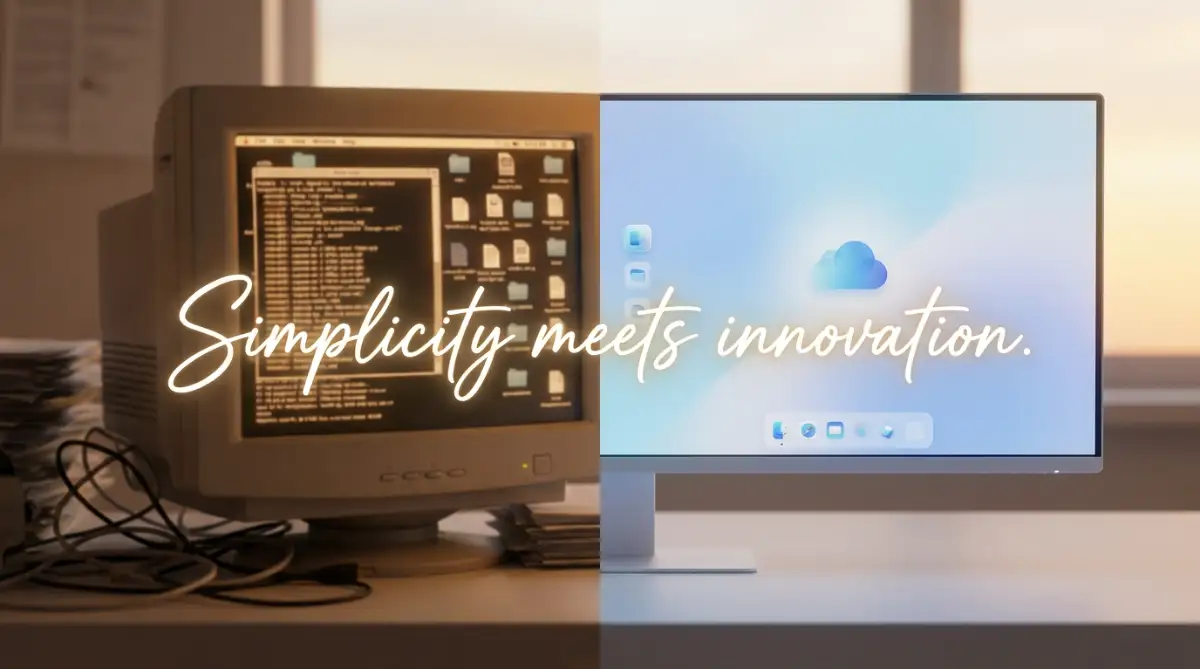
Breaking Down the "Tech Genius" Myth
The biggest lie we are told is that you need to be a coding expert to use advanced technology. This is simply falsesimple ai layout.
Think about how you use a modern television. You do not need to understand the electrical wiring inside the TV to change the channel. You just press a button on a simple remote control.
The same logic applies to modern conversational ai tools. You do not need to know how the machine thinks. You just need to know how to talk to it.
The design philosophy behind tools like Cloude is focused entirely on regular people. The creators realized that complex menus actually slow people down.
When you remove the clutter, your brain can finally relax. This is where the concept of a clean layout becomes so powerful ai for beginners.
Myth vs Reality: Uncovering the Truth
Let us look at a few common misunderstandings that hold beginners back.
Myth 1: You need to learn a special programming language.
Reality: You just need to know how to speak plain, normal English. If you can text a friend, you can use this platform.
Myth 2: You have to memorize secret commands.
Reality: There are no hidden codes. You just ask questions naturally, exactly as they pop into your head.
Myth 3: One wrong click will delete everything.
Reality: The interface is built to be totally safe. You can always undo, edit, or simply ask the machine to try again.
When you let go of these fears, you realize that using an ai assistant is actually fun.
The Power of a Blank Canvas
When you first open up a clean cloudDesign workspace, you might be surprised by how empty it looks.
There are no flashy banners. There are no complicated toolbars on the side.
There is just a simple text box waiting for your words.
This emptiness is not an accident. It is a highly intentional design choice meant to reduce your cognitive load. Cognitive load is simply the amount of effort your brain uses to process information.
When you see a messy room, you feel stressed. When you walk into a clean, minimal room, you feel calm.
The digital world works the exact same way. A clean layout gives your mind the breathing room it needs to be creative.
Why Simplicity Wins Every Time
Imagine trying to write a heartfelt letter while someone is playing loud rock music right next to your ear. It would be nearly impossible.
Cluttered software is like that loud rock music. It distracts you from your main goal.
By hiding all the complicated technical settings, you can focus purely on the conversation. You are no longer fighting with the software. You are partnering with it.
This simple approach is exactly why a complete beginner can sit down and get immediate results within five minutes.
Talking, Not Typing: A New Way to Work
The secret to mastering these new platforms is changing how you think about your keyboard.
Most of us were taught to type specific keywords into search engines. If we wanted a chicken recipe, we typed "chicken recipe easy fast."
We talked like robots because the search engines were robots.
With modern conversational platforms like chatGPT or Cloude, this robotic habit is actually holding you back digital assistance.
You need to stop typing like a robot and start talking like a human.
The Coffee Shop Analogy
Imagine you are walking into your favorite local coffee shop.
You would never walk up to the counter and shout "Coffee hot large sugar." The barista would look at you like you were crazy.
Instead, you say, "Hi there, could I please get a large hot coffee with a little bit of sugar, and make sure it is not too hot?"
You give the barista context. You explain exactly what you want and how you want it.
Your digital assistant works best when you treat it exactly like that friendly barista.
Scenario: Ordering a Digital Output
Let us say you want to write a friendly email to your boss asking for a few days off.
The old way of using a computer would be to search for "time off email template" and spend an hour filling in the blanks ai, Cloude, cloudDesign, chatGPT
The new, simple way is just talking to your screen.
You simply type: "I need to write an email to my boss, Sarah. I want to ask for next Thursday and Friday off because my sister is getting married. Please make the tone professional but very warm and polite."
The assistant understands the context, the names, and the exact tone you want.
Within seconds, you have a perfect draft. You did not use any code. You just had a normal conversation.
Want to see exactly how this looks in real life? Watch the quick video below where I demonstrate a live side-by-side comparison of the old way versus this simple new method, and then keep reading to learn the magic behind context memory!
A Side-by-Side Look at Everyday Workflows
Sometimes, the best way to understand how easy something is, is to compare it to the old way of doing things.
Let us look at a simple comparison table to see how a clean cloudDesign saves you time and mental energy.
When you look at this table, the choice becomes incredibly clear.
You are trading hours of frustration for seconds of simple conversation.
The Magic of Context Memory
One of the most powerful features that beginners completely miss is the power of memory.
When you use a traditional search engine, every single search is a brand new event. The computer does not remember what you asked it two minutes ago.
Modern assistants actually remember the conversation you are having right now.
This means you do not have to repeat yourself over and over again.
Having a Real Back-and-Forth Chat
Let us pretend you asked your assistant to write a short story about a dog named Max.
The assistant gives you a great story, but you decide you want Max to be a golden retriever instead of a poodle.
You do not have to write a brand new request.
You just type: "That is great, but can you change Max into a golden retriever and make the ending a little happier?"
The system remembers the entire story. It completely understands what you mean by "change Max."
This back-and-forth chat makes editing feel completely effortless. It is exactly like working with a highly skilled human assistant who sits right next to your desk.
Real-Life Success: From Blank Screen to Published Work
To truly understand how simple this is, let us look at a real-world example.
Meet David. David is a 55-year-old high school history teacher.
He loves cooking on the weekends and always dreamed of starting a small food blog to share his recipes with his family.
For months, David tried to use traditional website builders and writing tools. He bought expensive courses. He watched endless technical videos.
Eventually, the technical stress became too much. He almost gave up on his dream completely.
Then, David discovered the incredibly simple layout of modern ai tools.
The Exact Steps David Took
David did not read a manual. He just opened the clean interface and started typing like he was talking to a friend.
His very first message was simple: "I am a beginner trying to start a food blog. I have a great recipe for homemade apple pie. Can you help me write a fun introduction for it?"
Immediately, the screen filled with a warm, engaging introduction about the smell of fresh apples in the autumn.
David was shocked. He then typed: "Can you make it a little shorter, and mention that this recipe was my grandmother's?"
The tool updated the text perfectly.
David realized he did not need to learn complicated software. He just needed to direct the conversation. Today, David runs a beautiful blog, and he writes all of his posts using his digital assistant CloudeDesign.
The Role of Visual Space in Productivity
We often underestimate how much our eyes affect our brain.
When you look at a busy street full of neon signs, your brain works on overdrive to process everything.
When you look at a calm ocean, your brain naturally slows down and focuses.
The cloudDesign philosophy uses the concept of the calm ocean.
By removing sidebars, hiding complex toolbars, and using soft, pleasant colors, your eyes are immediately drawn to the text.
You are never confused about where to click. There is only one place to type, and one place to read.
Removing the Digital Clutter
Think about your physical desk right now.
If it is covered in old coffee cups, scattered papers, and tangled wires, you probably feel a little stressed sitting there.
Now imagine sweeping everything off that desk into the trash.
You leave only a beautiful piece of white paper and a nice pen.
That sudden feeling of relief is exactly what beginners experience when they switch from complex software to a clean digital assistant.
You are removing the digital clutter so your natural creativity can finally shine through.
Troubleshooting Common Beginner Hiccups
Even with the easiest tools in the world, you might occasionally run into a tiny bump in the road.
This is completely normal. Learning a new habit takes a little bit of practice.
The great news is that fixing these issues requires zero technical skill.
What to Do When the Output Isn't Perfect
Sometimes, the assistant gives you an answer that is not exactly what you wanted.
Maybe the tone is too formal. Maybe the answer is too long.
Beginners often think they broke the machine, or that they asked the question wrong.
Do not panic. You did not break anything. The assistant just needs a little more direction.
The "Tell Me More" Technique
Instead of giving up, you simply need to refine your instructions.
If the text is too long, just say: "This is good, but please make it half as long."
If the words sound too robotic, just say: "Rewrite this so it sounds like two friends talking over coffee."
You are the director of a movie, and the machine is your actor.
If the actor gives a bad performance, you do not fire them. You just give them better directions for the next take.
Pro Tip: The "Act As" Trick
Here is one of the most powerful secrets that beginners can use right away.
You can actually tell your assistant who to pretend to be.
If you are struggling with a math problem, you can type: "Act as a patient middle school math teacher, and explain this fraction to me."
If you need fitness advice, you can type: "Act as an encouraging personal trainer, and give me a simple morning stretching routine."
By giving the assistant a specific role, you instantly change the tone and quality of the response.
It is an incredibly easy trick that guarantees amazing results every single time.
Building Your Daily Routine Around Smart Assistance
Once you realize how incredibly simple this technology is, you will start finding ways to use it every single day.
You do not need to wait for a massive project to open your workspace.
You can use it for the smallest, most boring tasks in your daily life.
Starting Small and Scaling Up
The best way to build your confidence is to start with low-pressure tasks.
Do not try to write a 300-page book on your first day.
Instead, ask the assistant to help you write a grocery list based on three dinners you want to cook.
Ask it to draft a polite text message to a neighbor who plays their music too loud.
Ask it to explain a confusing news headline in simple terms.
Every time you successfully complete a small task, your confidence will grow.
Replacing Frustration with Curiosity
The most beautiful shift happens when you stop being afraid of the machine and start becoming curious about it.
You will start looking at your daily problems and wondering, "Can my assistant help me with this?"
You will find yourself smiling instead of sighing when you have a difficult email to write.
You have successfully replaced the heavy burden of tech frustration with the light, easy feeling of smart assistance.
Why The Future is Simple
Technology is finally moving in the right direction.
For decades, computers got more and more complicated. We had to learn their language just to survive in the modern workplace.
Now, the computers are finally learning our language.
The clean layout of modern ai tools is proof that the industry is finally putting the user first.
They are realizing that the most powerful tool in the world is useless if a beginner cannot figure out how to turn it on.
Embracing Your New Digital Partner
You no longer have to sit on the sidelines while other people enjoy the benefits of modern technology.
The door is wide open, and the welcome mat is laid out perfectly for you.
Whether you