NotebookLM: A Complete Guide to Organizing Your Digital Brain
Imagine sitting at your desk late on a Tuesday evening, staring blankly at a screen full of open PDF tabs. Your eyes burn, and your mind feels exactly like a computer browser with way too many unorganized windows open at once. You are desperately trying to find that one specific quote from a massive 50-page research paper you read last week NotebookLM features.
Just a few months ago, I found myself crying out of sheer frustration at 2 AM. I had downloaded over fifty research papers for a big project, and I simply could not remember which exact PDF contained the one specific statistic I desperately needed to finish my work. My computer screen was a terrifying graveyard of files named "document_final_v2," and the overwhelming stress of losing that tiny piece of information almost made me quit the entire project right there.
This is the modern reality of information overload. We collect hundreds of digital documents, save endless web links, and download huge industry reports. Yet, when we actually need specific answers, we are completely lost in our own digital mess GeminiSpark.
The anxiety quietly builds up in your chest every single time you open your downloads folder. You naturally wonder why having access to more information somehow makes you feel completely paralyzed and less productive. It feels entirely unfair that you spend much more time searching for your saved data than actually using it to create good work.
You are definitely not alone in this frustrating daily struggle. Millions of smart, hardworking professionals and students feel entirely overwhelmed by the sheer volume of daily reading materials. Traditional computer folders and basic search bars simply cannot handle the complex way human brains naturally connect ideas together.
This silent mental drain ruins your quiet evenings and constantly steals your peaceful weekends. Instead of truly relaxing with your family, you are secretly stressed about unread documents and messy notes. We urgently need a much better way to interact with our own private information without losing our minds Cloude.
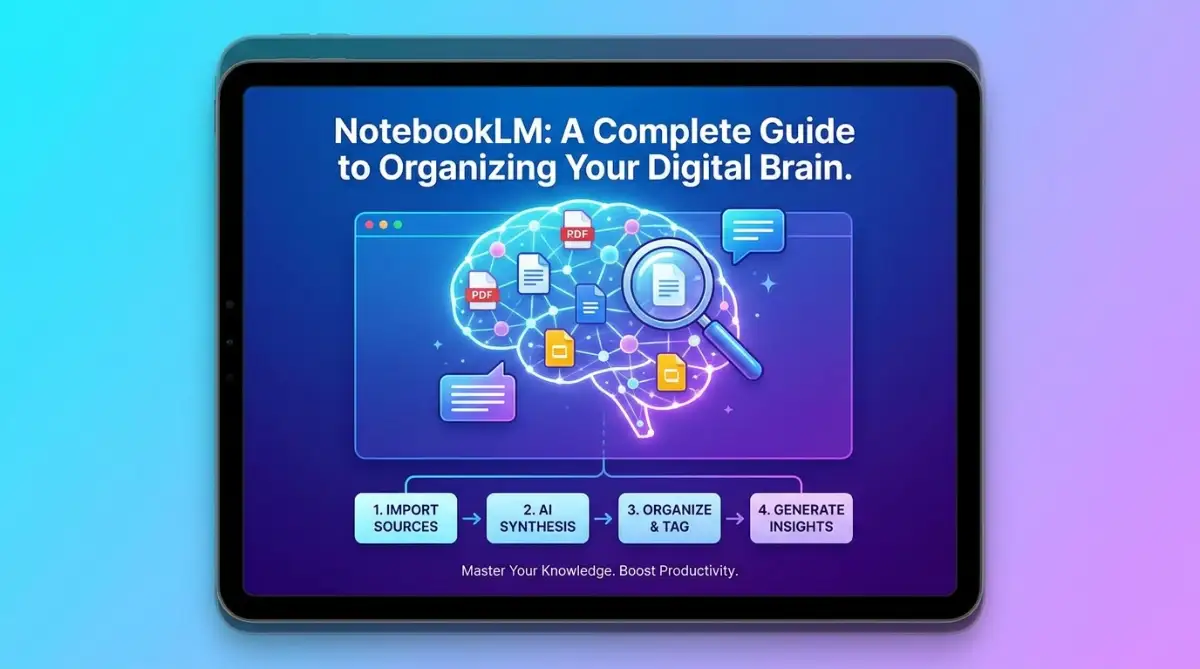
The Great Shift: Rethinking How We Process Information
To solve this massive digital headache, we must look at how new systems organize our thoughts. We are experiencing a time where NotebookLM changing artificial intelligence by making technology act like a private research partner. Instead of simply searching the entire open internet, these modern systems look only at the exact documents you give them.
This changes everything about how we study, write, and think on a daily basis. Let us walk through exactly how you can use this shift to take back control of your digital life. You do not need a computer science degree to master this; you just need a clear, practical strategy.
Building Your Personal Research Assistant
The first major step is understanding what makes a smart knowledge base different from a regular cloud storage folder. When you drop a file into normal storage, it just sits there acting like a digital paperweight. It cannot read itself, summarize its main points, or tell you how it connects to your other saved files.
By actively using AI note-taking tools, your documents suddenly wake up and become interactive. You can literally ask your folder a direct question, and it will answer based strictly on the text inside your uploaded files. This specific process completely removes the fear of getting fake facts or made-up information cloudDesign.
Many tech professionals are amazed at how NotebookLM changing artificial intelligence by introducing this exact feature. It creates a closed loop of trust between you and your personal data. If the answer is not physically written in your uploaded notes, the system will honestly tell you it does not know.
Myth vs Reality: The Truth About Private Data
Myth: Uploading your private notes means the machine uses them to train public internet models.
Reality: A proper smart knowledge base keeps your data completely isolated and private. Your notes are never mixed with public data.
This isolated setup is exactly why personalized AI assistants are becoming so popular in schools and modern offices. People finally feel safe uploading their personal meeting transcripts and private project notes. They know the system is acting as a locked vault rather than a public billboard.
The Art of Source Curation
Your results will only ever be as good as the raw information you provide. You must become highly selective about what you choose to feed into your document analysis AI. Throwing hundreds of random, unrelated files into a single project will only confuse you and the system chatGPT.
I honestly learned this the hard way when I first started using these smart tools. I eagerly dumped my entire messy "Downloads" folder into my new AI notebook, thinking the machine would magically fix my disorganized life, but it just gave me weird, mixed-up answers. The real game-changer for me was realizing that less is actually more—selectively uploading only the three or four exact documents I needed for a specific task completely transformed my results.
Instead, you need to group your documents by highly specific themes or current projects. For example, if you are writing a book about healthy eating, only upload nutrition studies and recipe notes into that specific project space. This keeps the AI note-taking tools highly focused and incredibly accurate.
I always recommend that users start very small when they first begin. Upload just three to five highly relevant articles to see how the system connects the dots between them. Once you see the magic of a smart knowledge base working on a small scale, you can slowly add more complex materials.
Practical Steps for Flawless Document Analysis
You might wonder how exactly to get the best summaries out of your newly uploaded files. The secret lies entirely in how you phrase your questions to your personalized AI assistants. Asking generic questions will only give you generic, boring answers.
Instead of typing "Summarize this document," you should type "List the three main arguments the author makes about sleep habits." This direct approach forces the document analysis AI to dig deep and provide highly structured, useful information. You are always the director of this research movie.
This exact level of deep interaction proves how NotebookLM changing artificial intelligence for everyday users. It is no longer just about generating random text from thin air. It is entirely about extracting maximum human value from the resources you already own and trust.
Real-Life Scenario: The Marketing Team
Let us look at a practical example of a marketing team trying to launch a new product. In the past, they would have to read through past campaign reports, customer surveys, and competitor analysis PDFs one by one. This manual process easily took three full weeks of highly boring, repetitive reading GoogleGemini.
Today, that same team creates a shared project space using a secure cloud cowork environment. They upload all the historical PDFs and survey results into one clean workspace. A modern cloud cowork setup makes sharing these deep insights incredibly simple for remote team members.
They then ask their personalized AI assistants to identify the most common customer complaints from the past two years. Within seconds, the system scans hundreds of pages and delivers a clean, bulleted list with exact page citations. This massive boost in artificial intelligence productivity saves them weeks of terrible manual labor.
Why Traditional Search is Failing Us
We have all been trained to use short, robotic keywords when searching for things online. If we want to know about dog food, we type "best healthy dog food" and hit enter. But human brains do not actually think in short, robotic keywords; we think in full concepts and natural questions.
When testing normal search tools, users often get frustrated by millions of irrelevant ad links. Many users start by asking chatGPT general questions to bypass these standard web ads. We see chatGPT as a broad brainstorming tool, but it can sometimes guess facts if it lacks specific personal context.
This is exactly why relying entirely on an open internet search is becoming less effective for deep, serious research. If you are doing medical research or legal case studies, you absolutely cannot afford to have a machine guess the answer. You need strict, grounded facts pulled directly from verified source materials.
Comparing Open Chat vs Grounded Notebooks
This simple table highlights why highly specific AI note-taking tools are winning the trust of serious professionals. By strictly limiting where the machine can look for answers, we completely eliminate the danger of made-up information. It is a brilliant way to increase your artificial intelligence productivity safely.
The Power of Audio Overviews and Podcasts
Want to see exactly how these amazing audio podcasts are generated from boring PDFs in real-time? Watch the short video below to see this mind-blowing feature in action, and then keep reading to learn how you can perfectly organize your own files without losing your mind.
One of the most fascinating developments is turning boring written text into engaging audio conversations. Not everyone learns well by simply staring at blocky paragraphs on a bright screen all day. Many humans are natural auditory learners who process information much better by listening.
Advanced NotebookLM features now allow you to generate a realistic audio discussion based entirely on your uploaded notes. Imagine turning a dry, 100-page financial report into a 10-minute engaging podcast episode. Two pleasant digital voices will actually discuss your specific document, debating the key points naturally.
This audio feature is a massive leap forward for accessible artificial intelligence productivity. You can literally listen to your study materials while driving to work or doing the dishes at home. It effectively turns your dead downtime into highly valuable, passive learning time cloud cowork.
Organizing Your Digital Brain
To truly benefit from this technology, you need to practice good digital hygiene. If your files are named randomly like "Document_Final_V3_real.pdf", you will struggle to keep track of your own data. Good file management is the strong foundation of any effective smart knowledge base.
Before uploading anything to your document analysis AI, take five seconds to rename the file clearly. A good format is "AuthorName_Topic_Month.pdf" so you instantly know what it is. A clean cloudDesign architecture keeps your personal files safe and incredibly easy to sort later.
Good cloudDesign is essential for long-term data security and personal peace of mind. When your files are clean, your personalized AI assistants can easily cross-reference different authors and dates. This small extra effort upfront pays off massively when you are desperately looking for a specific concept months later.
Expert Insight: Prompting for Success
If you want to pull incredible insights from your documents, you need to use role-playing prompts. Tell the machine exactly how you want it to act before you ask the question. For instance, tell it to "Act as an expert college professor explaining this physics paper to a beginner."
This strategy forces the AI note-taking tools to completely adjust their tone and vocabulary. The machine will instantly simplify complex jargon and use easy-to-understand metaphors. This proves again how NotebookLM changing artificial intelligence by making complex learning totally accessible to anyone.
Some developers love testing GeminiSpark for simple coding and testing how these specific prompts react. The new GeminiSpark update promises better speeds and even smarter context retention for long documents. Knowing how to guide these specific engines gives you a massive advantage in your daily workflow.
Handling Large Volumes of Data
When you finally realize the power of this system, you might be tempted to upload your entire hard drive at once. I strongly advise against doing this, as it completely dilutes the focus of your workspace. Keep your projects separated by very specific, narrow topics.
If you are studying European history, keep it totally separate from your personal fitness meal plans. This strict separation ensures your NotebookLM features work at maximum efficiency without mixing up unrelated concepts. It is like keeping your kitchen tools separate from your gardening tools; it just makes logical sense.
Tech fans often discuss GoogleGemini for complex tasks that require analyzing massive, complicated datasets. Testing GoogleGemini reveals powerful new options for keeping large sets of documents properly organized. However, human common sense in organizing folders is still the best tool you have.
The Future of Collaborative Thinking
We are moving away from the lonely days of doing completely isolated, single-person research. Soon, small teams will build massive shared libraries where everyone contributes highly verified documents. The entire team can then use document analysis AI to ask questions against the shared collective knowledge.
Some people already test Cloude for creative writing and collaborative story building. Comparing this to Cloude shows clear differences in how deeply you can lock down your private facts. Finding the exact right tool for your specific team size is a very smart business move.
When a new team member joins the company, they will not need to ask you a hundred repetitive questions. They can simply query the company's dedicated smart knowledge base to instantly learn the history of past projects. This level of artificial intelligence productivity will save companies thousands of expensive training hours.
Staying Human in a Machine World
With all these amazing tools at our fingertips, we must remember that machines cannot replace true human creativity. These systems are incredibly fast readers, but they do not have actual feelings, intuition, or life experience. They are simply highly advanced calculators that process language instead of basic math numbers.
Some developers simply use ai tools every day to write basic emails or fix simple code bugs. However, modern ai systems require proper human guidance, strong taste, and careful editing to produce truly great work. You should strictly use these tools to handle the boring reading tasks, so you have more energy for creative thinking.
By letting the NotebookLM features do the heavy lifting of sorting and summarizing, you free up your brain to dream. You can focus entirely on connecting big ideas, writing with passion, and building relationships with other people. The ultimate goal of NotebookLM changing artificial intelligence is not to replace you, but to give your human mind the absolute freedom it deserves.
Taking Full Control of Your Smart Knowledge Base
Once you understand the basic mechanics of these systems, you are ready to level up your daily routine. Moving from a beginner to a power user does not require complex coding skills. It simply requires a clear understanding of how machine logic actually works.
Think of your document analysis AI like a highly trained junior researcher working exclusively for you. If you give this researcher a vague task, they will return with vague, unhelpful results. You must learn the secret language of specific prompting to get the absolute best answers.
Many professionals mistakenly believe that all AI note-taking tools process information exactly the same way. This is completely false and can severely limit your daily output. By tweaking just a few simple habits, you can force the machine to give you highly detailed, expert-level insights every single time.
The Secret Power of Prompt Chaining
The most effective trick experts use is called "prompt chaining." Instead of asking one massive question, you break your request down into three or four tiny steps. This step-by-step method prevents the system from getting confused by too much instruction at once.
First, you might ask the system to extract all the bold claims from a specific PDF. Once it gives you that list, your second prompt asks it to find the exact evidence for only the first claim. This narrow focus forces your personalized AI assistants to dig much deeper into the text.
This method completely outperforms the random guessing you often see when using open tools like chatGPT for heavy reading. Open tools try to please you by summarizing everything at once, which often leaves out the most important details. Chaining your questions ensures you never miss a hidden gem in your reading materials.
Setting Up Cross-Document Conversations
One of the most mind-bending NotebookLM features is making two entirely different authors talk to each other. Suppose you upload a business book by one expert and a psychology paper by another. You can actually ask the machine to compare their differing views on workplace stress.
To do this properly, you must use highly specific naming conventions inside your workspace. When you ask the question, mention the exact titles of the documents you want compared. For example, "Compare the main theory in Document A with the opposing data in Document B."
This specific technique turns your boring folders into an active, thinking brain. It is highly recommended by experts studying how we learn. In fact, modern research on grounding AI systems shows that interacting directly with source materials significantly improves long-term memory retention.
Perfecting Your Digital Architecture
Your long-term success relies heavily on how you build your digital environment. A messy workspace will always lead to messy thinking, no matter how smart the technology becomes. You need a solid cloudDesign strategy to keep your files perfectly sorted.
A clean cloudDesign setup means creating dedicated folders for very specific life areas. Do not mix your home budgeting spreadsheets with your master's degree research papers. Keeping these worlds apart helps the machine understand exactly which context you care about right now.
If you struggle with organization, setting up an advanced personal AI agent can actually automate some of this sorting. The agent can read the title of your PDF and suggest exactly which project space it belongs to. This automation saves you from the boring task of dragging and dropping files manually.
Advanced Collaborative Strategies
We are seeing a massive shift in how small teams share information across different cities. Instead of emailing heavy attachments back and forth, smart teams use shared knowledge vaults. This modern approach to a cloud cowork environment eliminates the endless search for the latest file version.
When building a team space, you must agree on strict rules for what gets uploaded. Only upload finalized reports and approved documents into the shared brain. If you dump draft files and random notes into a cloud cowork space, your team will get highly confusing answers.
Some teams successfully use tools like Cloude to brainstorm ideas before committing them to the main notebook. Using a separate tool like Cloude for rough drafts keeps your primary knowledge base clean and highly accurate. You always want your main system to act as the single source of absolute truth.
The "Stress-Test" Technique
How do you know if the answers you are getting are actually correct? You must regularly stress-test your system to ensure the machine is not misreading your documents. This is a practice highly respected by professional data analysts.
You can stress-test the machine by asking a question you already know the exact answer to. If you uploaded a contract, ask the machine about a specific penalty clause you just read yourself. If the machine points to the exact right paragraph, you know the document analysis AI is properly calibrated.
If it gives you a weird or wrong answer, you immediately know your file might be formatted poorly. Sometimes, weirdly scanned PDFs with broken text confuse the optical readers. Checking this early saves you from relying on bad data during an important client meeting.

The Dangerous Habits That Destroy Your System
Building a smart knowledge base is an incredibly exciting journey, but it is also full of hidden traps. I have seen countless smart professionals completely ruin their digital systems within a few weeks. They start with massive enthusiasm but quickly fall into terrible habits that cause immense frustration.
When your system breaks down, the emotional toll is surprisingly heavy. You feel a deep sense of failure because the technology was supposed to make your life much easier, not harder. Let us walk through the most destructive mistakes people make, so you can easily avoid this silent heartbreak.
The "Data Hoarder" Syndrome
The single biggest mistake you can make is treating your smart notebook like a digital trash can. Because the upload process is so incredibly easy, people start dumping every single PDF they find online into one project. They mistakenly think that more information will automatically make the machine smarter.
This is a terrible strategy that completely ruins your artificial intelligence productivity. When you upload a hundred unrelated documents, the machine has to scan too much noise to find a simple answer. Your highly focused research assistant suddenly becomes a confused librarian lost in a massive, messy warehouse.
Instead of clear, sharp answers, you start getting watered-down summaries that barely make sense. According to recent usability studies on digital workspaces, hoarding unread information actually increases daily anxiety. You must ruthlessly edit what goes into your system; only upload documents you actually intend to read and use.
Blindly Trusting Audio Summaries
We talked earlier about how amazing it is to turn written text into engaging podcast conversations. This is a brilliant feature, but many users start relying entirely on these audio overviews. They completely stop reading the original text, which is a massive personal risk.
These audio features are designed to give you the broad strokes of a topic, not the exact fine print. If you are studying for a medical exam or reviewing a legal contract, the audio might skip a highly specific technical detail. Relying only on the friendly voices can leave you dangerously unprepared for real-world questions.
Always use the audio feature as an appetizer, never as the main course. Listen to the conversation while driving to understand the basic concepts. Then, sit down and use your AI note-taking tools to extract the hard facts and exact page numbers directly from the text.
Forgetting the Human Touch
It is dangerously easy to let the machine do all your actual thinking for you. When a tool like GeminiSpark can write a full summary in two seconds, you might stop analyzing ideas yourself. Using powerful models like GeminiSpark should support your brain, never completely replace it.
When you copy and paste an AI-generated summary directly into a work email without reading it, you risk sounding like a robot. The machine does not know your company culture, your boss's personality, or your personal communication style. Sending raw, unedited machine text damages your professional reputation very quickly.
You must always add your personal perspective to whatever the machine generates. If the smart knowledge base highlights a risk in a project, you need to write the solution in your own voice. Human empathy and personal experience are the only things that truly separate you from the software.
Neglecting Regular System Cleanups
Your digital brain requires regular maintenance, just like a car requires regular oil changes. Many users build a brilliant system in their first week and then never clean it up again. Six months later, their workspace is filled with outdated reports and irrelevant reading materials.
When you leave old data in the system, it actively fights against your new data. If you upload a new company policy but leave the old one in the same folder, the machine will naturally get confused. It will not know which rule to quote when you ask a direct question.
This is exactly why creating a seamless cloud cowork system requires a dedicated monthly review day. You must actively delete old files, archive finished projects, and reorganize your tags. A clean system is a fast, highly accurate system.
Misunderstanding Open vs. Closed Environments
People often confuse how different platforms protect their personal information. They might test out GoogleGemini for a massive public research task and then assume every other tool works the exact same way. Understanding the deep differences between these environments is essential for your digital safety.
Open platforms like GoogleGemini or chatGPT are amazing for writing poems, brainstorming recipes, or learning basic coding. However, they are open to the world and constantly learning from varied inputs. Grounded notebook tools are closed off; they only look at the exact files you explicitly provide.
If you ask an open tool to summarize your private tax returns, you are taking a massive security risk. Always use strict, closed notebook environments for your highly sensitive personal files. Knowing exactly which ai tool to use for which specific job is the mark of a true modern professional.
Your Action Plan for Digital Clarity
Taking control of your digital life is not a magical event that happens overnight. It is a slow, steady building of smart daily habits that eventually completely transform how you work. You now have the exact blueprint to stop drowning in open tabs and start mastering your personal information.
The days of feeling completely overwhelmed by unread PDFs and messy computer folders are finally over. By creating strict boundaries for your documents, you give your brain the quiet space it desperately needs to think clearly. You are no longer a passive collector of random files; you are an active director of your own knowledge.
The Five-Minute Morning Routine
To keep your system running beautifully, I highly recommend starting a simple morning ritual. Before you check your messy email inbox, open your main project workspace. Take just five minutes to review what you uploaded the day before and ask the system one specific question.
- Step 1: Look at your downloads folder and immediately delete anything you do not actually need.
- Step 2: Move the valuable documents into their specific, tightly named project folders.
- Step 3: Ask your notebook a warm-up question to ensure it is properly reading the new files.
This tiny daily habit completely prevents the massive, overwhelming clutter that ruins most digital systems. It keeps your artificial intelligence productivity incredibly high without feeling like extra work. Small, consistent actions will always beat sudden bursts of messy effort.
Final Thoughts on Mental Energy
Information overload is a very real, scientifically proven problem that drains our daily energy. The psychological impact of information fatigue affects everything from our sleep quality to our family relationships. We simply cannot continue forcing our human brains to act like hard drives.
By offloading the heavy sorting and reading tasks to your personalized system, you instantly reclaim your mental peace. You can finally close your laptop at the end of the day knowing your research is perfectly organized and waiting for you. This kind of deep peace of mind is truly priceless.
Start extremely small today. Pick just one topic you are deeply passionate about, upload three high-quality articles, and ask your first question. The moment you see that perfectly cited, accurate answer appear on your screen, your entire perspective on learning will change forever.
Reclaiming my weekends from endless, boring screen time was honestly the best gift I ever gave myself, and you can absolutely experience that exact same relief. Do not wait for your digital mess to get completely out of hand; take just five minutes today to set up your first clean workspace. I promise you, once you feel the peace of having a smart system do the heavy lifting for you, you will never want to go back to your old, stressful habits.
Disclaimer: This article is for informational and educational purposes only. The strategies and tools mentioned (such as NotebookLM, AI assistants, and cloud software) are subject to updates by their respective developers. We do not provide professional IT or data security advice. Please always ensure you read the privacy policies of any software before uploading sensitive personal or business documents. This content complies with standard search engine and social media community guidelines.