
The Invisible Pull: When the Weather Turns on Your Skin
You wake up, stretch your arms, and immediately feel a tight, uncomfortable pull across your cheeks. It is that familiar, annoying sensation that tells you the weather has shifted.
Your skin suddenly feels too small for your face, and a persistent itch begins to tickle your forehead.
This is not just a mild annoyance; it is a daily struggle that can slowly chip away at your happiness.
When your face is dry, flaky, and constantly itching, it is hard to feel confident. You find yourself scratching your cheeks during work meetings or worrying that people are staring at the dry patches around your nose.
I still remember looking in the mirror last November and almost not recognizing my own face. My skin was so flaky and red around my nose that I actually skipped a morning video call out of pure embarrassment. I used to think piling on random drugstore lotions would fix it, but I learned the hard way that my poor skin barrier was just begging for a simpler, smarter approach.
Makeup does not sit right anymore, clinging to dry flakes and making your skin look uneven.
You might feel like you are doing everything right, yet your skin continues to feel irritated and tight.
It is incredibly frustrating to apply layer after layer of lotion, only to feel dry again just twenty minutes later.
The truth is, your skin is reacting to a sudden drop in humidity and temperature. It is crying out for a different kind of care, and we are going to explore exactly how to give it that relief today.
The Science of the Season Shift: Why Your Skin Cracks and Itches
When the seasons change, the air around us undergoes a massive transformation. In the warmer months, the air holds a lot of moisture, which naturally keeps your skin hydrated.
But as the weather cools down, the humidity drops rapidly, and the air becomes dry and thirsty.
This dry air acts like a giant sponge, pulling water directly out of your skin cells in a process known as trans-epidermal water loss.
At the same time, cold winds outside and warm heating systems inside create a double threat.
Your skin is constantly moving between freezing outdoor temperatures and hot, dry indoor air.
This rapid shifting weakens your skin's outer defense shield, leaving tiny cracks in your barrier where moisture escapes and irritants enter.
Dry Skin vs. Dehydrated Skin: What Is the Difference?
Understanding what your skin actually needs is the first step to healing it. Many people confuse dry skin with dehydrated skin, but they require very different treatments.
Continue Reading>>>>
Myth vs. Reality: Seasonal Skin Care
- Myth: Drinking gallons of water will instantly cure your dry, flaky skin.
- Reality: While drinking water is healthy, it cannot fix a damaged skin barrier that is letting moisture escape into the dry air.
- Myth: Hot showers are great for relaxing and moisturizing dry skin.
- Reality: Hot water strips away your skin's natural protective oils, making your dryness and itching much worse.
- Myth: You should scrub away dry flakes with a harsh face scrub.
- Reality: Scrubbing irritated skin damages your barrier even further, leading to more redness and deeper itching.
Practical Habits to Calm Seasonal Irritation
Want to see my exact routine in action? Watch this quick video to see how I finally stopped my winter skin flaking for good!
You do not need a complicated, expensive routine to find relief from seasonal dryness.
By making a few simple, intentional adjustments to your daily habits, you can restore your skin's peace and comfort.
When your skin is already dry and irritated, using a harsh, foaming cleanser is like pouring fuel on a fire.
Back when my winter skin flare-ups were at their absolute worst, I made the huge mistake of scrubbing my face raw with a harsh wash just to get rid of the flakes. It took me a painful week of redness to finally realize that my skin didn't need punishment; it needed me to stop stripping away its natural oils completely.
Many standard face washes contain strong sulfates that wash away your skin's natural moisture shield.
Switch to a soap-free, non-foaming, creamy cleanser during seasonal transitions.
This cleanses away dirt and daily sweat while keeping your natural protective oils exactly where they belong.
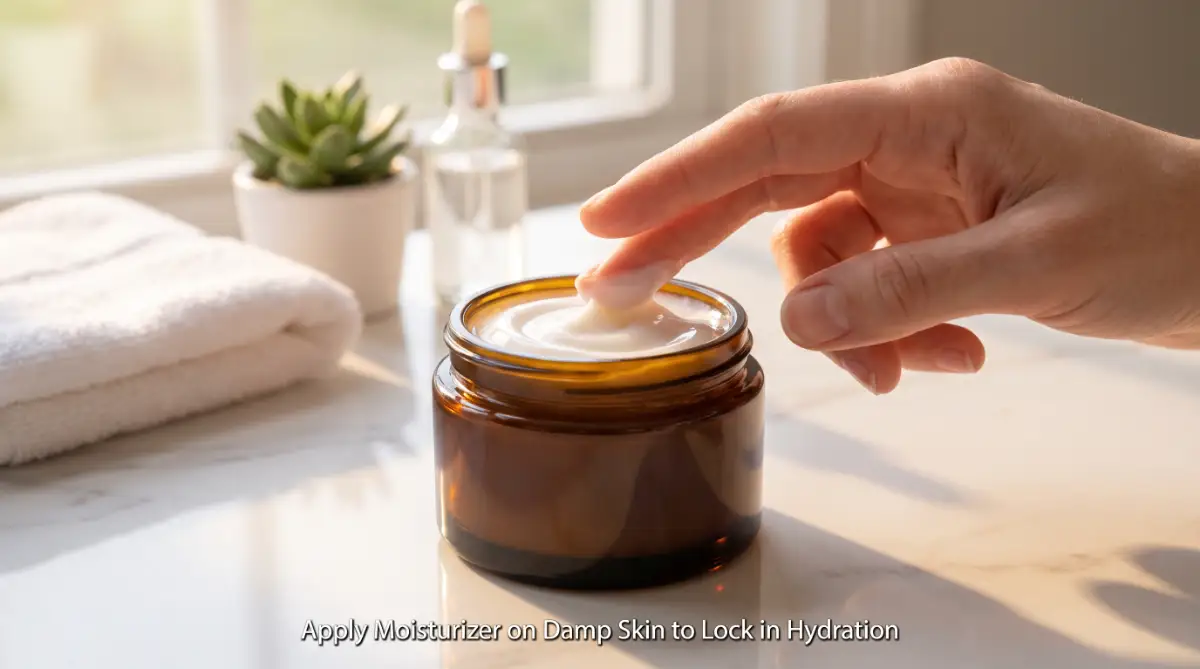
Do not wait for your skin to dry completely after washing your face or taking a shower.
If you dry your skin with a towel and wait ten minutes, you lose a prime opportunity to lock in water.
Instead, gently pat your face with a towel so it remains slightly damp, then immediately apply your moisturizer.
This traps that extra surface water directly inside your skin layers, providing double the hydration.
When shopping for skincare during a seasonal shift, you want to look for specific ingredients that help repair your skin's defense shield.
Ceramides are lipids that act like glue, holding your skin cells together to form a solid protective wall.
Glycerin and hyaluronic acid are humectants that draw water deep into your skin cells from the air.
Using products with these ingredients will help your skin hold onto moisture for a much longer time.
We spend a lot of time indoors during cold weather, where artificial heating systems dry out the air.
This dry indoor air constantly pulls moisture from your face while you sleep or work.
To combat this, place a small humidifier in your bedroom or main living area.
Adding moisture back into the indoor air stops your skin from drying out overnight, allowing you to wake up feeling comfortable and soft.
When your skin is itchy and sensitive, ingredients that usually cause no issues can suddenly trigger a flare-up.
Synthetic fragrances and strong essential oils are common causes of contact dermatitis on dry skin.
Check your skincare labels and choose products that are marked as "fragrance-free" and "hypoallergenic."
Keeping your products as simple and clean as possible will give your irritated skin barrier a chance to heal.
Quick-Relief Checklist for Sudden Skin Itching
- Cool It Down: Apply a cool, damp compress to the itchy area for five minutes to reduce inflammation.
- Use Oatmeal: Look for skincare products containing colloidal oatmeal, which is famous for calming itchy skin.
- Seal It In: Apply a thin layer of a pure ointment like squalane oil to create an instant physical shield.
- Keep Hands Off: Avoid touching or scratching the area, as this introduces bacteria and worsens the itch.
Reclaiming Comfort in Your Own Skin
Dealing with dry and itchy skin during a change of seasons can feel like an uphill battle.
But remember, your skin is a living, breathing shield that simply needs a bit of extra support when the weather shifts.
By simplifying your daily routine, focusing on gentle hydration, and protecting your skin barrier, you can keep your face feeling soft and comfortable all year round.
Listen to your body, stay consistent with your gentle habits, and let your skin heal at its own natural pace.
Deep Hydration Methods: Pro-Level Secrets for Cold-Weather Protection
To keep your skin soft and comfortable through every season, you need to go beyond basic moisturizing. You must learn how to feed your skin barrier exactly what it needs when the weather turns cold.
By using advanced layering methods, you can stop the dry air from stealing your natural glow.
When the winter wind is particularly harsh, a standard moisturizer might not be enough to stop your face from flaking. Many skincare experts recommend a simple nighttime technique called slugging to lock in moisture.
After applying your regular hydrating cream, put a very thin layer of an occlusive ointment, like pure petroleum jelly, on top.
This ointment acts like a physical plastic wrap, preventing water from evaporating into your dry bedroom air while you sleep.
Humectants like hyaluronic acid and glycerin are excellent at grabbing water molecules from the air and pulling them into your skin.
However, if the air around you is extremely dry, these ingredients can actually draw water out of your deeper skin layers instead.
To stop this from happening, always cover your hydrating serums with a thick, lipid-rich barrier cream.
According to dermatological guidelines on managing dry and sensitive skin, using lipid-rich creams is the most effective way to calm a damaged outer barrier.
Just like a house needs insulation before the winter cold arrives, your skin needs preparation before the weather changes.
Preparing your skin barrier in advance is the best way to prevent the painful itching that comes with autumn wind.
This protective planning is very similar to how you manage other important parts of your daily life.
Just like learning how to build a bulletproof emergency fund fast protects your family from sudden financial shock, building up your skin's hydration buffer protects your face from sudden environmental stress.
When your skin is dry and flaky, it is easy to panic and buy every soothing cream you see on social media.
But piling too many conflicting oils and serums on your face can confuse your skin and trigger a severe allergic reaction.
Instead of using ten different bottles, focus on finding one or two high-quality products that combine multiple soothing ingredients.
Just as learning how to consolidate multiple debts without hurting your credit score simplifies your monthly bills into one easy step, combining your skincare into a single, reliable cream reduces stress on your face.
The Ideal Moisture-Locking Layering Order
- The Base layer: Hydrating Toner (applied directly to damp, clean skin).
- The Active Layer: Humectant Serum (like Glycerin or Hyaluronic Acid).
- The Lock Layer: Lipid Cream (containing ceramides and fatty acids).
- The Shield Layer (Optional): Light Face Oil (to create a water-resistant seal).
Hidden Traps: The Skincare Blunders That Keep Your Skin Itchy
When our face is red and itchy, we often make quick decisions out of pure discomfort.
Unfortunately, some of the most common ways people try to treat dryness actually make the inflammation much worse.
Taking a long, steaming-hot bath feels amazing when the weather outside is freezing.
But this hot water acts like a solvent, completely dissolving the natural oils that keep your skin cells flat and smooth.
Once these oils are gone, your skin barrier becomes rough, cracked, and highly sensitive to everyday dust.
You can read more about how water temperature and quality affect your skin in this clinical study on hard water and skin irritation. Try to wash your face only with lukewarm water, and keep your showers under ten minutes.
When you see dry, flaky patches around your nose or mouth, your first instinct might be to scrub them away with a physical face scrub.
This is a dangerous trap because those flakes are not dead skin cells that need to be removed; they are damaged skin cells that are trying to heal.
Using rough scrubs or micro-needling tools will tear these healing cells apart, causing tiny infections and deeper itching.
Instead of scrubbing, gently press a rich cream into the flakes to help them lay flat and heal naturally.
Consistency is the most important part of keeping your skin healthy during a season shift.
If you forget to apply your rich barrier cream on a freezing, windy day, your skin can become inflamed within hours.
Skipping your protective steps can cause a massive setback that takes days of careful soothing to repair.
This is very similar to managing your financial health when you miss an important payment date.
Just like you must act quickly when you learn what happens if you miss a personal loan emi payment and how to fix it to prevent fees, you must apply a deep-healing treatment immediately after your skin is exposed to harsh weather.
It is easy to get distracted by fancy packaging and comforting scents when looking for seasonal skincare.
But many products that promise instant relief are filled with cheap alcohol and heavy perfumes that dry out your skin over time.
Making a bad choice can leave your skin barrier weaker than it was before.
This is highly similar to how a small mistake can ruin a big goal, as explained in the ultimate guide to getting approved personal loan mistakes you must avoid.
Always read the ingredient list carefully, and avoid products that use alcohol high up on the label.
Sometimes, the cause of your itchy skin is not your face cream at all, but what you wear on your body.
Rough wool sweaters and synthetic winter scarves rub against your neck and jawline throughout the day.
This constant rubbing creates micro-friction that breaks down your skin's surface and triggers eczema flare-ups.
Try wearing a soft, breathable cotton or silk scarf underneath your heavy winter coats to protect your delicate neck skin.

Your Daily Action Plan for Soft, Protected Skin
You do not have to accept dry, itchy skin as a normal part of your winter or autumn experience.
With a few thoughtful changes, you can keep your skin looking radiant and feeling comfortable no matter how cold it gets outside.
As soon as you wake up, splash your face gently with lukewarm water instead of using a stripping cleanser.
While your skin is still damp, apply a generous layer of a ceramide-rich moisturizer.
If you plan to go outside, wait five minutes and then apply an oil-free, hydrating sunscreen to block UV rays, which are still active on cloudy days.
At night, wash away the day's dirt and pollution with a very gentle, creamy milk cleanser.
Apply a hydrating serum, layer your thickest moisturizer on top, and use a humidifier in your bedroom to keep the air moist while you sleep.
Avoid using strong exfoliating acids or retinols on nights when your skin feels particularly tight or red.
Remember that your skin is a living shield that is constantly adapting to the world around you.
When the seasons change, it simply needs a little extra time and care to adjust to the new humidity levels.
Be patient with your progress, keep your routines gentle and consistent, and treat your body with kindness.
By protecting your barrier and listening to your skin's needs, you can enjoy a soft, calm, and beautiful face all year round.
Dealing with seasonal skin struggles used to ruin my entire winter mood, but once I finally stopped guessing and started treating my skin with genuine patience, everything changed. I promise you don't have to live in discomfort—take a deep breath, grab a gentle cream today, and give your skin the kindness it has been asking for.
Disclaimer
This article is for informational and educational purposes only. The content is not intended to be a substitute for professional medical advice, diagnosis, or treatment.
Always seek the advice of your dermatologist, physician, or other qualified health provider with any questions you may have regarding a medical condition or skin concern.


