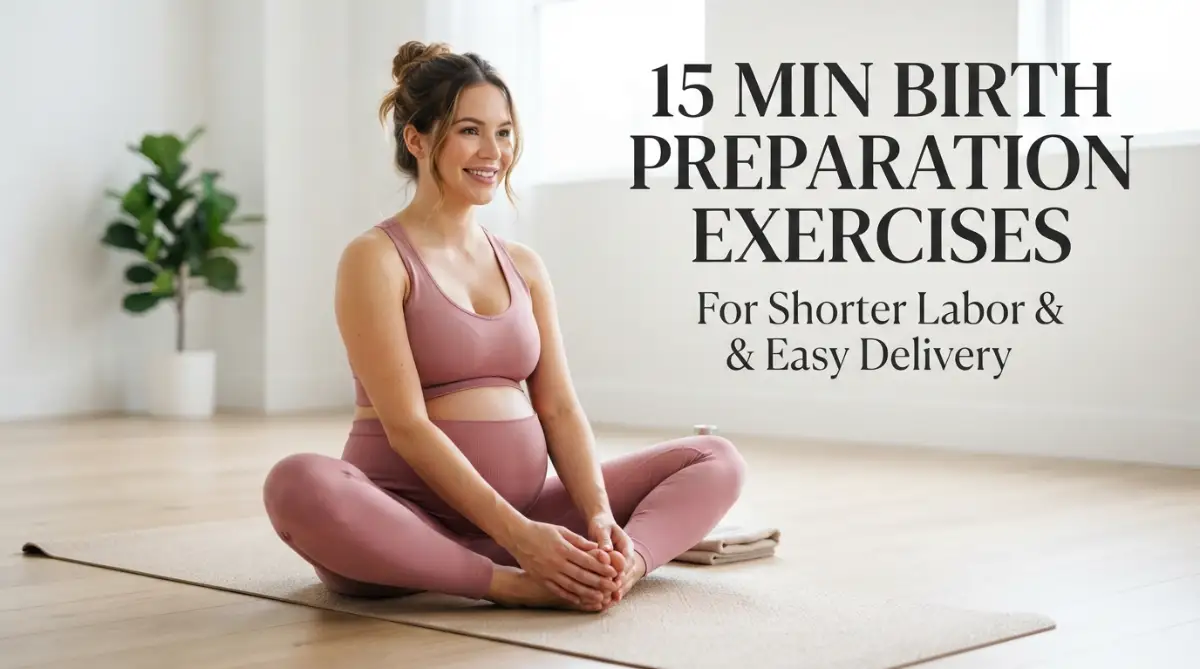
15-Min Birth Preparation Exercises for a Shorter, Easy Labor
You are staring at the bedroom ceiling in the middle of the night. Your lower back feels like it is locked in a vice. Your hips are incredibly tight, and every time you try to roll over, a sharp ache shoots down your legs.
Most mothers know this exact feeling. As your belly grows, the physical weight of carrying a new life starts to take a heavy toll on your joints and muscles. You might find yourself dreading the actual day of delivery.
When I was pregnant with my first baby, I remember waking up at 3 AM with this terrifying thought: "How am I actually going to push a baby out of my body?" My lower back was throbbing constantly, and every horror story I heard from relatives played on a loop in my head. I felt completely unprepared and physically stiff, which only made my anxiety worse. It wasn't until I stopped panicking and started focusing on a few specific daily movements that everything finally shifted for me.
The stories you hear from friends or family often do not help. People love to share their long, exhausting, and painful birth experiences. This constant flow of negative stories can easily steal your mental peace.
You start wondering if your body is actually ready for what is coming. The fear of a 24-hour labor process is enough to make anyone feel anxious and overwhelmed. This fear often leads to tense muscles, which is the exact opposite of what you need for a smooth delivery.
But what if you could change this entire story? What if you could spend just a small fraction of your day preparing your body to work with the birth process, rather than fighting against it?
Taking control of your physical readiness gives you a massive mental boost. When you know your pelvis is open and your muscles are relaxed, that late-night anxiety begins to fade away. You stop feeling like a helpless passenger and start feeling like a strong, prepared mother.

Why Gentle Movement Changes the Birth Experience
You do not need to be a professional athlete to have a great birth experience. In fact, intense workouts can sometimes do more harm than good right now. What you actually need is targeted, intentional movement birth preparation exercises pregnancy stretching shorter labor easy delivery natural birth prep
Think of your pelvis like a doorway. If the hinges are stiff and rusty, pushing the door open is going to take a lot of force and time. If the hinges are oiled and loose, the door swings open effortlessly.
Daily stretching acts like oil for your pelvic joints. By dedicating just 15 minutes a day to specific movements, you are actively helping your baby settle into the optimal position. This can significantly reduce the hours you spend in the delivery room.
Many women search for ways to trigger labor naturally when they are past their due date. They look up laborinducing tricks, hoping for a quick fix. However, the best laborinducing strategy is to prepare your body weeks in advance.
When you practice regular laborprep naturalbirth techniques, your body learns how to relax on command. This relaxation is essential for a smooth and fast delivery.
Myth vs Reality: Exercise and Pregnancy
Myth: Resting in bed all day is the safest way to protect your baby in the final weeks.
Reality: Excessive sitting can cause the baby to rest in a posterior position, which often leads to a longer, more painful back labor.
Myth: Stretching will accidentally cause you to go into premature labor.
Reality: Safe, gentle stretching does not force the baby out. It simply creates a better, more spacious environment for the baby to move down when the time is right.
The 15-Minute Daily Routine for a Smoother Delivery
If you are more of a visual learner, take a look at this quick video below where an expert demonstrates these exact same stretches step-by-step. Watch how gently she moves—it is the perfect guide to follow along with before you read through the detailed instructions below!
You can do this entire routine in the comfort of your own living room. You only need a soft mat, comfortable clothes, and a quiet environment. Let us break down the exact movements that will help open your body.
1. The Cat-Cow Pelvic Tilt (3 Minutes)
This is one of the most effective ways to relieve lower back pressure. It also encourages your baby to move into the correct anterior position for birth.
Start on your hands and knees on your mat. Make sure your wrists are directly under your shoulders and your knees are under your hips. As you take a deep breath in, gently drop your belly toward the floor and look up slightly pregnancy stretching for shorter labor pelvic floor exercises birth ball routine natural delivery third trimester stretches
As you breathe out, round your back up toward the ceiling, tucking your chin to your chest. Think about pulling your belly button upward. Move slowly with your breath, repeating this motion for three full minutes.
If you experience wrist pain, you can do this exact same movement while resting your forearms on an exercise ball. The key is to keep the spine moving and the pelvic floor relaxed.
2. The Butterfly Hip Opener (3 Minutes)
Tight hips are a major roadblock during delivery. The butterfly stretch gently opens the inner thighs and pelvic region without putting strain on your joints.
Sit comfortably on the floor and bring the soles of your feet together. Let your knees drop outward toward the floor. Do not force them down; just let gravity do the work.
Sit up nice and tall, pulling your shoulders back. You can hold onto your ankles and take deep, slow breaths. Imagine sending your breath directly down to your pelvic floor.
If your hips are very tight, place a yoga block or a rolled-up towel under each knee for support. Hold this position and focus entirely on relaxing the muscles around your groin for three minutes.
3. The Supported Deep Squat (3 Minutes)
Squatting is perhaps the most powerful position for opening the pelvic outlet. It can increase the size of the birth canal by up to 30 percent.
Stand with your feet slightly wider than hip-width apart. Point your toes outward slightly. Slowly lower your hips down as far as you comfortably can.
If you feel off-balance, hold onto a heavy piece of furniture, a sturdy doorframe, or your partner's hands. Keep your heels flat on the floor. If your heels pop up, roll up a towel and place it under them for support.
Stay in this deep squat and take slow, deep breaths. This position naturally stretches the perineum, which can help prevent tearing during delivery. Spend three minutes here, taking breaks to stand up if your legs get tired.
4. Birthing Ball Rotations (3 Minutes)
An exercise ball is your best friend during the final weeks of pregnancy. It takes the pressure off your spine while allowing for excellent mobility.
Sit squarely on the center of the ball with your feet planted firmly on the floor. Keep your knees slightly lower than your hips. Begin making large, slow circles with your hips.
Imagine you are drawing a circle on the floor with your tailbone. Do 10 circles in a clockwise direction, then switch and do 10 circles counter-clockwise. This movement mimics the natural swaying you will instinctively do during contractions.
These rotations are amazing for naturalinduction when your body is fully ready. Even if you are not trying a naturalinduction just yet, it keeps the joints lubricated.
5. The Asymmetrical Lunge (3 Minutes)
Sometimes, babies get stuck slightly off-center in the pelvis. Asymmetrical movements help shift the pelvic bones just enough to help the baby slide down into the correct spot.
Place one foot flat on the floor in front of you, and rest your other knee on the ground behind you (like a kneeling lunge). Make sure you have a wall or chair nearby for balance.
Gently lean your weight forward into the front foot, feeling a stretch in the front of your back hip. Hold this stretch for 30 seconds, taking deep breaths, and then switch sides.
Repeat this on both sides for three minutes. This specific movement creates uneven space in the pelvis, which is often exactly what a baby needs to navigate the birth canal.
Expert Insight: The Power of the Exhale
Most people hold their breath when they feel physical discomfort. During labor, holding your breath makes your muscles tense up, which increases pain and slows down the birth. While doing these 15-minute exercises, practice making your exhales twice as long as your inhales. This signals your nervous system to stay calm, which is exactly how you want to respond to a real contraction easy delivery tips cat cow pregnancy back pain relief pregnancy labor preparation pelvic tilts
Nutrition and Movement: The Complete Preparation Strategy
Preparing for birth is not just about stretching your muscles. Your energy levels and overall wellness play a huge role in how your body handles labor. Everything you do from day one matters.
You might be in your thirdtrimester, but the habits you built early on still count. Think back to your First trimester diet. The choices you made then laid the groundwork for your baby's growth.
Even if you struggled heavily with morning sickness, finding the right Nausea relief foods helped you survive. Now that you are near the end, you still need good nutrition to power through the physical marathon of birth.
Many moms search for a good Pregnancy nutrition guide to keep their energy up. Simple Prenatal dietary hacks, like eating small protein-rich snacks before your stretching routine, can make a huge difference.
If you want to inducelaborathome safely, your body needs the energy to actually start the process. Attempting to inducelaborathome when you are dehydrated or exhausted rarely works.
How Your Diet Impacts Your Pelvic Floor
Believe it or not, what you eat affects your muscle elasticity. Healthy eating for moms is not just about baby weight; it is about keeping your tissues hydrated and flexible.
When you focus on Pregnancy meal planning, make sure you include plenty of healthy fats and water. Good hydration keeps the fascia around your muscles soft.
If you are dealing with late-stage nausea, Managing pregnancy nausea is still a priority. You cannot focus on your stretches if you feel sick.
Look back at the Nausea relief foods that worked for you in the beginning, like ginger or plain crackers. Use those same Prenatal dietary hacks now to settle your stomach before doing your 15-minute routine.
Good Health tips always combine diet and exercise. Proper Pregnancy meal planning gives you the stamina to do your daily squats. This is a core pillar of Women health.