The Truth About AI Risks & 3 Steps for Total Security [Step-by-Step]
I remember staring at my glowing computer screen late one night, feeling completely overwhelmed by the sudden explosion of smart tools everywhere. I was just trying to organize my daily tasks, but it felt like a machine was watching my every move. My heart would race every time a random app asked for permissions to scan my personal files. I kept wondering if my personal data was safe, or if I was blindly handing over my life to unknown servers across the globe.
The anxiety was incredibly real, and it started messing with my mental peace. I felt like I had to learn a hundred new tech skills just to survive without compromising my privacy. Everywhere I looked, people were praising these new tools, but no one was talking about the silent toll it takes on our minds. Normal people like you and me are caught in the middle of a massive tech wave, and honestly, it is terrifying.
Every day, ordinary folks face the fear of their personal information being leaked or misused. You might download an app to help with daily chores, only to find it tracking your location and reading your messages. The sheer power of artificial inteligence terrified me at first, especially when I saw how easily it could mimic human behavior. We are trading our peace of mind for a little bit of convenience, and that is a dangerous game to play.
Instead of feeling productive, I felt a deep sense of dread whenever I logged online. I worried about how these smart tech risks would impact my family and my future career. The fear of being replaced by a machine or having my identity stolen is a heavy burden to carry. It feels like we are losing control over our own digital lives, and no one gave us a rulebook on how to handle it.
Even simple tasks started to feel like navigating a dangerous maze. I wanted to improve my video editing workflow, but I was bombarded with automated features that demanded access to my entire hard drive. It made me realize that our digital safety habits need a massive upgrade if we want to survive this shift. We can no longer click "accept all cookies" and hope for the best.
The Unspoken Dangers We Face Daily
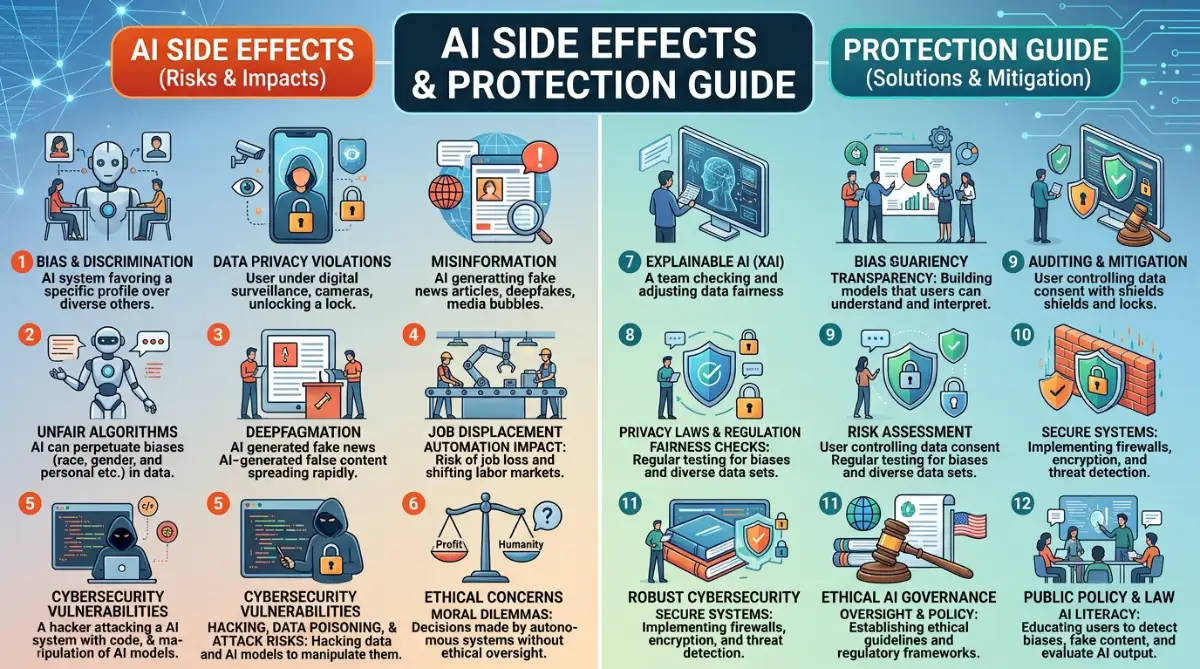
When I first decided to try out chatGPT, I was amazed by how quickly it answered my questions. But immediately after hitting send, a cold wave of panic hit me. Who was reading my prompts, and where was this information being stored? It turns out, without proper data privacy protection, our casual conversations might be used to train massive computer models.
I tried switching things up and using Claude as an alternative, hoping it would feel a bit safer for my daily tasks. Yet, the nagging feeling of being watched never really went away. The automated software dangers are real, and they are hiding behind friendly chat boxes and helpful assistants. We assume these tools are safe just because everyone else is using them.
I even tested an app called gamma to help me put together a quick presentation for a local community project. While it saved me hours of design work, it also asked for my email contacts and calendar access. Why would a presentation maker need to see who I am meeting with on a Tuesday morning? This is exactly how our digital safety habits get compromised without us even noticing.
It completely disrupted my creative flow because I spent more time reading privacy policies than actually working. I eventually logged into googleaistudio just to see if I could figure out how these systems actually process our inputs. What I found was a complex web of data sharing that the average person has no time to understand.
Why Getting Good Directions Matters
Everyone online was suddenly an expert, talking about prompt engineering like it was the only skill that mattered anymore. They made it sound like magic, but they never mentioned the security risks tied to feeding sensitive details into a machine. I didn't even know how to do a simple prompt write without worrying that I was giving away my personal business secrets.
Then came the boom of hyper-realistic image generation tools, which honestly made me question what was real and what was fake. Seeing completely fake photos look exactly like reality brought a new level of fear into my life. If it is this easy to fake a photo, how can we trust anything we see on our screens anymore? We desperately need better machine learning safety protocols to handle this mess.
Taking Back Your Digital Control
The good news is that you do not have to be a tech genius to protect yourself from these smart tech risks. The first step is simply becoming aware of what you are sharing and where you are sharing it. You have the power to say no to unnecessary app permissions and take control of your data today. Let’s look at some highly practical ways to lock down your digital life.
First, always treat your personal information like physical cash. You would not hand your wallet to a stranger on the street, so do not hand your data to a random app. Start reviewing the privacy settings on every tool you use daily. Turn off data training options if the software allows it, so your personal chats do not become public knowledge.
Building strong digital safety habits means being picky about the tools you allow into your life. Before downloading anything new, ask yourself if the convenience is really worth the privacy trade-off. Often, the old-fashioned way of doing things is much safer and less stressful. Keep your private life private by limiting what you type into chat boxes.
A Simple Routine for Better Privacy
You need a clear plan to maintain your data privacy protection without going crazy. Start by creating a separate, anonymous email address specifically for signing up for new tech tools. This keeps your primary inbox clean and safe from potential data leaks. If a service gets hacked, your main accounts remain totally secure.
Never use real names, addresses, or sensitive company data when testing out a new system. If you need help editing a document, change the specific details before pasting it online. These automated software dangers only become a problem if you feed them the exact truth. By blurring the details, you get the help you need while staying completely hidden.
My Personal Pro Tip: I used to dump my entire schedule into random organizing apps just to save a few minutes. One day, I realized I was basically publishing my exact location and daily routine to unknown servers. Now, I use fake names for my appointments and keep my actual addresses offline. It gives me incredible peace of mind knowing my real life is completely invisible to these machines.
Setting Up Safe Boundaries
Want to see exactly how to lock down your privacy settings in under 5 minutes? Watch this simple, step-by-step video guide below to secure your accounts before it's too late!
If you want to keep your mind at ease, you must establish strict digital boundaries. Treat these smart assistants like strangers you just met at a coffee shop. You might ask them for directions, but you would not tell them your bank account number. Maintaining this healthy distance is a core part of machine learning safety.
Think about your daily video editing workflow or your writing process. Do you really need an internet connection to do the heavy lifting? Whenever possible, use software that runs directly on your own computer rather than in the cloud. Offline tools are a massive shield against unexpected smart tech risks.
The Truth About Job Security Fears
One of the biggest side effects no one wants to talk about is the heavy anxiety around job security. I have lost sleep wondering if a fast machine is going to replace the skills I worked years to build. This fear is a very real side effect of the tech boom, and it causes massive amounts of stress. But hiding from the problem will not make it go away.
Instead of panicking, look at how you can adapt your digital safety habits to stay ahead. Learn how to use these systems safely, so you become the person controlling the tool, not the one replaced by it. You do not need to master artificial inteligence overnight; just learn the basics of how it works. Knowledge is your strongest weapon against anxiety.
The reality is, machines still lack human empathy, creativity, and the ability to connect on a personal level. Your unique life experiences and human touch cannot be replicated by any line of code. Focus on building relationships in your industry and doing work that requires genuine human emotion. This is the ultimate data privacy protection for your career.
Myth vs Reality: What You Actually Need to Know
Myth: You must share all your data to get good results from smart tools.
Reality: You can get amazing results by providing generic context without exposing sensitive, personal facts.
Myth: Only huge companies need to worry about automated software dangers.
Reality: Hackers and data brokers target normal people every day because we usually have weaker security habits.
Myth: Turning off data sharing will break the tool completely.
Reality: Most premium services still work perfectly fine even when you opt out of their data training programs.
Why Your Creative Process Matters
When I finally understood how these systems work, my anxiety slowly began to fade away. I realized I could still use things like chatGPT for brainstorming ideas without giving up my privacy. I learned to ask broad, generic questions instead of feeding it my exact personal problems. This simple shift in behavior changed my whole perspective.
The same goes for tools like Claude, which I now use strictly for analyzing public information, never my private notes. By separating my public work from my private thoughts, I regained my sense of security. You have to build a wall between your digital tools and your actual human life. It is the only way to avoid the hidden smart tech risks floating around out there.
Even when I play around with gamma now, I use a burner email and fake contact lists. I get to enjoy the fun features without handing over the keys to my digital house. Protecting your flow means working without fear, and you cannot do that if you are worried about who is watching. You have to take these proactive steps every single time.
Mastering Your Daily Prompts Safely
I decided to look deeper into googleaistudio just to educate myself on how data is processed in the background. Learning how things work under the hood gave me a massive confidence boost. I stopped being afraid of the machine and started treating it like a basic utility, just like electricity. It is powerful, but only dangerous if you stick your finger in the socket.
I started practicing safe prompt engineering by creating templates that use placeholders instead of real names. If I need to draft an email, I use "[Client Name]" and "[Company Target]" in my text. This means my prompt write remains entirely anonymous, and the machine learns absolutely nothing about my real business. It is a tiny habit that provides massive machine learning safety.
When it comes to image generation, the rules are slightly different but just as important. Never upload real photos of your family or children to these platforms to turn them into cartoons or avatars. Once a photo is uploaded, it becomes part of a massive database that you can no longer control. Always use stock photos or generic descriptions to keep your family's identity completely safe.
Building a Long-Term Defense Plan
Staying safe is not a one-time event; it is a continuous habit that you build over time. You need to routinely check the permissions on your phone and computer to see what is running in the background. If an app has not been used in a month, delete it completely from your device. Less clutter means fewer chances for automated software dangers to sneak into your life.
Educate your friends and family about these digital safety habits because your security often depends on them, too. If your friend uploads your phone number to a sketchy app, your privacy is instantly compromised. Have an open conversation with your loved ones about why data privacy protection matters. We all have to look out for each other in this new digital space.
Make a habit of backing up your important files on a physical hard drive that sits on your desk. Cloud storage is incredibly convenient, but a physical backup is your ultimate safety net against online disasters. If an app crashes or a service shuts down, your video editing workflow and personal memories remain perfectly intact. Physical backups provide a level of comfort that the cloud simply cannot match.
Staying Human in a Machine World
It is incredibly easy to feel small and helpless when technology is moving this fast. But you must remember that you are the one in the driver's seat, and these machines work for you. By setting strict boundaries, you keep your mental health intact and your personal life secure. You can enjoy the benefits of new technology without becoming a victim of its side effects.
Take a deep breath and start small today. Change one password, turn off one unnecessary app permission, or set up one burner email account. Every small action you take builds a thicker wall of machine learning safety around your digital identity. You do not need to do everything perfectly right now; you just need to start moving in the right direction.
We are all figuring this out together, step by step. Do not let the fear of smart tech risks stop you from living a productive and happy life. Stay curious, stay cautious, and always prioritize your own peace of mind above any shiny new tool. By building solid, everyday habits, you will navigate this new world safely and confidently.
Next-Level Security Strategies You Can Use Right Now
Once you understand the basic risks, it is time to build a much stronger wall around your digital life. You do not need a degree in computer science to apply these advanced security methods today. They are actually very simple habits that keep your personal information completely invisible to hungry algorithms.
The best defense against automated software dangers is learning how to run tools locally on your own machine. When software operates offline on your computer, your private files never travel through the internet. This completely removes the fear of unknown servers stealing your brilliant ideas or personal documents.
Many creators who work with heavy media files already know the value of keeping things offline. For example, if you are learning about setting up a safe video editing workflow, local storage is your best friend. It keeps your creative projects totally secure and makes your computer run much faster.
Another expert secret is called data masking, and it is a game-changer for everyday users. Data masking simply means replacing real facts with fake, generic details before you type anything online. You get the exact same helpful answers without ever exposing your actual private life.
Think of it like wearing a disguise to a public event. You can still participate in the fun, but nobody actually knows who you are or where you live. This simple habit creates a massive barrier for data privacy protection that hackers simply cannot cross.
Building A "Sandbox" Environment
If you love testing out new digital assistants, you should create what tech experts call a sandbox. A sandbox is just a fancy term for an isolated digital space where you play with new apps. You can set up a completely separate web browser just for experimenting with smart tech tools.
Never log into your main banking, personal email, or social media accounts on this specific browser. If one of these new apps turns out to be malicious, it stays trapped inside that sandbox. It cannot reach your important passwords or read your private search history.
This method gives you total freedom to explore new artificial inteligence software without any anxiety. I use this exact method whenever I want to try a new prompt write technique I saw online. It keeps my main work environment completely clean and totally protected from unexpected background tracking.
For more detailed technical guidance on setting safe boundaries, you can review the National Institute of Standards and Technology advice on machine safety. Reading verified sources helps you understand exactly how big companies protect their own internal systems.
Smart Habits For Creative Projects
If your daily work involves generating graphics or managing social media content, your risks are slightly different. You might use advanced tools to test out creating secure digital portraits for a client project. Always make sure you are not uploading private family photos as a base reference.
When you upload an image to a cloud server, you usually give up your ownership rights immediately. The company can use your face to train their next generation of software without paying you a dime. That is why practicing solid machine learning safety is so important for digital artists and regular users alike.
Instead of real photos, rely heavily on text descriptions to get the visual results you want. You can easily learn blending creative styles online just by choosing the right words. This keeps your personal identity safe while still letting you create amazing, professional-level artwork.
Taking Advantage Of API Privacy
Here is a secret that most regular users never hear about: using an API connection is usually much safer than using a public website. When you use the consumer version of chatGPT or Claude, your data is often used for training by default. But when you use their developer API, the privacy rules are completely different.
Companies usually have strict rules that prevent them from reading or training on API data. You do not have to be a programmer to use this method. There are many simple desktop apps that let you plug in an API key easily.
This simple switch completely upgrades your digital safety habits almost instantly. It costs a few pennies per use, but that tiny cost is worth the massive boost in personal security. You get the smartest answers without giving up your basic human right to privacy.
Regular Audits For Maximum Peace of Mind
Long-term security requires you to do a quick digital audit at least once every month. Take ten minutes on a Sunday morning to check which apps have access to your camera and microphone. You will be shocked at how many useless apps demand access to your exact physical location.
Turn off permissions for anything that does not absolutely need it to function. If a basic calculator app wants to read your contacts, delete it immediately. Protecting your daily flow means actively removing anything that feels slightly suspicious or overly nosy.
To understand how app tracking works behind the scenes, you can read the Electronic Frontier Foundation's guide on hidden trackers. It is an excellent resource that explains how your digital footprint is bought and sold every single day.
By cleaning up your device regularly, you keep your digital environment light, fast, and secure. It removes the silent anxiety that someone is always watching you through your webcam.
The Hidden Traps That Destroy Your Digital Privacy
While trying to fix these problems, many people accidentally step into traps that make their situation much worse. We are moving so fast that we forget to look before we leap. Let's talk about the specific mistakes that can completely ruin your digital security overnight.
The most common mistake I see is the blind trust people place in friendly-looking chat interfaces. Just because an app uses a cute robot logo does not mean it has your best interests at heart. People casually paste their entire medical history or financial plans into these boxes without a second thought.
When you overshare, you are willingly feeding the exact details hackers pray to find. You might think you are just asking for a budget template, but you just handed over your exact salary and home address. This careless behavior completely ruins any data privacy protection you previously set up.
Once that personal data is inside a massive server, you can never truly delete it. You lose total control over who sees it, how it is stored, and who might buy it in the future. It is a nightmare scenario that causes extreme emotional stress once you realize what you have done.
Ignoring The Fine Print
Another massive pitfall is clicking "I Agree" on privacy policies without reading a single word. Yes, reading legal text is boring, but ignoring it is incredibly dangerous today. These companies hide terrible data-stealing clauses in the middle of long paragraphs because they know you will not read them.
If you are using a new tool like gamma for work, you must know what they do with your finished files. Do they own the copyright to the presentation you just made? Can they sell your client list to a third-party advertising agency?
If you refuse to check the rules, you are putting your own professional reputation on the line. Imagine having to explain to a client why their secret project was leaked online. Your digital safety habits directly impact the people who trust you, so take that responsibility seriously.
The Danger Of Fake Applications
Right now, the app stores are completely flooded with fake smart tools designed purely to steal your information. They use popular keywords to trick you into downloading malware directly onto your phone. You might think you are downloading a helpful assistant, but it is actually a hidden tracking virus.
These fake apps often promise unlimited free image generation or instant essay writing just to get your attention. Once installed, they quietly copy your contact list, read your text messages, and track your daily location. This is one of the scariest smart tech risks because it happens completely silently in the background.
To avoid this trap, always verify the developer before you install anything new. Look for official links from trusted websites rather than searching blindly in the app store. You can learn more about verifying digital software safety through the Cybersecurity and Infrastructure Security Agency advice portal.
Trying To Block Everything At Once
Many people get so scared after reading about data leaks that they try to block every single digital service. They delete all their accounts, stop using the internet, and try to go completely off the grid. While this sounds incredibly safe, it is simply not practical for a normal, modern lifestyle.
Living in total fear will ruin your daily productivity and isolate you from your friends and colleagues. You cannot completely avoid tools like googleaistudio if your industry requires you to understand modern tech trends. Extreme paranoia is just as bad for your mental health as ignoring the risks completely.
Instead of burning everything down, aim for a balanced, thoughtful approach to technology. Use the advanced tools that genuinely help your daily video editing workflow or writing process, but use them safely. Moderation and clear boundaries are much better than living in a constant state of panic.
Sharing Unverified Information
One of the biggest side effects of modern tech is the massive spread of completely fake information. When you use automated software to research a topic, it often invents facts that sound highly convincing. If you share these fake facts without checking them, you destroy your own credibility.
This happens a lot when people blindly trust a quick prompt write to generate business emails or reports. They copy the text directly without reading it, sending embarrassing mistakes to important clients. It shows a complete lack of care and professionalism that can seriously harm your career.
Always take an extra five minutes to read and verify whatever a machine produces for you. Treat the software like a very enthusiastic intern who sometimes tells lies to impress you. Verifying facts is a core part of machine learning safety that protects your personal reputation.
Your Personal Blueprint For A Secure Digital Life
Taking control of your digital security does not have to be a scary or exhausting process. It is simply about building a few solid habits that naturally protect your personal space. Once you apply these steps, you will instantly feel a massive weight lift off your shoulders. You will stop worrying about who is watching you and start enjoying your internet experience again.
The truth is, these modern tools are incredibly powerful and can genuinely make your daily life easier. You do not need to run away from artificial inteligence; you just need to set the ground rules. When you control the boundaries, the technology serves you properly without asking for your soul in return.
Start today by auditing just one single app on your mobile phone. Check the permissions, review what data it collects, and delete it if it feels too nosy. Tomorrow, try practicing the data masking technique when you search for something online. These tiny, simple actions stack up quickly to create an unbreakable digital shield around your life.
If you ever feel overwhelmed, remind yourself that you hold the ultimate power over your devices. You can always pull the plug, turn off the internet, and walk away whenever you choose. No software is smarter than a human being who decides to take their privacy seriously.
Protecting your data is really about protecting your peace of mind and your mental health. Stay alert, stay educated, and always keep a healthy distance between your real life and your digital screen.
My Personal Pro Tip: I used to feel terrible anxiety every time an app updated its privacy terms. Now, I keep all my sensitive documents on an encrypted, physical hard drive completely disconnected from the internet. Taking my most valuable data completely offline gave me back my sleep and total peace of mind!
Questions People Always Ask About Smart Tech Safety
Can these smart tools listen to my daily voice conversations?
Most text-based systems cannot listen to you unless you specifically grant microphone access to a mobile app. Always check your phone's privacy settings and disable microphone permissions for any app that does not absolutely need it.
Is it safe to use my real name and email when testing new software?
It is much better to use a dedicated burner email address and a nickname when trying out unknown digital tools. This simple habit keeps your primary inbox safe from spam and protects your real identity from potential data leaks.
Do these companies actually read my private chat logs?
Many companies state in their terms that human reviewers might read your chats to improve their system quality. If you do not want strangers reading your thoughts, you must manually turn off data training in the account settings.
What should I do if I accidentally shared sensitive financial data?
Go into the app settings immediately and look for an option to delete your conversation history permanently. Afterward, monitor your financial accounts closely for any weird activity and change your important passwords just to be completely safe.
Will using offline tools slow down my computer too much?
It depends on how old your computer is, but many modern offline tools are highly optimized for regular laptops. You might have to wait a few extra seconds for a result, but that slight delay is absolutely worth your total privacy.
Disclaimer: This article is for informational and educational purposes only and does not constitute professional cybersecurity or legal advice. Always review the specific terms of service and privacy policies of any software you use. We may earn a small commission from affiliate links included in this content, which helps support our work at no extra cost to you.