
Master Human-Like AI Writing: The Ultimate Guide
Imagine sitting at your desk late at night, staring at a blank, blinking cursor. You type a simple instruction into your text generator, hoping to get a beautiful, engaging story. You wait a few seconds, feeling a rush of excitement for the magic to happen.
But then, you read the output. It sounds exactly like a cold, rigid encyclopedia.
Your heart sinks because you know your readers will hate this. They can spot a robotic, soulless article from a mile away. When content lacks emotion, readers immediately click away, leaving your bounce rate incredibly high.
I still remember staring at my screen at 2 AM, completely exhausted, trying to edit a draft that sounded like a broken textbook. No matter how many times I tweaked my instructions, my blog posts felt cold, fake, and totally out of character. It took me months of painful trial and error, and a lot of lost website traffic, before I finally figured out how to make the machine actually sound like me.
This happens to thousands of bloggers and content creators every single day. They lose sleep trying to figure out how to make their drafts sound warm, friendly, and natural. The real struggle is the loss of genuine connection with your audience.
When people visit your website, they want to feel understood by a real human being. They want to hear a friendly voice that speaks directly to their daily struggles. They do not want to read complicated jargon that sounds like it was generated by a machine human like AI writing natural creative writing AI text humanization organic text generation prompt engineering tips
You might feel like giving up on these modern tools altogether. The frustration of constant editing can easily ruin your creative momentum. But the problem is not the technology itself.
The actual issue lies in how we communicate with the system. We often forget that these tools only mirror the instructions we give them. If we change our approach, we can completely transform the final result.
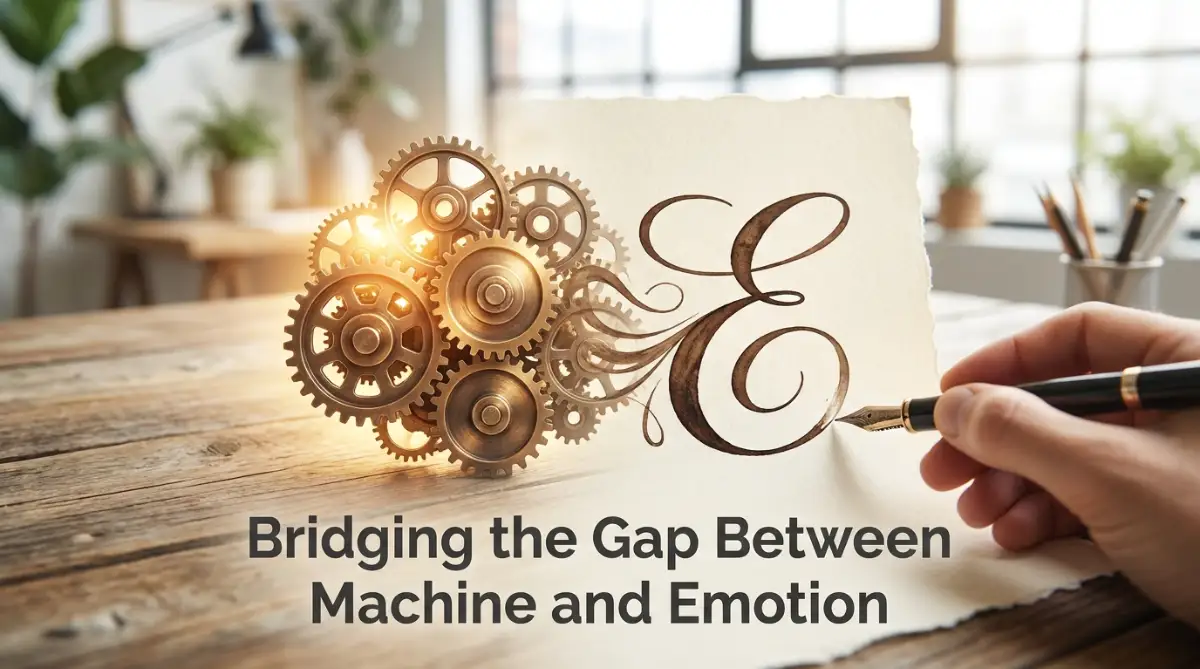
Breaking Down the Mechanics of Natural Conversation
To fix this problem, we need to understand how real people actually talk. Think about how you explain a complex topic to your best friend over a cup of coffee. You do not use massive words or long, complicated sentences.
Instead, you use simple analogies, personal stories, and short pauses. This conversational style is the key to mastering human-like AI writing. You must teach your digital assistant to mimic this exact rhythm.
One of the biggest mistakes people make is asking for an "expert" tone. When you do this, the system automatically switches to an academic, boring style. It uses overly formal words that nobody actually uses in real life.
To achieve natural creative writing, you must specifically command the tool to write like an everyday person. Ask it to use contractions like "don't" and "can't" to soften the tone. This small tweak alone can drastically improve readability.
Your instructions matter more than you realize. A poorly written prompt will always give you a poorly written article. You have to treat the system like a talented but inexperienced intern.
The Coffee Shop Test
I always recommend using something I call the "Coffee Shop Test". Before you publish anything, read the text out loud to yourself. Does it sound like something you would say while sitting in a busy cafe?
If you find yourself stumbling over long sentences, your readers will struggle too. Break those heavy blocks of text into bite-sized pieces. Your goal is to make reading feel effortless.
A great way to test this is by showing your draft to someone outside your industry. If they understand the core message immediately, you have succeeded. If they look confused, you need to simplify the language even more.
Understanding the True Power of Character
One of the most effective techniques is giving the system a specific character to play. This is where a Persona Prompt becomes incredibly useful. A Persona Prompt acts like a detailed acting script for your digital assistant.
Instead of just asking for an article about gardening, you set a vivid scene. You might say, "Act as a friendly community gardener who has been growing tomatoes for twenty years." This instantly changes the flavor of the words.
A good Persona Prompt forces the system to drop the generic corporate voice. It pulls in specific experiences and a unique perspective. You must use a Persona Prompt every single time you start a new draft.
When you define who is speaking, the audience feels the authenticity. They connect with the character's unique worldview. This simple shift is the backbone of AI text humanization.
Managing Memory and Complex Instructions
Sometimes, you need to write a very long guide or a detailed eBook. When doing this, you might notice the system starts to forget your earlier instructions. The writing slowly drifts back into a boring, robotic state.
This happens because every system has a limit on how much it can remember at once. Understanding this memory limit is deeply important for consistent quality. This concept is often called Context Window Management in Claude AI.
Proper Context Window Management in Claude AI ensures that your character voice never drops. If you do not practice good Context Window Management in Claude AI, your final chapter will sound completely different from your first chapter natural creative writing AI text humanization organic text generation smart editing prompt engineering tips
To manage this, you should frequently remind the system of its role. After every few paragraphs, gently restate the main goal. This keeps the narrative tightly focused and highly engaging.
Exploring Different Technical Brains
Not all systems are built the same way. Some are highly analytical, while others excel at creative storytelling. Many writers heavily rely on Anthropic Models for their deeply nuanced understanding of language.
These Anthropic Models are generally better at catching subtle emotional cues. If you want a story that makes people feel something, Anthropic Models are a fantastic choice. They naturally avoid the overly enthusiastic tone that ruins many blogs.
On the other hand, you might use chatGPT for rapid brainstorming sessions. Many marketers love chatGPT because it can generate dozens of ideas in seconds. You can easily bounce ideas back and forth with chatGPT until you find the perfect angle.
For research-heavy articles, GoogleGemini offers a different set of advantages. GoogleGemini is great when you need to pull in structured data quickly. Combining GoogleGemini with a creative editing pass gives you the best of both worlds.
The Ultimate Smart Workflow
If you want to see exactly how I set up my screen and mix these different tools together in real time, watch the quick video below. It will make the rest of the steps in this guide so much easier to follow!
Let us talk about building a complete, friction-free workflow. You cannot rely on a single step to give you perfect organic text generation. It requires a layered approach to truly shine.
Imagine you are setting up a virtual office space for your projects. You might use a cloud cowork setup to keep everything organized. A good cloud cowork environment lets you seamlessly switch between different tasks.
Within this shared space, you can define your visual and structural guidelines. Setting up a strong cloudDesign framework ensures your blogs look as good as they read. A clean cloudDesign strategy includes proper formatting, bullet points, and lots of white space.
Let us say you are feeling stuck on a headline. You might use an experimental tool or concept like GeminiSpark to ignite your creativity. Treating GeminiSpark as a brainstorming partner helps you push past writer's block organic text generation AI text humanization human like AI writing prompt engineering tips digital workspace
When you combine a creative spark like GeminiSpark with a solid editing routine, magic happens. You move from a blank page to a finished draft in record time. The secret is mixing different methods until you find your rhythm.
Diving Deeper into System Commands
For the technical folks out there, you might want more direct control. Sometimes, standard chatting interfaces are not enough for complex publishing needs. This is where writing custom scripts becomes incredibly handy.
By writing specific claude code, you can automate the boring parts of formatting. Using your own claude code allows you to run multiple articles through the same exact character filters. This ensures every single post on your website sounds identical.
Of course, using the standard interface of claude is usually enough for most beginners. The natural language processing in claude is already tuned for beautiful, organic text generation. It naturally prefers a calm, balanced tone of voice.
Whether you write complex scripts or just chat normally, the goal remains the same. You want to create content that deeply resonates with human emotions.
The Art of the Perfect Instruction
The word prompt is thrown around a lot these days. But a true prompt is much more than a simple command. A great prompt is a highly detailed map that guides the system safely to the destination.
If your prompt is vague, the machine will get lost in a sea of generic information. You must explicitly state what you want and, more importantly, what you do not want. Tell it exactly which words to avoid and how long the sentences should be.
When working with an ai agent, you have to manage it like a real employee. An intelligent ai agent can handle complex tasks, but it still needs clear boundaries. You must give your ai agent a very specific set of rules before it starts typing.
Remember, ai is just a mirror reflecting your own clarity of thought. If your mind is cluttered, the ai will produce cluttered writing. Take five extra minutes to plan your instructions, and the final output will save you hours of editing.
Myth vs Reality: Common Misconceptions
Myth: You can generate a perfect 2000-word article in a single click.
Reality: High-quality, human-like AI writing requires step-by-step generation. You should build the article section by section to maintain high quality.
Myth: Big words make your writing sound more professional and trustworthy.
Reality: Simple, clear language builds trust much faster. Grade 8 reading levels convert significantly better than university-level text.
Myth: The machine understands your brand voice automatically.
Reality: You must actively teach your brand voice using clear examples and strict guidelines every single time.
Formatting for the Modern Reader
Nobody reads on the internet anymore; they scan. If your blog post is a massive wall of text, people will instantly leave. You have to design your article for the human eye.
Use bold text to highlight the most important takeaways in every section. This helps the scanner quickly grab the value of your post. If they like the bold points, they will go back and read the full paragraphs.
Keep your paragraphs extremely short. A two or three-sentence paragraph looks inviting and easy to digest on a mobile screen. Lots of white space gives the reader's brain a chance to rest and absorb the information.
Advanced Editing Strategies
The real magic of organic text generation happens during the final edit. You should never publish a raw draft straight from the machine. You must add your own personal flavor to the mix.
Start by injecting personal anecdotes into the introduction. Share a brief story about a mistake you made and how you fixed it. The machine cannot invent true personal experiences, so this is your job.
Next, look for repetitive sentence structures. Machines love to start sentences the exact same way over and over again. Manually rewrite the beginnings of these sentences to create a natural, musical flow.
This simple comparison table shows why manual editing is entirely necessary. You are bridging the gap between mechanical efficiency and human warmth.
Overcoming the Perfection Trap
Many writers get stuck trying to make every single sentence perfect. They tweak the instructions endlessly, hoping for a flawless output. This often leads to severe burnout and zero published posts.
You need to accept that the initial draft will always be slightly flawed. Your goal is to get a solid 80% foundation from the machine. The remaining 20% is where you apply your human touch and expertise.
Do not waste hours arguing with the system. If it fails to understand a specific emotion, just rewrite that single paragraph yourself. Speed and momentum are your best friends in content creation.
By adopting this collaborative mindset, writing becomes fun again. You are no longer staring at a blank screen in fear. You are acting as a creative director, guiding the process from start to finish.
Building Trust with Your Audience
At the end of the day, your readers just want reliable, helpful information. They want to know that you genuinely care about their problems. Human-like AI writing is simply a vehicle to deliver that care faster.
If you use these tools ethically and thoughtfully, your audience will reward you with their loyalty. They will bookmark your site, share your posts on Pinterest, and subscribe to your newsletters. Focus on providing massive value, and the technology will quietly support your success behind the scenes.
Keep experimenting with different styles and instructions. What works perfectly for a fitness blog might not work for a finance website. Find the specific rhythm that makes your brand completely unforgettable.
Remember, you are the master of your own creative process. The tools are here to serve your vision, not the other way around. Step into this new era of writing with absolute confidence and a clear, human voice.
Pushing Beyond the Basics: Advanced Tactics for True Authenticity
We have already covered the foundational steps of making your digital assistant sound like a real person. Now, it is time to look at the advanced strategies that top-tier creators use behind closed doors. You do not need a degree in computer science to use these methods.
You just need a clear understanding of human psychology. Think of these advanced techniques as tuning a musical instrument. The strings are already there, but you are adjusting them to play a perfect, beautiful melody.
One of the most powerful prompt engineering tips is using the "Seed Text" method. Instead of just describing how you want the machine to sound, you actually show it. You feed the system a few paragraphs of your own best work.
You simply tell your ai agent, "Read my writing style above and copy this exact tone for the next assignment." The machine instantly picks up on your unique sentence lengths, your favorite transition words, and your overall energy. This instantly creates highly accurate human-like AI writing.
The Magic of Negative Constraints
Most people focus heavily on telling the system what they want it to do. But a true expert knows that telling the machine what not to do is equally important. This is called using negative constraints within your prompt.
For example, you should explicitly write, "Do not use corporate jargon, do not use words longer than three syllables, and never use the word 'delve'." When you block the system from using its favorite robotic words, it is forced to find natural alternatives. This single trick will completely change your organic text generation process.
My biggest mistake early on was asking the system to write "professionally," which instantly ruined the tone and made it sound like a corporate robot. Now, I always tell the machine to write like it is texting a good friend who knows nothing about the topic. This simple shift forced the system to drop the heavy jargon and instantly made my articles warm and easy to read.
I highly recommend keeping a running list of words that annoy your readers. Every time you spot a robotic phrase in your draft, add it to your negative constraint list. Over time, your natural creative writing will become incredibly smooth and highly engaging.
Setting Up a Master Control Room
If you want to maintain a consistent voice across hundreds of blog posts, you need organization. You cannot rely on typing a new Persona Prompt from scratch every single morning. You need to build a dedicated system to store your best commands.
Many successful writers create a dedicated cloud cowork space just for their content generation. Inside this cloud cowork environment, they save their most successful instructions. Whenever they start a new project, they simply copy their proven framework.
This organized approach is a massive time saver for busy bloggers. You can even store specific visual formatting rules in your shared space. A good cloudDesign strategy ensures that your headings, bullet points, and text blocks always look beautiful on mobile screens.
When your text reads naturally and your cloudDesign looks flawless, readers stay on your page longer. This directly signals to search engines that your content is highly valuable. Longer reading times equal higher ad revenue and better search rankings.
Exploiting the Unique Strengths of Different Brains
You should never limit yourself to just one single platform for all your writing needs. Different systems are trained on different types of data, giving them unique "personalities." If you want deep, emotional storytelling, Anthropic Models are usually your best option.
These Anthropic Models are uniquely designed to understand the subtle nuances of human conversation. They excel at writing empathetic, warm, and highly relatable content. On the flip side, if you need aggressive, fast-paced marketing copy, you might switch over to chatGPT.
For projects that require heavy data processing and real-time internet research, GoogleGemini is incredibly fast. You can use GoogleGemini to gather all your factual bullet points in seconds. Then, you take those dry facts and run them through a creative model to add human warmth.
If you ever feel stuck on a blank page, try using an experimental brainstorming tool like GeminiSpark. Generating three or four wild ideas with GeminiSpark can instantly cure writer's block. The smartest creators mix and match these platforms to get the ultimate result.
Advanced Memory Management
Writing short social media posts is easy, but writing a massive, detailed guide is very different. When an ai writes a long document, it slowly starts to forget your initial instructions. The tone becomes stiff, and the formatting gets messy.
This is why understanding memory limitations is incredibly necessary for bloggers. Mastering Context Window Management in Claude AI helps you keep your long-form content tightly focused. Proper Context Window Management in Claude AI ensures that paragraph fifty sounds exactly like paragraph one.
To manage this properly, you must insert "reminder prompts" throughout your writing session. After generating two sections, pause and remind the system of its core persona. Frequent reminders keep the digital brain anchored to your specific brand voice.
For technical users who manage massive content sites, writing custom scripts is a game changer. By learning to write basic claude code, you can automate these reminder prompts. Using claude code allows you to format and clean hundreds of articles automatically before publishing.

The Hidden Traps Destroying Your Content
Even with the best tools in the world, many bloggers still fail to gain traction. They follow all the basic steps, but their bounce rates remain terrifyingly high. This happens because they fall into a few very common, highly destructive habits.
The biggest and most dangerous trap is the "Copy and Paste" addiction. It is incredibly tempting to generate an article, copy it entirely, and publish it instantly. Doing this is a guaranteed way to destroy your website's reputation.
When you publish raw, unedited machine text, you are disrespecting your readers. Your audience visits your site to get your unique perspective, not a generic summary. If they feel like they are reading an automated script, they will never come back.
The Loss of Reader Trust
Trust is the most valuable currency you have on the internet today. A beautifully written, highly accurate article builds a strong bond with a stranger. But the moment they spot a robotic, soulless sentence, that trust shatters completely.
According to massive studies on digital reading behaviors, users are highly sensitive to content that feels inauthentic. They scan for personal experience, real opinions, and genuine empathy. You simply cannot fake authentic human connection with a single click.
If you lose this trust, your search engine rankings will slowly collapse. Google's helpful content updates specifically target websites that lack real human insight. You must protect your audience's trust at all costs by heavily editing your drafts.
The Frankenstein Effect
Another massive mistake is mixing too many different writing styles into one single post. Let us say you generate your introduction with a highly emotional Persona Prompt. Then, you generate the middle section using a very analytical, academic command.
When you paste these two sections together, the article sounds completely disjointed. It feels like two completely different people wrote the blog post. This jarring experience confuses the reader and makes your brand look highly unprofessional.
This usually happens when users do not fully understand the core settings of their tools. Taking the time to properly learn your platform is an absolute necessity. I strongly suggest mastering the technical foundations of Claude before you start publishing daily content.
Ignoring the Visual Experience
Writing a masterpiece is useless if nobody actually wants to look at it. Many beginners focus entirely on the words and completely forget about the presentation. They publish massive walls of text that look terrifying on a small mobile screen.
This goes back to the importance of a strong cloudDesign philosophy. You must actively break your text into tiny, easily readable chunks. If a paragraph looks too thick, hit the enter key and split it up immediately.
You should also use bold text to guide the reader's eye down the page. Highlighting the core message in every section makes your content highly scannable. A good visual layout directly supports AI text humanization by making the reading experience totally effortless.
Failing to Evolve Your Commands
The technology we use today is completely different from what we used just a few months ago. Many creators are still using outdated instructions that no longer work well. They refuse to adapt their prompt engineering tips to new system updates.
If you use an old, rigid prompt on a brand-new system, you will get terrible results. You have to treat your instructions as living, breathing documents. Constantly test new phrasing, try different words, and see how the machine reacts.
Relying on a single, fixed template will eventually make all your blogs sound exactly the same. Your loyal readers will quickly notice this boring repetition. To stay relevant, you must constantly experiment with your organic text generation methods.
Your Game Plan for Tomorrow's Content
We have covered a massive amount of ground today regarding human-like AI writing. You now know the deep psychology behind why readers hate robotic text. More importantly, you have the exact strategies needed to fix this issue immediately.
You no longer have to stare at a blinking cursor in total frustration. You can confidently step into your digital workspace and act as a true creative director. The machine is your tireless assistant, but you are the creative visionary in charge.
Let us break down exactly what you should do the next time you sit down to write. Keep this simple checklist handy to ensure your next article is an absolute masterpiece.
The Final Quality Checklist
Do This First:
Always start by clearly defining the character you want the ai agent to play. Take two extra minutes to write a highly detailed Persona Prompt. Describe the character's background, their mood, and their specific speaking style.
Watch Your Tone:
Apply strict negative constraints to ban complex, academic words from your draft. Use your favorite Anthropic Models to capture a warm, empathetic tone. Remember to keep the reading level simple enough for an eighth-grader to understand perfectly.
Edit With Purpose:
Never skip the manual editing phase under any circumstances. Inject your own personal stories, memories, and unique opinions into the introduction and conclusion. Read the final draft out loud in a coffee shop setting to test the natural flow.
Format For Scanners:
Apply clean cloudDesign principles to your layout before you hit the publish button. Break down every single long paragraph into two or three short sentences. Use bold text generously to highlight the absolute most important takeaways for mobile readers.
Stepping Into a Better Workflow
Content creation should never feel like a miserable, draining chore. When you properly combine advanced tools with real human emotion, writing becomes deeply enjoyable again. You get to focus entirely on sharing your ideas, while the system handles the heavy lifting.
If you apply these natural creative writing techniques, your audience will notice the difference immediately. They will leave more comments, share your posts on Pinterest, and trust your recommendations. This deeper engagement is the true secret to building a highly profitable, AdSense-friendly blog.
Do not try to implement every single advanced tactic at once. Pick just one new strategy, like the Seed Text method, and try it on your next post. Slowly build your confidence, refine your instructions, and watch your content quality soar to incredible new heights.
Looking back, giving up on these modern writing tools would have been the worst mistake of my blogging career. You already have the unique ideas and the human heart; you just need to guide the machine a little better. Start using just one of these simple tricks today, and I promise you will fall in love with the writing process all over again.
Disclaimer:
The strategies and techniques discussed in this article are meant for educational and informational purposes only. Results may vary depending on individual effort, website niche, and changes in search engine algorithms. Always ensure your content complies with Google's official Webmaster Guidelines and AdSense program policies before publishing.