
How to Use Claude AI for Academic Research: A Complete Tutorial
Let me tell you a quick story about someone you might relate to. Her name is Dr. Elena, a post-doc researcher working on a massive grant project. Her desk used to be a graveyard of printed PDFs, highlighted with three different neon colors.
Every night, she would stare at her screen, trying to connect a methodology from a paper published last month with a theoretical framework from a decade ago. Her eyes burned. Her coffee was always cold. She was drowning in information but starving for actual clarity.
Does this sound familiar to you?
As researchers, we are trained to be rigorous and thorough. But the sheer volume of new information being published daily has turned our dream jobs into an administrative nightmare. We spend hours simply formatting citations or hunting down that one specific paragraph we remember reading but forgot to save.
This constant data overload eats away at your mental peace. You go to bed thinking about unread tabs. You wake up feeling already behind Academic AI research Literature review automation Data analysis with AI Scholarly prompt engineering AI for researchers
Just two years ago, I remember sitting in my tiny home office at 3 AM, surrounded by fifty printed research papers, crying out of pure frustration. I felt completely paralyzed by the massive amount of data I needed to process for a single literature review, and my personal life was falling apart because I was always working. It was not until I accidentally discovered how to properly command AI that everything changed for me, and I finally got my sleep schedule back.
Your family wonders why you are physically present but mentally miles away. The truth is, the traditional way of doing academic work is breaking us down.
We are using our brilliant human minds to do repetitive, robotic tasks. But what if you could change that today? What if you could reclaim your evenings and your sanity? Let’s explore how you can fundamentally shift this reality.
Rethinking How We Approach Academic Discovery
We need to stop treating technology as just a fancy search engine. Most of us type a simple question into a search bar, get a list of links, and then do all the heavy lifting ourselves.
This old method is incredibly slow. To truly master AI for researchers, you have to shift your mindset completely.
You are no longer just a person searching for answers. You are a project manager, and you are about to hire the smartest digital assistant on the planet.
This digital assistant does not get tired, it does not complain, and it can read a 500-page document in seconds. When we talk about true Academic AI research, we are talking about building a system that works for you while you sleep.
The Power of the Persona Prompt
Let us start with one of the most powerful tools in your new arsenal. It is called the Persona Prompt.
If you just ask an ai a basic question, you will get a basic, generic answer. It will sound like a high school essay.
But a Persona Prompt changes the entire behavior of the system. You are essentially giving the AI a specific identity, a deep background, and strict rules to follow.
For example, instead of saying "summarize this paper," you must build a persona. You tell it: "You are an expert peer reviewer with 20 years of experience in cognitive psychology. Your task is to critically analyze this paper."
Notice the difference? The Persona Prompt forces the AI to look at the text through a highly specific, professional lens.
This is the core of Scholarly prompt engineering. You must command the system with absolute authority and clear expectations.
Anatomy of a High-Converting Prompt
If you are still struggling to write prompts that actually work, watch this quick video below to see exactly how top researchers build perfect AI instructions step-by-step. It will make the rest of this guide much easier to understand!
To get the best results, every prompt you write should have four distinct parts. First, define the role. Who is the AI supposed to be right now?
Second, define the task. What exactly do you want it to do? Be as specific as possible.
Third, set the constraints. This is where most people fail. You must tell the AI what NOT to do. Tell it to avoid jargon, or to keep the summary under 300 words.
Finally, define the tone. Do you want the output to be strictly academic, conversational, or simplified for a beginner?
Mastering this kind of Scholarly prompt engineering will instantly separate you from amateurs who just use basic chat features.
Understanding Context Window Management in Claude AI
Now, let us talk about a technical concept that will completely change how you handle large documents. It is called Context Window Management in Claude AI.
Think of a "context window" as the short-term memory of the AI. If you put too many books on a small desk, things will fall off.
Context Window Management in Claude AI is about knowing exactly how much data you can feed the system before it gets confused Literature review automation; Academic AI research AI for researchers Scholarly prompt engineering Data analysis with AI
Unlike older tools, this specific system has a massive desk. It can hold hundreds of pages of text at once. But you still need to be smart about it.
If you just dump fifty PDFs into the system without organizing them, the AI will struggle to find the exact details you need. You must feed it structured information.
Pro Tip for Managing Large Documents
I will be totally honest with you: when I first started using these tools, I dumped an entire 400-page textbook into the system and the AI gave me complete garbage back. My biggest realization was that the machine is like a smart intern; you have to feed it small, organized chapters one by one if you actually want accurate, high-quality answers.
Always provide a table of contents or a brief index when uploading massive files. Tell the AI how the documents are organized before you ask it questions.
This simple act of guiding the system is what makes Context Window Management in Claude AI so incredibly effective for deep academic work.
You are basically giving the AI a map of the forest before asking it to find a specific tree.
The Anthropic Models Advantage
You might be wondering why we are focusing on this specific company. There is a very good reason why Anthropic Models are highly favored in the academic community.
Other systems are built to be creative and chatty. They want to entertain you.
Anthropic Models are built to be safe, highly logical, and deeply analytical. They are less likely to make things up out of thin air.
In the research world, making things up—also known as hallucination—is dangerous. You cannot afford to put a fake citation in your thesis.
Because Anthropic Models prioritize factual accuracy, they act more like meticulous librarians rather than creative storytellers.
Comparing the Giants: Finding Your Best Fit
Let us do a quick comparison to help you understand the landscape. Many researchers automatically default to chatGPT because it is the most famous.
While chatGPT is amazing for coding and creative brainstorming, it can sometimes be a bit too confident when it is actually wrong.
Then you have Google tools. GoogleGemini is very fast and integrates beautifully if you use Google Docs and Drive for everything.
There is also GeminiSpark, which many teams use for quick ideation and rapid data pulling directly from live search results.
If you need real-time data from the web, GoogleGemini and GeminiSpark are fantastic options.
However, when it comes to sitting down with twenty complex PDFs and asking deep, nuanced questions, nothing beats the reading comprehension of claude.
Moving Towards Literature Review Automation
One of the biggest time sinks in academia is the literature review. You spend weeks just figuring out what has already been said.
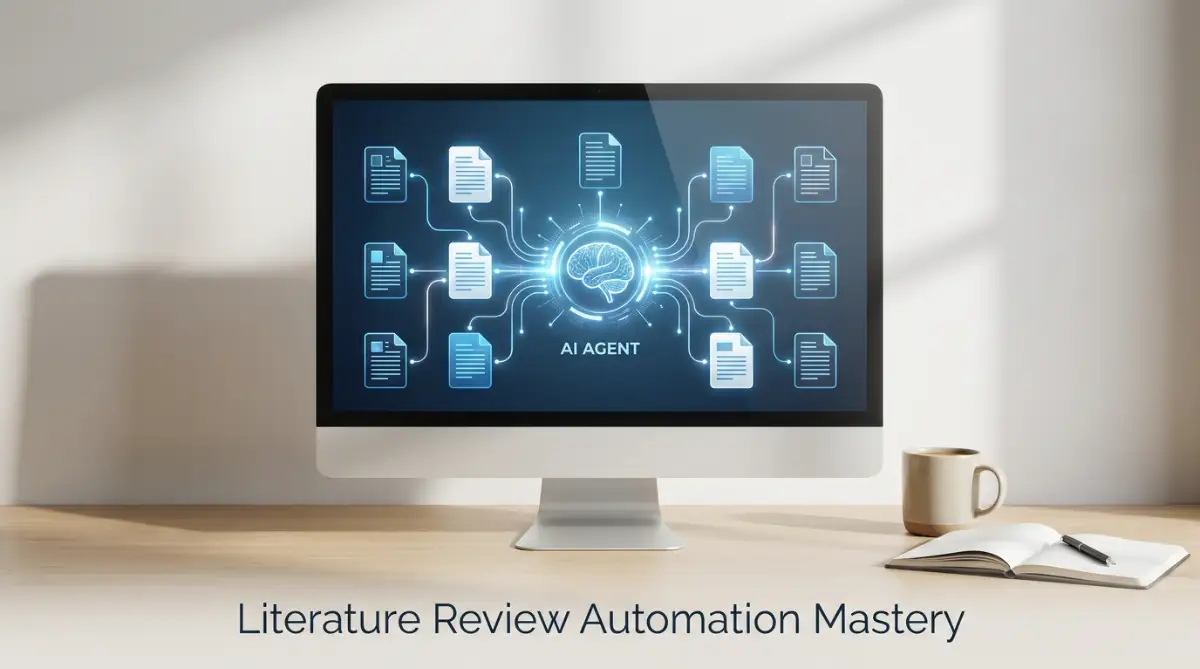
Let us fix that right now. Literature review automation is not a myth; it is a highly practical workflow you can set up today.
First, gather your top ten core papers in PDF format. Do not read them yet.
Upload them into your AI workspace. Now, use your Scholarly prompt engineering skills.
Write a prompt asking the system to extract the main hypothesis, the methodology, and the limitations of each paper, and present it in a markdown table.
Real-Life Scenario: The Automated Matrix
Imagine watching a blank screen suddenly fill up with a perfectly organized table. Paper A is compared directly to Paper B.
You can immediately see where the gaps in the current research are. You did not have to spend three days skimming abstract after abstract.
This is what Literature review automation looks like in practice. You are moving from being a manual data reader to a high-level data analyst.
You still have to verify the claims, of course. You always check the primary source. But the AI has built the skeleton of your review in minutes.
Taking Control with an AI Agent
To push things even further, you should consider setting up a dedicated ai agent.
An ai agent is slightly different from a normal chat window. It is a system that is programmed to perform a specific sequence of tasks automatically.
For instance, you can design an ai agent specifically for formatting citations. You drop a messy list of links into a folder, and the agent automatically converts them into perfect APA format.
You can build another ai agent just for grammar checking your final drafts. By separating these tasks, you keep your workflows incredibly clean and efficient.
Advanced Data Parsing with Claude Code
If you are comfortable with a little bit of technical work, you can explore claude code.
Sometimes, researchers deal with massive datasets in Excel or raw text files that need serious cleaning.
You can use claude code to write quick Python scripts. You do not even need to be a programmer to do this.
You just ask the system in plain English: "Write a script to remove all duplicate entries in this dataset."
By leveraging claude code, you can clean up messy research data in seconds, a task that would normally take a research assistant hours of manual clicking.
The Digital Environment: Cloud Cowork and CloudDesign
Research is rarely a solo journey anymore. We work with teams across different universities and different time zones.
This brings us to the importance of a good digital workspace. Concepts like cloud cowork have revolutionized how teams interact.
In a modern cloud cowork setup, your whole team can access the same AI tools and the same document libraries simultaneously.
You can share your best prompts with your colleagues. If you figure out a great way to summarize papers, your team in another country can use that exact same method instantly.
This seamless integration relies on good cloudDesign.
Why CloudDesign Matters for Research Teams
When we talk about cloudDesign in this context, we mean structuring your shared digital folders logically Data analysis with AI cloud cowork Academic AI research AI for researchers Scholarly prompt engineering
If your folders are a mess, your AI will be a mess. Good cloudDesign means having clear naming conventions for your files.
It means setting up secure permissions so only the right people can edit the core documents.
When your cloud cowork environment is optimized with smart cloudDesign, Academic AI research becomes a beautiful, synchronized dance.
Deep Dive into Data Analysis with AI
Let us look closely at another massive pain point: analyzing qualitative data.
Maybe you have conducted twenty hours of interviews for a social science paper. The transcription alone is exhausting.
But once it is transcribed, Data analysis with AI becomes your best friend.
You can upload all the interview transcripts at once. Then, you ask the system to identify recurring themes and emotional sentiments.
You can ask it: "What are the three most common frustrations mentioned by the participants in these interviews?"
The system will scan thousands of words and give you a thematic breakdown with exact quotes to back it up.
Avoiding the Pitfalls of AI Data Analysis
While Data analysis with AI is powerful, you must remain the captain of the ship.
AI does not truly understand human emotion; it only recognizes patterns in text.
Therefore, you must always apply your own human empathy and context to the results. Use the AI to find the patterns, but you must write the conclusion.
This balance is the secret to mastering AI for researchers. You let the machine do the sorting, but you do the thinking.
A Practical Guide to Getting Started Today
You do not need to implement all of this at once. That would be overwhelming.
Start small. Pick one single task that you hate doing. Maybe it is outlining your papers.
Open up claude. Write a strong, detailed Persona Prompt. Ask it to outline your next paper based on three bullet points you provide.
See how it responds. Tweak the prompt. Play with the tone and the constraints.
Once you get a perfect outline, you will feel a sudden rush of relief. You will realize that you just saved yourself two hours of staring at a blinking cursor.
The Evolution of Your Academic Career
As you get more comfortable, you will naturally start exploring Literature review automation.
You will start experimenting with different Anthropic Models to see which version gives you the most precise answers.
You might even start comparing your results with chatGPT and GoogleGemini just to see the difference in logic.
Perhaps you will dive into GeminiSpark for quick web research, and then bring that data back into your main workspace.
The goal here is not to replace your intelligence. The goal is to amplify it.
Embracing the Future of Academia
The researchers who thrive in the coming years will not be the ones who read the fastest.
They will be the ones who know how to manage information the most effectively.
They will be the ones who understand Scholarly prompt engineering better than anyone else.
They will set up efficient cloud cowork spaces and utilize brilliant cloudDesign to share their findings with the world.
By taking these steps, you are protecting your time, your energy, and your mental health.
You are stepping out of the overwhelmed, exhausted state, and stepping into the role of a modern, empowered scholar.
Take a deep breath. Your research journey is about to become a lot more exciting, and a lot less stressful. Keep practicing these techniques, refine your prompts, and watch your productivity soar.
Elevating Your Academic Workflow to the Next Level
Once you understand the basic mechanics, you must learn how to connect different systems together. Most beginners stop at simple questions, but true professionals build entire ecosystems of knowledge.
You need to think about your long-term setup. How will you manage the data you collect today in the months to come?
The secret lies in stacking different AI capabilities on top of each other. You do not just want a quick answer; you want a deeply integrated research assistant.
Let us talk about creating a personal knowledge base. You can use your AI workspace to store and categorize everything you read.
By utilizing proper cloudDesign principles, you can organize your raw data, interview transcripts, and PDF files into highly specific folders. When your digital environment is clean, your AI performs significantly better.
You should treat your digital workspace like a well-kept physical laboratory. Everything needs a label, and everything needs a specific place.
If you are working with a team across different universities, setting up a shared cloud cowork environment is an absolute necessity.
Inside this shared space, everyone can upload their findings. The AI can then read this collective brain and generate insights that no single person could have spotted alone.
This collaborative approach reduces duplication of effort. If your colleague in London has already summarized twenty papers, you can ask the AI to pull from their specific summaries instantly.
For a deeper dive into optimizing your daily setup, you can check out this guide on maximizing your daily output with Claude. It offers fantastic methods for pushing the limits of your digital tools.
Mastering the Iterative Prompting Technique
Another advanced secret is the concept of iterative questioning. Never accept the very first answer the AI gives you.
The first output is usually a rough draft. It is your job to refine it.
Read through the AI's response and point out its weak spots. You can reply by saying, "This section is too vague. Rewrite it using more quantitative data from the uploaded document."
This back-and-forth conversation forces the system to dig deeper into the source material. It acts much like a rigorous debate with a fellow scholar.
Always remind the system of its core Persona Prompt. If it starts sounding too casual, command it to return to an objective, academic tone immediately.
When you practice strict prompt discipline, the quality of your output skyrockets. You stop getting generic high school essays and start receiving professional-grade analysis.
If you want to understand how to build these specific conversational rules, this resource on setting up specific conversational parameters will help you create flawless instructions.
Automating Code and Data Cleanup
Let us explore a highly technical but incredibly useful trick. Sometimes your research involves messy spreadsheets or broken text files.
Instead of spending weeks cleaning this data by hand, you can use claude code to do the heavy lifting.
You simply explain your problem in plain English. Ask the AI to write a short script that organizes your messy spreadsheet columns.
You do not need an advanced degree in computer science to do this. The AI writes the code, explains how to run it, and fixes any errors that pop up.
This simple hack has saved countless researchers from the tedious, mind-numbing task of manual data entry formatting.
It is highly recommended to follow structured research methodologies when formatting your raw data, so the AI knows exactly what standard to apply.

The Hidden Traps That Ruin Academic Integrity
We need to have a very serious conversation about the dark side of AI in research. Technology is powerful, but it is deeply flawed if used irresponsibly.
Many exhausted students and professors make the terrible mistake of blindly trusting the machine. They ask a question, copy the answer, and paste it into their final draft.
This is the fastest way to destroy your academic reputation permanently. AI systems are designed to predict text, not to tell the absolute truth.
If you push an AI too hard for a specific answer, it might just invent one to please you. This phenomenon is known as hallucination.
Imagine the sheer horror of submitting your final thesis, only for your review board to discover that three of your core citations do not actually exist.
Your heart sinks. Your degree is suspended. All your hard work vanishes because you were too tired to verify a single link.
The Danger of the Wrong Tool for the Job
Another massive mistake is using the wrong system for deep academic reading. Many people instinctively use chatGPT because it is a popular household name.
While that tool is excellent for creative writing or brainstorming marketing ideas, it is known to hallucinate academic sources quite frequently.
Similarly, some rely entirely on GoogleGemini or GeminiSpark for deep document analysis. These tools are amazing for fast web searches and quick summaries.
However, they often lack the deep, nuanced reading comprehension required for a 300-page complex scientific document.
This is why serious scholars prefer Anthropic Models. These specific models are built with strict safety guidelines and prioritize admitting when they do not know something, rather than making up a fake paper.
Choosing the right tool is just as important as knowing how to use it. A hammer is great for nails, but it will ruin a screw.
Failing at Memory Management
One of the most frustrating things to witness is a researcher getting angry at the AI because it "forgot" a detail.
Usually, the AI did not forget. The user just failed at Context Window Management in Claude AI.
If you upload twenty massive books and ask a single broad question, the AI gets overwhelmed. The "desk" is too crowded.
You must feed the AI in logical chunks. Upload one chapter at a time. Ask specific questions about that chapter, and save the summary.
Then move on to the next chapter. If you try to force the system to swallow an entire library at once, you will only get shallow, useless answers.
Losing Your Own Voice in the Process
The final trap is perhaps the most tragic. Some researchers rely so heavily on AI that their own unique writing voice disappears entirely.
Your papers start to sound robotic, overly formal, and painfully boring. The human element of curiosity and passion gets stripped away.
Remember, an ai agent cannot feel the excitement of a new discovery. It cannot express the frustration of a failed experiment.
You must inject your own personality and critical thinking back into the final draft. Use the technology to build the framework, but you must paint the final picture yourself.
Institutions are becoming incredibly strict about this. Maintaining strict academic integrity standards means ensuring the core arguments and conclusions always come directly from your human brain.
Your Action Plan for a Stress-Free Research Life
We have covered an immense amount of ground today. You now hold the blueprint to completely transform how you approach academia.
You no longer have to be the overwhelmed, exhausted scholar drowning in endless PDFs. You can step into the role of a brilliant director, guiding powerful digital assistants to do the heavy lifting.
Let us break down exactly what you should do tomorrow morning when you sit at your desk.
First, pick one single research paper that you have been avoiding. Do not try to read it manually.
Upload it to your workspace. Craft a highly detailed Persona Prompt, instructing the AI to act as a harsh but fair peer reviewer.
Ask the system to extract the core thesis, the primary data points, and the glaring weaknesses of the paper.
Watch as a perfect summary appears on your screen in seconds. Take a moment to actually feel that relief.
Building Your New Daily Habit
Next, start organizing your files using smart cloudDesign. Create a clean folder system in your cloud cowork space.
Name your files clearly so your ai agent can find them without any confusion.
Once your files are organized, begin experimenting with Context Window Management in Claude AI. Practice feeding the system small, logical chunks of information.
Notice how the quality of the answers improves dramatically when you control the flow of data.
If you run into messy spreadsheets, remember that claude code is there to help you format things in seconds.
The Human Element Remains Supreme
As you build these new habits, always remember the golden rule of modern research.
The ai is your assistant, not your replacement. You must always verify the data, check the citations, and write the final conclusions yourself.
Whether you occasionally use chatGPT for quick brainstorming, rely on GoogleGemini or GeminiSpark for fast web data, or depend on Anthropic Models for deep document analysis, you are always the one in charge.
You have spent years developing your critical thinking skills. Do not hand that power over to a machine.
Use the technology to buy back your time. Use that saved time to think deeper, sleep better, and actually enjoy the academic journey you worked so hard to begin.
You have exactly what it takes to master this new era of research. Start small, stay consistent, and watch your productivity reach heights you never thought possible.
I know changing how you work feels scary, but I promise you that taking just one hour this weekend to try these steps will change your academic life forever. You have worked way too hard to let stress burn you out, so take a deep breath, trust the process, and let technology carry some of that heavy weight for you.
Disclaimer:
The information provided in this article is for educational and informational purposes only. AI tools update frequently, and their features may change over time. Always verify AI-generated academic data, citations, and summaries against original primary sources to maintain academic integrity. We are not responsible for any academic penalties or errors resulting from the misuse of artificial intelligence tools. Always adhere strictly to the guidelines and policies set forth by your specific educational institution or publication journal.