
How to Raise a Smart Baby: Simple Science-Backed Daily Habits
You sit in the quiet nursery at midnight, holding your sleeping baby. The room is dark, save for the soft glow of your phone screen.
As you scroll through social media, you see videos of other toddlers matching colors, speaking early, or solving puzzles. A sudden wave of doubt washes over you, making you wonder if you are doing enough.
Every parent wants to give their child the best start in life. The fear that your little one might fall behind can feel heavy and overwhelming.
I remember sitting on my living room floor, staring at my six-month-old daughter while frantically searching online for baby brain games. I felt so guilty seeing other parents share clips of their infants doing advanced puzzles on social media. I realized I was letting worry ruin my precious time with my baby, and that is when I decided to shift my focus to simple, real-world connection.
We worry about milestones, toy choices, and whether we are talking enough. This silent pressure can easily steal the joy of early parenthood.
The truth is that you do not need expensive toys or complex programs to build early childhood intelligence. The most powerful tools for learning are already inside your home and your daily routines.
By making small, natural shifts in how you interact, you can support your child's growth without added stress. Let us look at how simple, science-backed habits can help your baby learn naturally.
The Power of Everyday Conversations
Your baby's brain builds millions of connections every single second during the first few years of life. One of the easiest ways to support baby brain development is simply through talking.
When you talk to your baby, you are not just making noise. You are shaping the physical structure of their growing brain.
The Science of "Serve and Return"
Think of your interactions with your baby like a game of tennis. When your baby babbles or looks at you, they are serving the ball.
When you smile, copy their sound, or talk back, you return the ball. This simple back-and-forth build is the foundation of early childhood intelligence.
It helps your baby feel safe, heard, and ready to learn. You do not need to set aside special time for this.
You can practice this while changing diapers, preparing meals, or walking in the park. Simply describe what you are doing in simple terms.
Keeping Your Language Simple and Rich
Use clear, real words when you talk to your little one. Instead of just saying "look," you can say, "Look at the big yellow leaf falling from the tree."
This exposes your infant to a wide variety of words and sentence structures. Over time, this natural exposure makes a massive difference in their language skills.
Using helpful strategies like smart parenting tips can make these daily conversations feel light and easy. You will notice your baby starting to copy your facial expressions and sounds much earlier.
Building Strong Brains Through Reading
Reading is not just about understanding stories. It is a sensory journey that introduces your baby to the structure of language.
Start Reading from the Very First Month
You do not have to wait until your child can speak to open a book. Even newborn babies benefit from hearing the rhythm of your voice.
Choose board books with high-contrast pictures, like black and white patterns. These images are easy for young eyes to focus on and keep their attention.
As they grow, move to books with touch-and-feel textures. This helps them connect physical touch with visual learning.
How to Read to an Infant
Do not worry about reading every single word on the page. Instead, point to the pictures and describe what you see.
Ask questions, even if your baby cannot answer them yet. For example, you can say, "Do you see the fluffy dog? The dog says woof!"
This active engagement helps build vocabulary and memory. It turns reading from a passive habit into one of the best cognitive activities for infants.
Active Learning vs. Passive Screen Time
Want to see exactly how real-world interaction shapes your baby's brain development compared to screens? Watch this short, helpful video to see simple, powerful ways to boost early learning during your daily routine!
It is tempting to use educational videos to help your child learn. However, research suggests that young brains learn best from real-world human interaction.
Why Human Connection Wins
Babies need a responsive partner to learn language and social patterns. A screen cannot react to your baby's smiles, giggles, or pointing.
When a screen talks, it does not wait for a response. This lacks the rich "serve and return" loop that builds strong neural pathways.
To help your child grow, try focusing on real-world experiences. If you need a moment of peace, explore simple ways to keep your infant calm without relying on digital devices.
For instance, learning 10 Parenting Tips to Calm Down Any Child In a Minute can help you handle fussy moments naturally. This keeps your home environment calm and supportive of healthy brain growth.
Sensory Play and Physical Movement
Movement is directly tied to cognitive growth in early childhood. When your baby moves their body, they are mapping out their physical world.
The Magic of Tummy Time
Tummy time is a simple but highly effective exercise. It strengthens your baby's neck, back, and shoulder muscles.
These physical strengths are necessary for reaching milestones like sitting up, crawling, and walking. A mobile baby is an exploring baby, and exploration is how they learn.
Place interesting toys just out of reach during tummy time. This simple challenge encourages them to think about how to move their body to get what they want.
Simple Hands-On Sensory Play
You do not need to buy expensive sensory kits. You can make your own using safe items around the house.
Let your baby touch different fabric scraps, like soft velvet, rough burlap, and smooth silk. You can also let them play with safe, clean kitchen utensils like wooden spoons and plastic bowls.
These simple sensory experiences are excellent cognitive activities for infants. They help your baby understand concepts like weight, texture, and sound.
Healthy Sleep and Brain Consolidation
A baby's brain does not rest when they are asleep. In fact, sleep is when the brain processes and stores everything learned during the day.
Setting a Predictable Sleep Routine
Consistent sleep routines help your baby's nervous system relax. A calm mind falls asleep faster and stays asleep longer.
Try a simple sequence like a warm bath, a gentle massage, and a short story. This signals to your baby that it is time to rest and recharge.
When babies sleep well, their brains can easily organize new information. This quiet time is essential for healthy baby brain development.
Nutrition for Brain Growth
If your baby has started eating solid foods, focus on nutrient-dense options. Healthy fats are particularly important for early brain structure.
Avocados, mashed salmon, and pureed eggs are wonderful options. These foods provide the building blocks your child needs for rapid cognitive growth.
Combining good nutrition with healthy sleep creates the perfect foundation for learning. It is one of the most effective smart parenting tips you can implement today.
Interactive Games for Daily Fun
You do not need structured lessons to teach your baby. Simple, classic games are packed with learning opportunities that support how to raise a smart baby naturally.
The Hidden Value of Peek-a-Boo
Peek-a-boo is more than just a fun game that makes babies laugh. It teaches them an important cognitive concept called object permanence.
This is the understanding that things still exist even when we cannot see them. When you hide your face and then reveal it, your baby learns to predict outcomes.
This simple prediction exercise builds trust, memory, and cognitive focus. It is a beautiful way to connect while growing their thinking skills.
Sorting and Stacking Activities
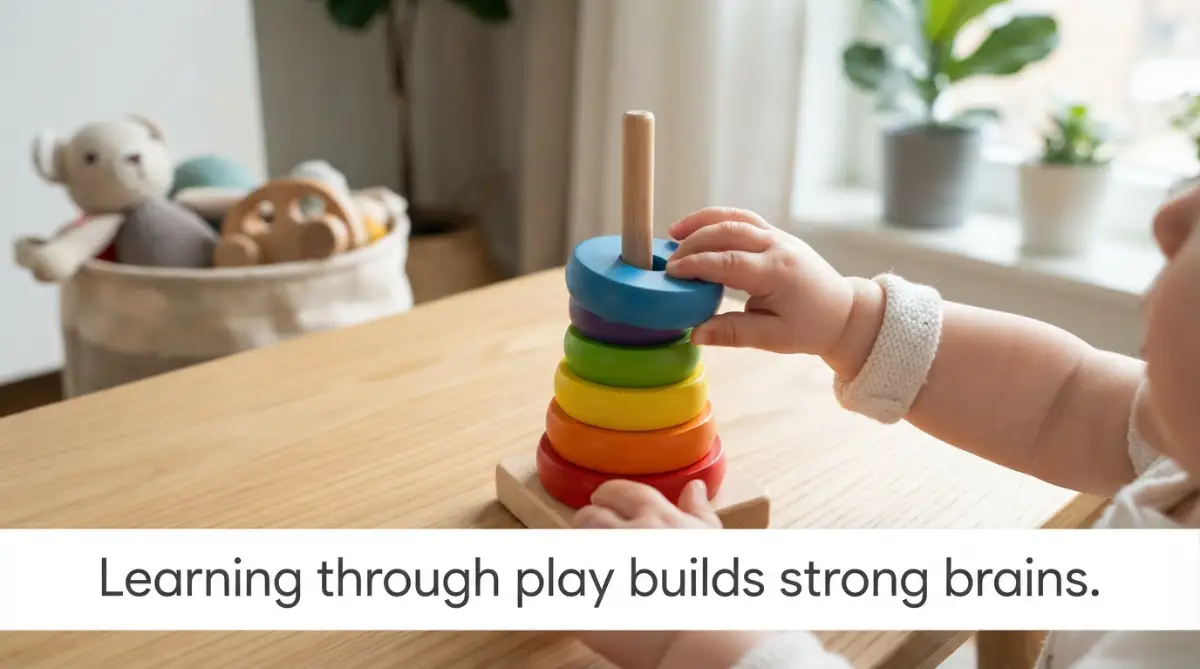
As your baby reaches six to nine months, introduce simple stacking cups or soft blocks. At first, they will simply love knocking down the towers you build.
This teaching moment helps them learn about cause and effect. Eventually, they will try to place one block on top of another.
This simple action requires hand-eye coordination, balance, and spatial awareness. These games are perfect examples of practical cognitive activities for infants.
The Role of Music and Rhythm
Music has a unique way of engaging multiple parts of the brain at the same time. It helps babies learn patterns, math concepts, and language structures.
Singing Lullabies and Simple Songs
Do not worry if you do not think you have a good singing voice. Your baby loves the sound of your voice more than any professional singer.
Singing nursery rhymes with repetitive patterns helps your baby anticipate words. Clapping your hands to the beat adds a physical layer to the learning.
This rhythmic movement helps babies recognize patterns in sounds. This recognition is a key building block for early childhood intelligence.
Making Simple Homemade Instruments
You can easily create simple instruments using clean, recycled bottles. Fill a small plastic bottle with dry rice or beans and seal the lid tightly with tape.
Let your baby shake the bottle to make different sounds. They will quickly learn that their physical actions make a specific sound occur.
This simple play setup helps them explore cause, effect, and physical rhythm safely.
Encouraging Safe Struggles and Problem Solving
It is natural to want to help your baby the moment they look frustrated. However, letting them experience safe, minor struggles is actually beneficial for their cognitive growth.
The Value of Productive Struggle
When your baby is trying to reach a toy that rolled under a chair, do not pick it up for them immediately. Watch them closely first.
Give them a few moments to figure out how to reach it. They might stretch their arm, turn their body, or crawl closer.
If they succeed on their own, they build confidence and puzzle-solving skills. This is a simple but powerful way to support how to raise a smart baby.
Offering Gentle Guidance
If your baby starts to get too upset, you can offer a tiny bit of help instead of doing the whole task. Move the toy just slightly closer so they can complete the reach.
This teaches them that effort leads to success. It keeps them motivated to try new things and solve their own problems in the future.
Creating a Calm and Emotionally Safe Environment
A stressed brain cannot learn effectively. For a baby to explore and learn, they must first feel completely safe and secure.
The Impact of Emotional Security
When you respond quickly and warmly to your baby's cries, you build a strong bond of trust. This trust gives your child the confidence to explore their surroundings.
A baby who knows they are safe is more willing to try new things and take safe risks. This exploration is essential for building early childhood intelligence over time.
Keep your home environment peaceful and predictable. This consistency helps your baby feel in control of their world.
Handling Fussy Moments with Grace
Every baby has difficult days when they cry and refuse to settle. During these moments, your own calm presence is the best tool you have.
Staying calm can be challenging when you are tired. Having a simple plan to soothe your child quickly can make a big difference.
Using practical guides like 10 Parenting Tips to Calm Down Any Child In a Minute can help you steady your own breathing and calm your baby. A calm, relaxed environment is the ideal space for healthy baby brain development.
Myth vs. Reality in Baby Learning
There are many misconceptions about how babies learn best. Let us clear up some of the most common myths so you can focus on what actually works.
- Myth: Expensive educational flashcards are necessary for early intelligence.
- Reality: Real-world experiences, like touching grass or looking at kitchen spoons, offer much richer learning benefits.
- Myth: Babies need constant stimulation to grow their minds.
- Reality: Overstimulation can lead to stress and fatigue. Quiet, unstructured playtime is just as important for brain growth.
- Myth: Educational baby videos can replace human play.
- Reality: Research shows infants learn language and social skills best from living human faces and voices.
By understanding these simple truths, you can save time, money, and energy. Focus on your daily interactions instead of feeling pressured to buy every new learning gadget.
Your Simple Daily Brain-Boost Routine
To make these ideas easy to use, here is a simple example of how to weave them into a normal day. You do not need a special schedule; just add small habits to your existing routine.
Morning Activities: Talk and Explore
- During Diaper Changes: Make eye contact, smile, and talk about your plans for the day.
- During Breakfast: Describe the textures and colors of the food your baby is eating.
- Tummy Time: Place a clean plastic mirror or a colorful toy in front of your baby for five to ten minutes.
Afternoon Activities: Read and Move
- Quiet Time: Sit together on a soft rug and look through a touch-and-feel book.
- Outdoor Walk: Point out natural sounds like birds singing or dogs barking.
- Stacking Play: Spend a few minutes building simple towers with soft blocks and letting your baby knock them down.
Evening Activities: Calm and Rest
- Bath Time: Sing a simple, rhythmic song while gently washing your baby.
- Story Time: Read one short, comforting story in a quiet, dimly lit room.
- Sleep Preparation: Keep your voice low and gentle to help their nervous system wind down.
Using these smart parenting tips helps you build a warm, loving routine that supports how to raise a smart baby without feeling like extra work.
Trusting Your Natural Parenting Instincts
Every baby is unique and grows at their own pace. Avoid comparing your little one's progress with other children you see online.
The small, loving steps you take every day are what truly matter. By talking, reading, playing, and keeping your baby safe, you are giving them the perfect environment to thrive.
Trust yourself and enjoy these simple moments of connection. The love and attention you give your baby today is the absolute best foundation for their future success.
Looking back, those simple, messy moments of floor play and silly kitchen songs made all the difference for my family. Do not wait for the perfect day or the perfect toy to start. Pick up a simple board book, make eye contact, and start talking to your little one today.
Expanding Your Baby's Mind: Deep Learning Strategies
The journey of early learning is not about memorizing facts or forcing early academic skills. Instead, it is about giving your little one the tools to think, adapt, and understand.
By using advanced cognitive play patterns, you can support your infant's mental growth in surprising ways. These methods help build strong pathways in the brain that will benefit them for their entire lives.
The Bilingual Advantage: Early Language Flexibility
One of the most powerful things you can do for your baby is expose them to more than one language. Young minds are built to recognize and sort complex acoustic differences with ease.
When a baby hears two different languages regularly, their brain has to work a little harder to organize the sounds. This extra effort builds a highly flexible neural network, which is key for baby brain development.
You do not need to be fully bilingual to start this process at home. You can play foreign language songs, read simple bilingual books, or invite bilingual friends to speak with your child.
This mental exercise strengthens their ability to switch between tasks quickly as they grow. It also lays an early foundation for problem-solving skills and long-term academic success.
Spatial Intelligence and Structural Play
Helping your baby understand how objects relate to each other in physical space is a great way to build early math skills. You can encourage this by using basic building toys, soft blocks, and household cups.
Let your baby practice putting smaller cups inside larger ones, or stacking wooden blocks as high as they can go. This simple play helps them learn about size, volume, gravity, and balance.
As they try to balance a block, their brain is performing rapid calculations about weight and distance. These basic ideas are actually early lessons in physics and geometry.
Engaging in these hands-on sessions is one of the most natural cognitive activities for infants that you can do at home. It keeps their minds active and teaches them to analyze their physical environment.
Building Executive Function from the Nursery
Executive function is like the air traffic control system of the brain, helping kids manage attention and plan actions. You can start supporting this early by playing simple memory and waiting games with your baby.
For example, hide a small toy under a cup and encourage your baby to find it after a brief pause. This simple delay trains their working memory to hold information over a short period.
Another excellent way to build this skill is by practicing simple baby sign language. When your child learns to use a hand sign for "more" or "please," they are learning to control their physical impulses to communicate.
Using helpful tools and structures can make this process feel smooth and joyful. You can discover some wonderful ideas in this guide on parenting hacks and gadgets to help organize your daily learning play.
Rich Narrative Speaking and Word Mapping
When you talk to your baby, try to avoid using simple, one-word directions. Instead, use rich descriptive sentences that tell a story about what is happening around them.
If you are cooking dinner,