
Fetal Development Week by Week: A Complete Pregnancy Guide
Imagine Sarah sitting on her bathroom floor, staring at two pink lines on a pregnancy test. Her heart races with excitement, but almost instantly, a wave of pure anxiety washes over her. She asks herself, "Is my baby growing normally right now?"
This is a fear almost every expecting mother faces daily. You wake up feeling perfectly fine one morning, and suddenly you panic because your normal pregnancy symptoms have disappeared. You spend hours scrolling through forums, terrifying yourself with horror stories about things going wrong.
I still remember exactly where I was when I found out I was pregnant, and the immediate panic that followed. I spent my entire first trimester terrifying myself over every little cramp, convinced something was wrong because I had no idea what was actually happening inside my body. It wasn't until I sat down and truly learned how my baby was growing week by week that my fear finally turned into pure excitement.
The unknown can steal the absolute joy of expecting a child. When you cannot see what is happening inside your own body, your mind plays tricks on you. Every little cramp or lack of movement sends you spiraling into unnecessary worry.
You do not have to live in this constant state of fear. By understanding exactly how your baby transforms from a tiny group of cells into a fully formed human, you gain incredible peace of mind. We are going to walk through human fetal development week by week so you never have to guess what is happening inside your womb again.
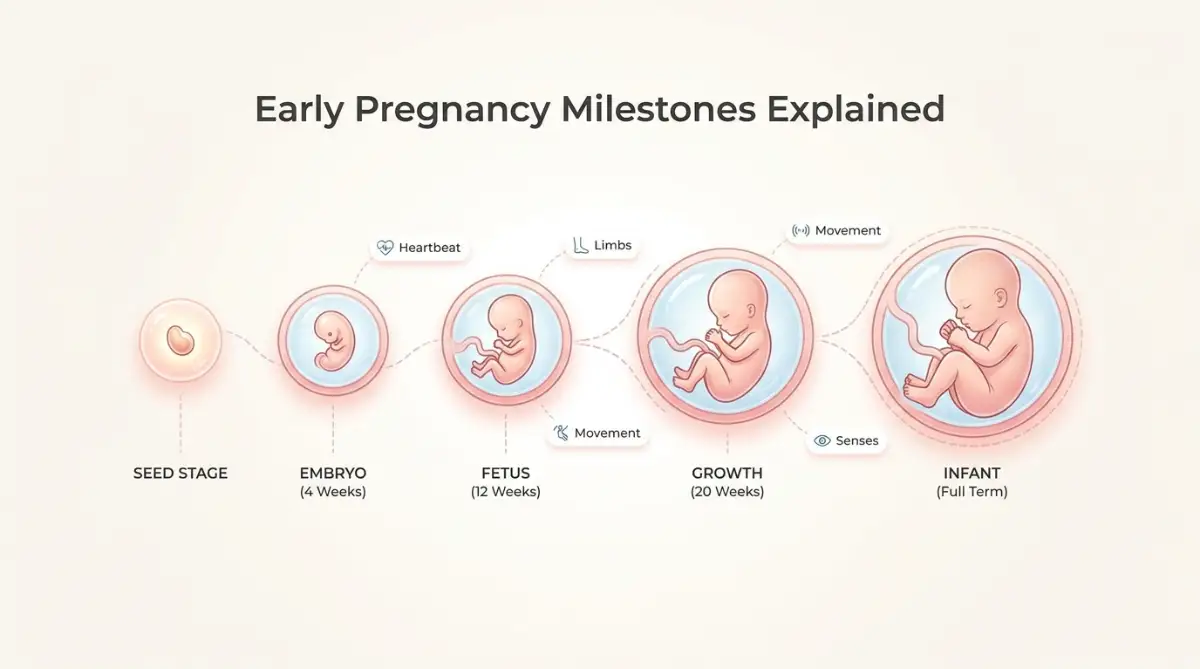
Mapping the Journey: A Detailed Fetal Development Timeline
Understanding your body during this time is an amazing experience. We will break down exactly what happens during the fetal development timeline. You will learn how your body changes, how your baby grows, and what you can do to support this beautiful process.
Let us start from the very beginning. Pregnancy is officially calculated from the first day of your last menstrual period. This means you are technically not even pregnant during the first two weeks of your forty-week journey.
Your body is simply preparing for a potential life. We will explore each phase with clear, scientific, and practical details.
The Foundation: Weeks 1 to 4
During week one and two, your body sheds the old uterine lining and begins building a new, nutrient-rich bed. Women health should be your primary focus right now. Taking a good prenatal vitamin with folic acid is one of the best Women health decisions you can make early on.
In week three, ovulation occurs. A single sperm meets your egg, and fertilization takes place in the fallopian tube. This tiny fertilized egg, now called a zygote, begins rapidly dividing into multiple cells.
By week four, this ball of cells reaches your uterus and implants itself into the lining. At this point, your little one is the size of a poppy seed. The foundation for the brain, spinal cord, and nervous system is already starting to form.
Managing Early Symptoms and Diet
Right around week four, you might notice some light spotting or cramping. This is completely normal and is known as implantation bleeding. You might also start feeling the first waves of morning sickness.
If you feel nauseous, do not panic. Experiencing morning sickness is actually a sign of a healthy, rising hormone level. To fight this, you need good Nausea relief foods.
Keeping plain crackers by your bed is one of the best Nausea relief foods you can eat before even sitting up in the morning. Ginger tea and lemon water are also excellent choices.
A solid First trimester diet will help you manage these early physical challenges. Your First trimester diet does not have to be complicated. Just focus on eating small, frequent meals throughout the day.
The Heartbeat Phase: Weeks 5 to 8
Welcome to week five! This is often when moms first realize they are expecting. The baby is now the size of an apple seed.
One of the most exciting early pregnancy milestones happens right now. Your baby's heart begins to beat, pumping tiny drops of blood through a newly formed circulatory system. These early pregnancy milestones are incredible when you realize how fast this happens.
During week six, the baby’s face starts to take shape. Tiny buds appear that will eventually become arms and legs. You might feel extremely tired during this phase as your body builds the placenta.
Week seven brings brain development at an astonishing rate. New brain cells are generated at a rate of one hundred per minute. Your baby is now the size of a blueberry.
By week eight, fingers and toes are forming. The baby is constantly moving, although you will not feel it for many more weeks. Proper Healthy eating for moms is highly recommended here to support this rapid cellular growth.
Focusing on Healthy eating for moms means adding more protein and dark leafy greens to your plate.
Pro Tip: Conquering Nausea Like a Pro
At this stage, Managing pregnancy nausea becomes a daily battle for many women. The trick to Managing pregnancy nausea is never letting your stomach get completely empty.
Try some simple Prenatal dietary hacks to keep your energy up. One of my favorite Prenatal dietary hacks is freezing grapes and snacking on them slowly when you feel sick.
A structured Pregnancy meal planning routine can save you from reaching for unhealthy snacks. Simple Pregnancy meal planning involves prepping boiled eggs, chopped fruits, and nuts for easy access.
The Turning Point: Weeks 9 to 12
Week nine is a major shift in human fetal development week by week. Your little one is officially no longer an embryo; they are now a fetus. The baby is the size of a cherry and has fully formed earlobes.
In week ten, all vital organs have formed and are starting to function together. The stomach produces digestive juices, and the kidneys make urine. This is a massive step in the baby growth stages.
Week eleven brings interesting physical details. The baby’s bones begin to harden, and tiny tooth buds appear under their gums. Understanding these baby growth stages helps you connect deeply with the life inside you.
By week twelve, you have reached the end of your first trimester! The baby is the size of a plum. Reflexes begin to develop, meaning your baby will open and close their fingers.
Essential Nutrition for the First Trimester
Let us talk about a reliable Pregnancy nutrition guide. Following a balanced Pregnancy nutrition guide ensures your baby gets the exact building blocks needed for bone development.
Excellent Health tips for this stage include drinking plenty of water and avoiding raw meats. Good Health tips also suggest taking daily walks to boost your blood circulation.
A few great Pregnancy health tips involve getting plenty of rest and listening to your body. Sharing these Pregnancy health tips with your partner helps them understand your daily physical struggles.
Stepping into the Golden Era: Weeks 13 to 17
You are now in the second trimester, often called the honeymoon phase of pregnancy. Your energy returns, and the nausea usually fades away. This is a beautiful chapter in the human fetal development week by week journey.
In week thirteen, your baby’s vocal cords form. The intestines move from the umbilical cord into the baby’s abdomen. The baby is about the size of a lemon.
Week fourteen brings unique facial expressions. Your baby can squint, frown, and even suck their thumb. A soft, fine hair called lanugo begins to cover their body to keep them warm.
By week fifteen, the baby is practicing breathing motions by inhaling amniotic fluid. This helps their tiny lungs develop. You might even start showing a little bump by this week.
During week sixteen, the baby’s eyes can perceive light. If you shine a flashlight on your stomach, they might turn away from it. This is one of the most fascinating aspects of pregnancy baby growth.
Week seventeen is when the skeleton changes from flexible cartilage to hard bone. The baby is now the size of a pomegranate. Tracking this pregnancy baby growth makes the experience feel much more real.
The Magic of Movement: Weeks 18 to 22
Week eighteen is incredibly special for many mothers. This is usually when you feel the baby move for the very first time. It feels like little flutters or butterfly wings brushing against your stomach.
In week nineteen, a protective coating called vernix caseosa covers your baby's skin. This thick, white substance prevents their skin from wrinkling in the amniotic fluid. The baby’s sensory development is exploding right now.
By week twenty, you are halfway through your pregnancy! The baby is the size of a banana. They can hear your voice clearly now, so talking and singing to your belly is highly beneficial.
Week twenty-one brings more coordinated movements. You might notice specific patterns in when they sleep and when they are active. Pregnancy Yoga is an amazing way for you to stay flexible and bond with your active baby.
Doing gentle Pregnancy Yoga stretches helps relieve the back pain that often starts around this time.
During week twenty-two, your baby looks like a miniature newborn. Their lips and eyebrows are fully formed. The brain is rapidly developing nerve endings for the sense of touch.
Want to actually see what these amazing growth stages look like inside the womb? Watch this short, fascinating video below to witness the magic of fetal development before we move into the crucial third-trimester changes!
Myth vs. Reality in Mid-Pregnancy
Myth: You should eat for two.
Reality: You only need about 300 extra calories a day during the second trimester. Overeating can lead to unnecessary complications.
Myth: Exercise is dangerous for the baby.
Reality: Gentle movement is amazing for both of you. Check with your doctor, but staying active usually leads to an easier delivery.
Rapid Growth and Survival Prep: Weeks 23 to 27
At week twenty-three, the baby's lungs are rapidly developing. They are producing a substance called surfactant, which will eventually help the lungs inflate with air. The baby is now the size of a grapefruit.
Week twenty-four is a massive milestone. If born early at this stage, the baby has a chance of survival with intensive medical care. The inner ear is fully developed, giving them a sense of balance.
In week twenty-five, the baby is adding serious body fat. This fat will help regulate their body temperature after birth. Their skin begins to smooth out and look less wrinkled.
Week twenty-six brings eye-opening moments, quite literally! Your baby can now open their eyes and blink. They respond strongly to sudden loud noises outside the womb.
By week twenty-seven, you have reached the end of the second trimester. The baby is the size of a cauliflower. They are practicing breathing, swallowing, and sucking every single day.
Following the fetal development timeline closely shows you exactly why your body feels heavier. You are carrying a fully active, rapidly growing tiny human.
The Home Stretch: Weeks 28 to 32
Welcome to the thirdtrimester. The thirdtrimester is all about gaining weight and maturing organs for life outside the womb.
In week twenty-eight, the baby’s brain tissue starts to show deep grooves and folds. This increases the brain tissue's surface area for advanced learning. They can also experience REM sleep, meaning your baby might be dreaming!
Week twenty-nine sees the baby's bones becoming fully developed, though they are still a bit soft. It is essential to keep up your calcium intake during this phase.
By week thirty, your baby is the size of a large cabbage. They are surrounded by about a pint and a half of amniotic fluid. As they grow bigger, that fluid volume will decrease to give them room.
During week thirty-one, the baby starts to process information from all five senses. They can taste the flavors of the food you eat through the amniotic fluid.
Week thirty-two brings massive weight gain for the baby. They are gaining about half a pound a week from this point forward. Most babies will soon start shifting into a head-down position for birth.
Tracking the human fetal development week by week helps you realize why you feel so exhausted right now. Your body is working overtime to build a chubby, healthy infant.
Preparing for the Big Day: Weeks 33 to 37
At week thirty-three, the baby’s immune system is receiving antibodies directly from you. These antibodies will protect them from infections after they are born. The baby is now the size of a pineapple.
Week thirty-four marks the point where a baby’s lungs are usually mature enough to function well on their own. Their fingernails have grown all the way to the tips of their fingers.
In week thirty-five, space is getting very tight inside your uterus. You will likely feel more intense rolls and pushes rather than sharp kicks.
Week thirty-six is a great time to start your laborprep naturalbirth routine. Preparing for a laborprep naturalbirth involves practicing deep breathing exercises and finalizing your hospital bag.
By week thirty-seven, your baby is considered early term. Their organs are ready to function outside the body. You might start researching safe laborinducing methods just in case you go past your due date.
It is important to discuss any laborinducing methods with your healthcare provider before trying them.
The Final Countdown: Weeks 38 to 42
Week thirty-eight means the baby is practically ready to meet you. They are shedding their lanugo hair and the white vernix coating. The baby is the size of a winter melon.
During week thirty-nine, your baby's brain is still developing rapidly. In fact, their brain will continue to grow incredibly fast during their first three years of life.
Week forty is your official due date! However, only a small percentage of women actually deliver exactly on this day. Your cervix is softening and preparing to open.
If you pass week forty, you might look into a safe naturalinduction. A gentle naturalinduction technique includes walking, bouncing on a birth ball, or eating dates.
Many moms ask how to safely inducelaborathome. If you want to inducelaborathome, always consult your doctor first, but acupressure and nipple stimulation are commonly discussed methods.
By week forty-one or forty-two, your baby is considered late term. Your doctor will monitor the baby closely to ensure the placenta is still providing enough nutrients. The amazing journey of human fetal development week by week is finally coming to an end, and your new life as a parent is about to begin.
Creating a Supportive Environment for Growth
Your journey through the baby growth stages is not just about what happens inside. It is heavily influenced by your daily habits.
Proper hydration is something you cannot ignore. Water carries essential nutrients straight to the baby's cells. It also helps prevent common issues like urinary tract infections and severe swelling.
Mental health is equally important. High stress levels can affect your baby's heart rate. Finding time to meditate, read, or listen to calming music directly benefits your baby’s development.