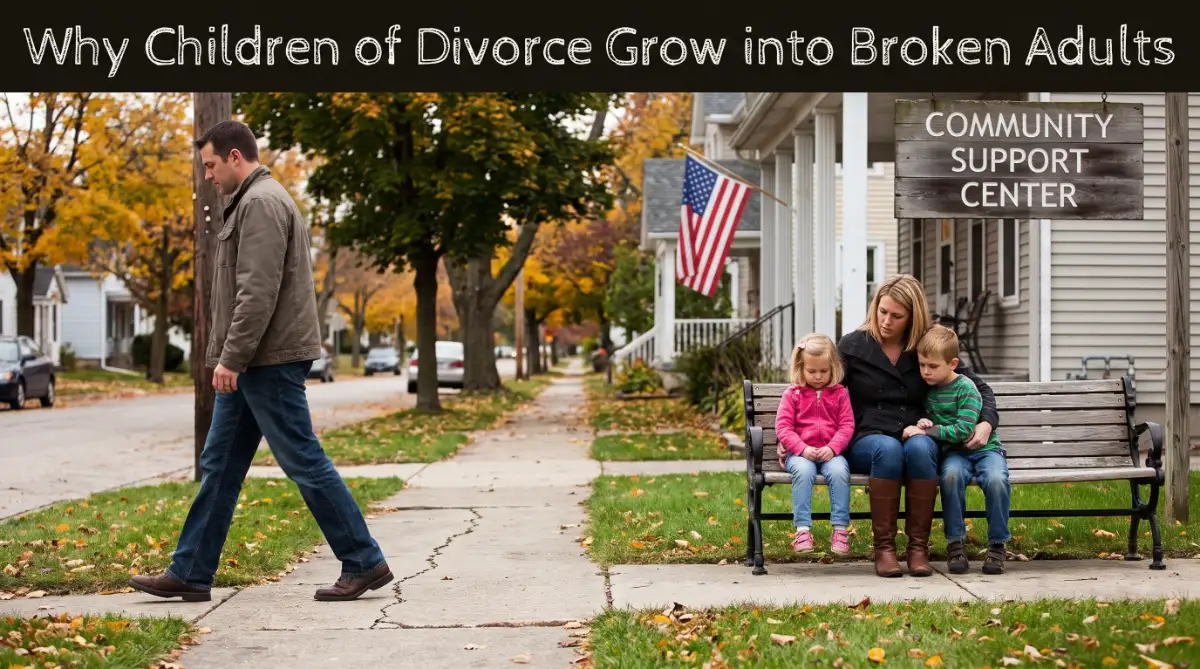
Beyond the Split: How Childhood Divorce Shapes Adult Lives
Imagine waking up every morning with a quiet voice in your head whispering that people will eventually leave you. For many adults who grew up during a messy family separation, this is not just a passing thought. It is their daily reality.
You might find yourself constantly overthinking a simple text message from your partner. When they reply late, your brain immediately assumes they are losing interest or preparing to walk away. This deep-seated fear of abandonment is incredibly exhausting.
I still remember the exact moment my childhood home fell apart, leaving me with a deep, silent fear that everyone I loved would eventually walk away. For years, I carried this heavy invisible baggage into my own adult relationships, constantly waiting for my partner to leave me at the first sign of trouble. If you are reading this and feeling completely exhausted from overthinking every text message or minor argument, please know I have been exactly where you are.
I recently spoke with a woman named Emily, who shared how her parents' separation completely rewired her brain. She told me, "I spend so much energy trying to be perfect, just so my husband will not find a reason to leave me like my dad left my mom." Her story is heartbreakingly common across the United States.
We often pretend everything is fine. We wear bright smiles, perform well at our jobs, and build seemingly normal lives. But behind closed doors, the anxiety of potential rejection eats away at our mental peace.
You might push people away before they can get too close, thinking you are protecting your heart. In reality, you are just recreating the isolation you felt as a child. This survival mechanism worked when you were young, but now it is destroying your chances at true happiness.

Why Childhood Trauma Follows Us Into Adulthood
When a child watches their home split in two, their basic sense of safety shatters. A house is supposed to be a secure foundation, much like the concrete base of a tall building. If that base cracks early on, the entire structure becomes unstable as it grows taller.
Psychologists explain that children naturally blame themselves for their parents' unhappiness. You might have thought, "If I was just a better kid, they would have stayed together." That heavy guilt does not magically disappear when you turn eighteen.
Instead, it transforms into severe people-pleasing habits. You learn to read every shift in a room's mood, desperately trying to keep everyone happy to avoid conflict.
This hyper-awareness burns a massive amount of mental energy. It leaves you feeling drained, hollow, and disconnected from your own authentic needs.
The Myth vs. Reality of Moving On
Let us break down some common misunderstandings about growing up in a broken home. Society often gives us terrible advice on how to handle emotional pain.
As you can see, ignoring the past is the most dangerous thing you can do. You have to look the pain in the eye before you can ask it to leave.
Rewiring the Mind for Healthier Attachments
Your brain is incredibly adaptable, which means you are never stuck in your current emotional state. Just as you learned defensive habits, you can completely unlearn them.
The first step is understanding your specific attachment style. Do you cling tightly to your partner when you feel insecure? Or do you immediately run away and isolate yourself?
Identifying these patterns takes away their hidden power. When you know why you are acting out, you can stop yourself in the middle of a downward spiral.
For example, when you feel the sudden urge to check your partner's phone out of paranoia, pause for ten seconds. Ask yourself, "Is this a real threat, or is my inner child feeling scared right now?"
Recognizing Your Avoidant or Anxious Patterns
Anxious individuals need constant reassurance. They want to hear "I love you" a dozen times a day just to feel safe.
If this sounds like you, you must learn how to self-soothe. Relying entirely on another person for your emotional stability is a recipe for disaster. It places an unfair burden on your relationships.
On the other hand, avoidant individuals shut down during arguments. They build massive emotional walls and refuse to communicate when things get tough.
If you lean toward avoidance, your homework is to stay in the room. Even if you just say, "I am overwhelmed but I am not leaving," you are breaking a toxic cycle.
Setting Boundaries Without Guilt
Growing up in a chaotic environment usually means you never learned what healthy boundaries look like. You might feel incredibly selfish when you finally say "no" to someone.
Understand that boundaries are not punishments for other people. They are simply instruction manuals on how to love and respect you properly.
Start small. Tell a friend you cannot make it to a dinner party because you need a quiet night in. Notice how the world does not end just because you prioritized your own rest.
Expert Insight: Healing begins the moment you realize your parents' failure to love each other was not a reflection of your worth. You have always been enough.
Breaking the Generational Cycle in American Families
The most powerful thing you can do is refuse to pass this trauma down to the next generation. You have the steering wheel now. You get to decide where your family line goes from here.
This requires total honesty with yourself and your future partner. You cannot sweep your triggers under the rug and expect a healthy marriage to bloom.
Have deep conversations about what marriage means to both of you. Discuss how you will handle arguments before the arguments even happen.
Creating a safe space for disagreements changes everything. When you know an argument does not mean an automatic divorce, you can finally relax and express your true feelings.
Communication Strategies That Actually Work
Stop using the words "always" and "never" during arguments. Saying "You never listen to me" puts the other person immediately on the defensive.
Instead, use "I" statements. Try saying, "I feel ignored when I am speaking and you look at your phone." This focuses on your feelings rather than attacking their character.
It is a small shift, but it completely changes the temperature of the room. It turns a potential shouting match into a productive conversation.
Furthermore, practice active listening. This means listening to understand, not just waiting for your turn to speak.
The Role of Shadow Work and Professional Help
Sometimes, reading articles and talking to friends is not enough to fix deep-rooted issues. There is absolutely no shame in seeking professional help.
Therapists act like emotional tour guides. They help you navigate the dark corners of your memory that you are too scared to visit alone.
Shadow work involves exploring the parts of your personality that you hide from the world. It is about accepting your flaws, your anger, and your jealousy without judgment.
When you stop fighting your own shadows, you free up massive amounts of mental energy. You become a whole, integrated person rather than a fractured collection of defensive habits.
Navigating Romantic Relationships When You Expect Them to Fail
One of the biggest hurdles for adults from divided homes is a quiet, persistent pessimism. Deep down, you might believe that all relationships eventually end in tears.
Because you expect failure, you might subconsciously self-sabotage a perfectly good romance. You pick unnecessary fights just to test if the person will actually stay.
This is known as a self-fulfilling prophecy. You push your partner so hard that they finally leave, and then you tell yourself, "See? I knew they would abandon me."
You have to actively challenge this cynical mindset every single day. Look around for examples of happy, long-lasting couples in your community.
Learning to Trust Your Partner Completely
Trust is not something that happens overnight. It is built in tiny, quiet moments over a long period.
It is built when your partner remembers how you take your coffee. It is built when they show up on time, keep their promises, and hold you when you cry.
You must take a leap of faith and allow yourself to be vulnerable. Yes, opening up means you might get hurt again. But keeping your walls up guarantees you will always be lonely.
Choose the risk of getting hurt over the certainty of being alone. That is the only way to experience deep, unconditional love.
Managing Conflict Without Running Away
Conflict is actually a healthy part of any relationship. It shows that two separate individuals with different opinions are trying to merge their lives.
The goal is not to avoid arguments completely. The goal is to learn how to fight fairly and respectfully.
Never call each other names, and never threaten to leave just to win an argument. Those actions cause permanent damage to the foundation of trust.
Instead, take a timeout if emotions are running too hot. Agree to revisit the conversation in an hour when both of your nervous systems have calmed down.
The Financial and Social Echoes of a Split Home
The impact of a family separation is not just emotional; it often bleeds into finances and social circles. Watching your parents struggle with money after a split leaves a lasting mark.
You might develop a severe scarcity mindset. This means you are constantly terrified of going broke, even if you have a great job and a solid savings account.
You might hoard money, refuse to treat yourself, or stay in a miserable job just because it feels secure. Money becomes a source of extreme anxiety rather than a tool for freedom.
Overcoming the Scarcity Mindset
To heal your relationship with money, you have to separate your current reality from your past experiences. You are not a helpless child anymore.
Create a realistic budget that includes room for joy and experiences. Remind yourself daily that you are capable of earning and managing your own wealth.
If you catch yourself panicking over a small expense, take a deep breath. Look at your bank balance and logically prove to your anxious brain that you are safe.
Financial independence gives you the power to make choices based on happiness, not fear. It is a necessary step in becoming a fully autonomous adult.
Finding Your Chosen Family
When your biological family is fractured, holidays and special events can feel incredibly painful. You might feel like a burden bouncing between two different households.
This is why creating a "chosen family" is incredibly important. These are the close friends, mentors, and partners who provide the unconditional support you missed out on.
Blood does not dictate who your real family is. Shared respect, mutual effort, and genuine love are what build a true support system.
Invest your time in friendships that uplift you. Surround yourself with people who celebrate your growth and hold your hand during the messy parts of healing.
Deep-Level Strategies for Rewiring Your Adult Brain
Now that we understand the root of the pain, it is time to look at the long-term cure. Healing from a fractured childhood does not happen overnight. It requires a daily commitment to changing how your brain reacts to stress.
Your nervous system learned to be on high alert when you were just a kid. Whenever you heard your parents arguing, your body flooded with stress hormones. As an adult, you still carry that exact same physical reaction into your own romantic relationships.
To fix this, you must learn how to manually regulate your nervous system. Deep breathing sounds simple, but it physically forces your heart rate to slow down. When your heart rate drops, your brain stops screaming that you are in danger.
I always tell people to practice the "Pause and Reflect" method. When your partner says something that makes you angry, do not speak for at least ten seconds. Those ten seconds give your logical brain enough time to catch up with your emotional brain.
This is a proven method for understanding childhood trauma recovery and moving past deeply ingrained defensive habits. You are teaching your body that a simple disagreement does not mean the end of the world.
Creating Emotional Autonomy in Your Relationship
One of the biggest secrets to a happy marriage is maintaining your own separate identity. When you grow up in an unstable home, you might try to merge your entire life with your partner. You think that if you are exactly like them, they will never leave you.
This extreme dependency actually smothers a relationship. It puts an enormous amount of pressure on your partner to be your sole source of happiness. No human being can carry that much weight for a lifetime.
You need to find joy outside of your romantic partnership. Pick up a hobby that belongs only to you, whether it is painting, running, or reading. Having your own safe space builds deep internal confidence.
When you know you can be happy on your own, you stop clinging to your partner out of fear. You start choosing to be with them out of love, which completely changes the energy of the relationship.
The Art of Arguing Without Destroying Trust
If you struggle to keep your cool when things get heated, watch this short video below to learn a simple trick that completely changed how I handle relationship stress. Once you finish watching, keep reading the rest of the guide below to discover the hidden self-sabotage habits that might be secretly ruining your happiness.
Arguments will happen, and that is actually a good thing. Two different people living under the same roof are bound to clash sometimes. The secret lies in how you handle the conflict.
Instead of shouting, you need to master the art of emotional neutrality. Keep your voice low and your body language open. If you cross your arms and glare, your partner's brain will automatically view you as a threat.
You should focus on structuring your thoughts during a disagreement so that you communicate clearly without attacking the other person. Stick to the current issue and never drag past mistakes into the current fight.
Pro-Level Secret: Set a strict time limit on your arguments. Agree that if a fight goes in circles for more than twenty minutes, you will both walk away. Take a break, drink some water, and come back when you are both calm.
Expert Q&A: Overcoming Daily Triggers
Question: What should I do when my partner needs space, but my anxiety makes me want to follow them?
Answer: You must respect their physical boundaries. Following them from room to room will only push them further away. Sit down, hold a cold glass of water to ground yourself, and repeat an affirmation like, "I am safe, and they will come back."
Question: How do I stop overthinking every little text message?
Answer: Turn off your phone notifications for a few hours. Your brain is addicted to the instant reassurance of a reply. Breaking that habit requires you to sit with the discomfort until the anxiety naturally passes.
Question: Can a highly anxious person ever have a normal, secure relationship?
Answer: Absolutely. It takes consistent effort and honesty. When you communicate your triggers openly, your partner can help you navigate them without feeling blamed.

Hidden Self-Sabotage Habits You Must Stop Ignoring
We all want a peaceful, loving home, yet many adults from broken families secretly destroy their own happiness. We do this without even realizing it. Our subconscious mind prefers familiar pain over unfamiliar peace.
Because chaos feels like home, a calm relationship might actually make you feel bored or suspicious. You might start picking fights just to create a spark of drama. This is a very dangerous game that will eventually exhaust your partner.
My biggest personal mistake was picking silly fights just to test if my partner would stay and fight for me. I finally realized that my sudden need for drama was just my broken inner child begging for reassurance, and unlearning that habit literally saved my relationship. Whenever you feel the sudden urge to push your partner away, pause and honestly tell them what you are actually afraid of instead of starting an argument.
Another terrible mistake is the habit of "testing" your partner's loyalty. You might act cold and distant just to see if they will fight to keep you. If they fail your invisible test, you use it as proof that nobody truly loves you.
This behavior is incredibly toxic. Real love is not a test, and your partner is not a mind reader. If you need affection, you have to be brave enough to ask for it directly.
The Danger of the Silent Treatment
Many children of divorce grew up watching their parents use silence as a weapon. If you use the silent treatment in your adult relationships, you are repeating a cycle of emotional abuse.
Refusing to speak to your partner does not solve the problem. It only creates a deep sense of panic and isolation in the home. You are essentially punishing them by withdrawing your love.
When you shut down, you think you are protecting yourself from getting hurt. In reality, you are slowly killing the intimacy in your relationship. A healthy partnership requires constant, flowing communication, even when it feels uncomfortable.
If you are too overwhelmed to talk, you must communicate that clearly. Simply say, "I am too upset to speak right now, but I will talk to you in an hour." This simple sentence prevents your partner from feeling completely abandoned.
Treating Your Living Room Like a Courtroom
Growing up around custody battles or bitter divorces can severely warp your view of conflict. You might approach every minor disagreement with your spouse as a war you have to win.
Instead of listening to understand, you spend the entire conversation building a defense. Sometimes we approach relationship conflicts like we are preparing for high-stress situations in law school, gathering evidence to prove the other person is entirely at fault.
This mindset destroys empathy. You cannot be on the same team if you are constantly trying to prove your partner wrong.
According to extensive research on predicting relationship success through conflict management, couples who show contempt for each other rarely survive. Rolling your eyes, using sarcasm, or mocking your partner are massive red flags. You must eliminate contempt from your home completely.
Using Trauma as a Permanent Shield
Your childhood trauma explains your behavior, but it does not excuse it. You cannot treat people poorly and then blame your parents' divorce for your actions.
Taking accountability for your own healing is the hardest step. It is much easier to play the victim and expect the world to adjust to your triggers. However, a healthy partner will only tolerate this for so long.
You have to take ownership of your mental health. If you know you have severe abandonment issues, it is your responsibility to manage them. Read books, listen to podcasts, or talk to a professional.
When you use your past as an excuse, you stay stuck in that past forever. You strip yourself of the power to change and grow into a better version of yourself.
Your Roadmap to Reclaiming Your Peace of Mind
You did not choose the family you were born into, and you did not choose to witness a painful divorce. However, you absolutely get to choose how the rest of your story unfolds. You hold the pen now.
Healing is not a straight line. There will be days when you feel incredibly secure, and other days when an old fear suddenly grips your heart. That is completely normal.
Do not beat yourself up when you take a step backward. The goal is progress, not perfection. Every time you catch yourself overreacting and choose to calm down, you are physically rewiring your brain for love.
You have survived 100% of your worst days. That scared little child inside of you is waiting for the adult version of you to step up and provide the safety they always wanted.
Actionable Steps You Can Take Tonight
Do not wait for tomorrow to start changing your life. You can take massive action tonight with a few simple shifts in your routine.
First, write down your deepest fear. Get a piece of paper and write out exactly what terrifies you about your relationship. Seeing your fears on paper takes away their hidden power.
Second, apologize for a recent overreaction. Go to your partner and say, "I realize I overreacted yesterday. I am working on handling my stress better." This shows immense maturity and instantly rebuilds trust.
Third, practice a ten-minute grounding exercise. Sit in a quiet room, close your eyes, and focus purely on your breathing. Consistently practicing mindfulness to reduce daily anxiety trains your brain to stay present instead of worrying about a future breakup.
A Final Note on Self-Forgiveness
You have to forgive yourself for the survival habits you developed. You built those walls to protect a fragile heart in a very confusing world. They served a purpose back then.
But you are safe now. You do not need the heavy armor anymore. It is safe to put the shield down and let people truly see you.
When you finally stop expecting people to leave, you create an environment where they actually want to stay. Your home can become the quiet, peaceful sanctuary you always dreamed of having as a child.
Start believing that you are worthy of a love that stays. Because the truth is, you always have been.
Looking back at my own messy healing journey, I can promise you that doing this hard emotional work is absolutely worth the peace of mind you will gain. You do not have to let your parents' painful history define your own future forever. Take it one small step at a time, and remember that you have the power to build a beautiful, secure life that nobody can take away from you.
Disclaimer:
The information provided in this article is for educational and informational purposes only. It is not intended as a substitute for professional psychological advice, diagnosis, or treatment. Always seek the advice of a qualified mental health provider with any questions you may have regarding a medical condition or emotional trauma.