
The Silent Anxiety of Staring at Your Future Bank Account
You wake up in the middle of the night. Your mind is racing, not about tomorrow's lunch, but about where you will be in ten or twenty years. Will you own a home? Can you afford to retire? The numbers feel too big, the path looks too long, and your current paycheck feels too small.
It is easy to feel stuck when you look at compound interest calculators. They tell you that you need hundreds of thousands of dollars to be safe. But they do not show you how to get there without living on bread and water today. You want a secure future, but you also want to enjoy your life right now.
This constant mental tug-of-war is exhausting. You might find yourself avoiding your bank account altogether. Or maybe you start a savings plan, only to abandon it three weeks later because it feels too restrictive. It is not that you lack discipline. The real issue is that most financial advice feels like it was written for robots, not real people with daily expenses and unpredictable lives.
When you see others online talking about their massive investment portfolios, it hurts. You start to doubt your own choices and worry you are falling behind. This quiet stress creeps into your daily life, making every small purchase feel like a mistake. You deserve to feel safe about your future without losing your peace of mind today.
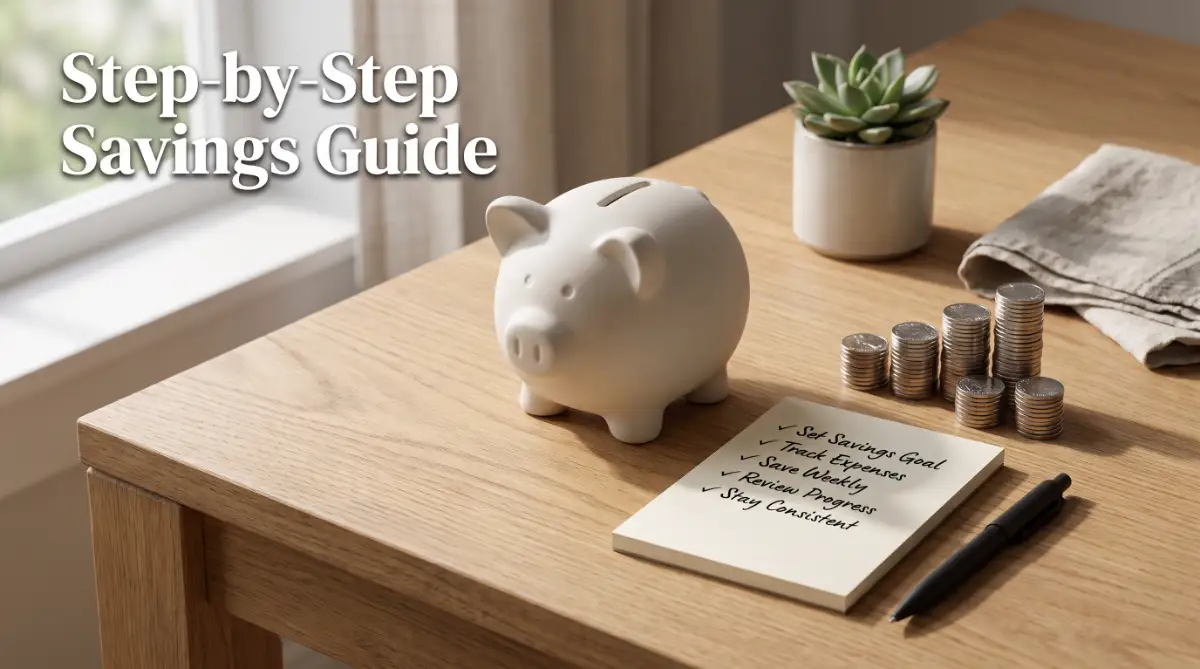
Breaking Down the Big Mountain: Your Simple Roadmap
To get where you want to go, you need a plan that does not drain your energy. We often overestimate what we can do in one year, but we underestimate what we can do in ten years.
Let us look at some practical, realistic ways to build your wealth without losing your sanity.
Large numbers scare our brains. If your goal is to save fifty thousand dollars, your brain registers that as an impossible hill to climb.
Instead of focusing on that giant number, break it down into a tiny, daily action. Focus only on what you can save over the next ninety days.
This simple shift in focus relieves the pressure. You are no longer trying to solve your entire life in one afternoon. You are just managing the next three months.
A micro-habit is an action so small that you cannot say no to it. For example, you could save just five dollars a day.
Five dollars does not feel like a sacrifice. But over time, this small habit builds your financial confidence.
Once you see this small progress, you will naturally want to increase the amount. The key is to start small enough to avoid panic.
Every time you have to decide to save money, you use up your mental energy. By the end of a long workday, your willpower is gone.
This is when we make bad spending decisions. To prevent this, make your savings automatic.
Set up your bank account to move a small amount of money to your savings on your payday. Do this before you have a chance to spend it.
If you never see the money in your main account, you will not miss it. This simple trick uses human psychology to your advantage.
Myth vs Reality: What Actually Works
We hear a lot of bad financial advice that makes us feel guilty. Let us look at the facts.
The Common Myth The Real Reality You must cut out all coffee and small joys to get rich. Small joys keep you happy; focusing on big wins matters more. You need a lot of money to start investing. You can start investing with as little as ten dollars. You need to check your accounts every single day. Checking too often causes stress and bad emotional choices.
We live in a culture that always wants more. If you do not know what you want, you will end up chasing someone else's dream.
Take a quiet moment to write down what security looks like for you. It might not be a mansion or a luxury car.
Maybe "enough" means having a paid-off apartment and the freedom to work part-time. When you define your own success, the urge to overspend disappears.
Before you start thinking about long-term investments, you need a safety net. This is not an emergency fund for big disasters.
This is a small buffer of one thousand dollars. This money is there to handle the small bumps in life, like a flat tire or a broken microwave.
Having this buffer stops you from using your credit card when things go wrong. It gives you a feeling of control. Once you have this buffer, you can start looking further into the future.
Many people spend hours trying to save two dollars on a grocery item. While saving money is good, this kind of extreme frugality can make you feel miserable.
Instead, focus your energy on the big areas of your budget. These are usually housing, transportation, and subscription services you do not use.
- Review your subscriptions: Are you paying for three streaming services you never watch?
- Look at your housing costs: Could you get a roommate or move to a slightly cheaper area?
- Check your insurance rates: Spending one hour on the phone comparing rates can save you hundreds of dollars a year.
By fixing these big areas, you save more money in one hour than you would by skipping coffee for a whole year.
If your money is just sitting in a regular account, it is easy to spend. You need to give every dollar a specific job to do.
Create separate savings accounts for different goals. You can name these accounts based on what they are for:
- The Car Fund: For repairs or a future vehicle purchase.
- The Future Home Fund: For a down payment.
- The Peace of Mind Fund: For emergencies.
When you see your money working toward a specific goal, you feel a sense of purpose. It becomes much harder to spend that money on random things.
We all make mistakes with our money. You might have a week where you spend too much or fail to save.
When this happens, do not beat yourself up. Money management is a skill, and learning any skill takes time.
If you make a mistake, acknowledge it and move on. One bad spending decision will not ruin your future. It is what you do consistently that matters.
You do not need complex spreadsheets to track your money. In fact, complex systems usually make people quit.
Use a simple notebook or a basic app to write down your net worth once a month. Your net worth is simply what you own minus what you owe.
Seeing this number grow, even by a tiny amount each month, is incredibly motivating. It proves that your small efforts are working.
Think about the person you will be in twenty years. What kind of life do you want them to have?
When you save money today, you are not depriving yourself. You are sending a gift to your future self.
This mindset shift makes saving feel like an act of love rather than an act of sacrifice. You are taking care of the older version of you who will rely on the choices you make today.
Continue reading>>
Mastering the Long Game: Advanced Strategies for Lasting Wealth
Now that you have built a basic foundation, it is time to look at the advanced strategies that keep your money growing over the years. Many people can save for a month or two, but the real challenge is keeping the momentum going for ten, fifteen, or thirty years.
To achieve this, you must learn how to manage your growing wealth without letting it take over your daily thoughts.
One of the best ways to manage your money for the long term is to split your funds into three clear buckets. This system helps you visualize where your money goes and keeps you from feeling guilty when you spend.
- The Now Bucket: This is your everyday checking account. It covers your rent, groceries, utility bills, and your occasional weekend dinners.
- The Medium Bucket: This account is for goals that are three to five years away. It is where you save for a down payment on a home, a new car, or a dream vacation.
- The Later Bucket: This is your long-term retirement and investment space. Once money enters this bucket, you do not touch it until you are ready to stop working.
This simple setup stops you from constantly worrying about whether you can afford a purchase. If the money is in your "Now Bucket," you can spend it freely.
Just like how understanding your body's response is key to success when you want to safely start intermittent fasting, managing your money requires a patient and steady approach. You must understand how your accounts work together to keep your financial health strong.
As you progress in your career, your income will likely increase. This is where most people fall into a common trap called lifestyle inflation.
When you get a raise, it is highly tempting to immediately buy a nicer car or rent a bigger apartment. Before you know it, you are still living paycheck to paycheck despite making huge money.
To prevent this, use the fifty-percent rule for raises.
Whenever you get a bump in pay, take half of that increase and automatically send it to your "Later Bucket." You can use the other half to improve your current lifestyle.
This smart strategy allows you to enjoy your hard work today while silently building a massive nest egg for tomorrow.
You do not need to look at your long-term investments every single week. In fact, doing so can cause unnecessary panic when the market goes up and down.
Instead, schedule a financial date with yourself twice a year. Use this time for reviewing your progress and make minor adjustments.
Ask yourself simple questions during this check-in:
- Has my income changed since my last review?
- Are my automated savings amounts still comfortable?
- Do I need to adjust my goals based on new life events?
By keeping these reviews to just twice a year, you keep your stress levels low. You allow your money to grow quietly in the background while you focus on living your life.
For reliable guidelines on tracking your accounts safely, you can refer to the resource planning tools on the Consumer Financial Protection Bureau website. They offer clear, government-backed advice on managing personal accounts.

Hidden Trapdoors: The Subtle Mistakes That Drain Your Progress
Even with a great plan, it is easy to slip up if you are not careful. When people try to build a long-term plan, they often fall into predictable traps that can ruin their hard work.
Many people start their savings journey with too much intensity. They cut out every single fun activity, stop eating out with friends, and monitor every penny.
This extreme lifestyle is rarely sustainable. Within a few months, they feel burnt out, miserable, and ready to quit.
When they finally break, they often go on a massive spending spree that wipes out all their hard work. Avoiding major financial errors is like avoiding the skincare mistakes making your acne breakouts worse; you have to fix the small daily habits to see real, long-term improvement rather than trying overnight miracle cures.
We live in an age of constant news updates and social media hype. You will constantly hear about new investment trends, stock market drops, or sudden economic crashes.
Many people panic when they see the stock market drop. They immediately sell their investments to avoid losing more money.
This is a massive mistake because it locks in your losses. Historically, markets have always recovered over long periods.
According to long-term economic studies published by the National Bureau of Economic Research, emotional selling during market dips is the number one reason individual investors underperform over time.
To protect yourself, turn off the financial news. Your long-term plan should be strong enough to survive temporary market drops without your intervention.
While having a savings account is great for emergencies, keeping all your long-term wealth in cash is a silent mistake. Inflation slowly eats away at the value of your cash every single year.
If your money is not growing faster than the rate of inflation, you are actually losing purchasing power.
You need to put your long-term savings into assets that grow over time, such as low-cost index funds or retirement accounts. Building this strong financial shield protects your bank account, just like how whole foods are your liver's best natural defense against harmful toxins. It keeps your financial core healthy and growing.
Your life is not a static picture. You will change jobs, move to new cities, get married, or start a family.
A financial plan created five years ago might not fit your current reality. One major mistake is forgetting to adjust your savings goals to match your changing life.
Make sure your plan is flexible. It should be a living document that grows and changes alongside you.
Your Immediate Action Plan: Steps to Take Tomorrow
You do not have to wait to start your journey. Here is a simple, stress-free action plan you can complete in less than thirty minutes tomorrow to get moving.
To make sure your progress stays smooth and steady, adding systemized checks to your savings process ensures a steady flow, similar to how fiber can transform your daily digestion for smoother daily health. This daily consistency keeps you moving forward without any sudden blocks.
Open your banking app and look at your transactions from the past month. Find any recurring subscription services that you do not actively use or enjoy.
Cancel at least one of them immediately. Even saving fifteen dollars a month adds up over time, and it takes zero effort after the initial cancellation.
Do not worry about saving hundreds of dollars right away. Set up an automatic transfer of just ten dollars a week to your savings account.
See how your budget feels after a month. If you do not notice the missing money, increase it to fifteen or twenty dollars.
Get a small piece of paper and write down your three most important financial dreams. Keep this paper inside your wallet or paste it on your desk.
Seeing these goals regularly acts as a gentle reminder. It makes you think twice before spending money on things that do not bring you real happiness.
Your Journey to Financial Peace of Mind
Building a stress-free financial future is not about becoming a math expert. It is about understanding human behavior and setting up systems that work with your natural habits.
You do not need to have everything figured out today. The most important step is simply starting, no matter how small that first step might feel.
By focusing on small habits, automating your decisions, and being kind to yourself, you can build a secure future. You can sleep peacefully at night knowing that your money is working hard for you in the background.
Take that first small step tomorrow. Your future self will look back and thank you for the quiet, steady steps you started taking today.
Professional Disclaimer:
Disclaimer: The information provided in this article is for educational and informational purposes only. It should not be taken as professional financial, investment, or legal advice. Please consult with a certified financial planner or professional adviser before making any major financial decisions.


