Stop Senior Dog Barking Quickly (Expert Guide)
It was 3:00 AM on a Tuesday when the barking started again. Not a sharp, warning bark, but a hollow, confused sound echoing through the dark house. I sat up in bed, rubbing my exhausted eyes, feeling a heavy mix of frustration and deep sadness.
I remember sitting on the cold hardwood floor a few years ago, holding my 14-year-old mixed breed, Buster, while he barked at the refrigerator. I felt like a complete failure because nothing I did seemed to calm him down. That feeling of helpless exhaustion is exactly why I spent months testing every gentle method I could find to help him sleep again.
My sweet older dog, who used to sleep quietly through the night, was standing in the corner of the living room, barking at an empty wall. You might be reading this right now with the exact same heavy heart, nursing a cold cup of coffee after another sleepless night.
Living with a senior dog who barks constantly takes a huge emotional toll on a family. You love your furry best friend more than words can say. But the non-stop noise creates incredible tension in the house.
Neighbors start to complain, dropping passive-aggressive notes in your mailbox. Your own patience runs dangerously thin, and then the guilt washes over you because you know your dog isn't trying to be bad.
They are confused, possibly in pain, and asking for help in the only language they know. The constant sleep deprivation makes it hard to focus at work and drains your daily energy.
You find yourself crying out of sheer exhaustion, wondering where your quiet, predictable companion went. It feels like you are losing them slowly, one confused bark at a time.
But I want you to take a deep breath. You are not alone in this struggle, and your dog's situation is not hopeless. We can help them find their peace again, and by doing so, we can bring the quiet back to your home.
Decoding the Noise: What Is Really Going On?
Before we can stop the barking, we need to understand what is triggering it. Older dogs do not suddenly become noisy just to annoy us. Their bodies and minds are changing rapidly.
Think about how a human feels when they start losing their hearing or eyesight. The world becomes a much scarier, unpredictable place. The same thing happens to our dogs.
When their senses fade, a simple shadow on the wall might look like a dangerous intruder. A normal house creak that they used to ignore might suddenly sound terrifying. They bark because they feel vulnerable and want to protect themselves.
Expert Insight: Never punish a senior dog for barking. Correction methods that worked when they were a puppy will only cause extreme panic now. We must approach this with pure empathy.
The Hidden Aches and Silent Pains
Another massive trigger for vocalization in older pets is physical discomfort. Joint pain, arthritis, or dental issues can cause sudden bursts of barking.
Imagine having a terrible toothache that you cannot explain to anyone. You would probably cry out in frustration, too. Dogs hide pain incredibly well, but eventually, it boils over into vocal complaints.
If your dog yelps or barks when they change positions, pain is likely the culprit. You must rule this out first by observing their movements closely.
Understanding Canine Dementia
Sometimes the hardest truth to face is cognitive decline. Canine Cognitive Dysfunction (CCD), often called dog dementia, is very common.
Dogs with CCD often forget where they are, even in their own homes. They get stuck behind furniture, forget their toilet training, and bark endlessly at nothing. Their internal clock gets completely mixed up.
They sleep all day and pace the floors all night. This pacing is almost always accompanied by a repetitive, rhythmic bark.
If you are still unsure if your dog is just getting older or showing actual signs of dog dementia, watch this quick video below for clear, real-life examples. Once you figure out exactly what your dog is going through, keep reading to find the gentle steps you can use to calm them down tonight.
Normal Aging vs. Canine Dementia
To help you understand what you are dealing with, look at this simple comparison. It will guide your next steps.
Immediate Relief: Actionable Steps to Quiet the Barking
Now that we know the "why," let us move on to the "how." You need practical, gentle methods to quiet your dog right now. These steps are designed to soothe their anxious nervous system quickly.
Step 1: Break the Cycle with Calming Touch
When your senior dog starts a barking fit, yelling "quiet" will only make them more anxious. They might even think you are barking along with them. Instead, you need to use a physical, calming interruption.
Walk over to your dog slowly so you do not startle them. Gently place your hand on their chest or the side of their shoulder. Use a slow, deep massage motion.
Speak in a very low, slow, and soothing whisper. Say things like, "It is okay, I am here." This physical contact helps ground them if they are confused or lost in a dementia episode.
Sometimes, just guiding them gently by the collar back to their bed is enough to break the trance. Do this as many times as needed without showing anger.
Step 2: Mask the Scary Sounds
If your dog is losing their hearing, they might only hear certain high-pitched or loud noises. This selective hearing makes everyday sounds very alarming.
You can fix this easily by introducing continuous background noise. White noise machines are incredible tools for senior dogs.
Place a white noise machine near their sleeping area. The constant, soft static blocks out the sudden noises from the street or the house settling.
I learned this the hard way after spending a fortune on expensive calming treats that did not work for my dog at all. I finally just plugged in a cheap box fan from my garage, and to my shock, he slept through the entire night without a single peep. Sometimes the simplest, cheapest fixes are the ones that actually save your sanity.
If you do not have a white noise machine, a simple box fan works perfectly. You can also play classical music or special calming dog music on a low volume.
Pro Tip: Choose a playlist without sudden changes in tempo or loud drum beats. Simple piano or harp music works best to lower a dog's heart rate.
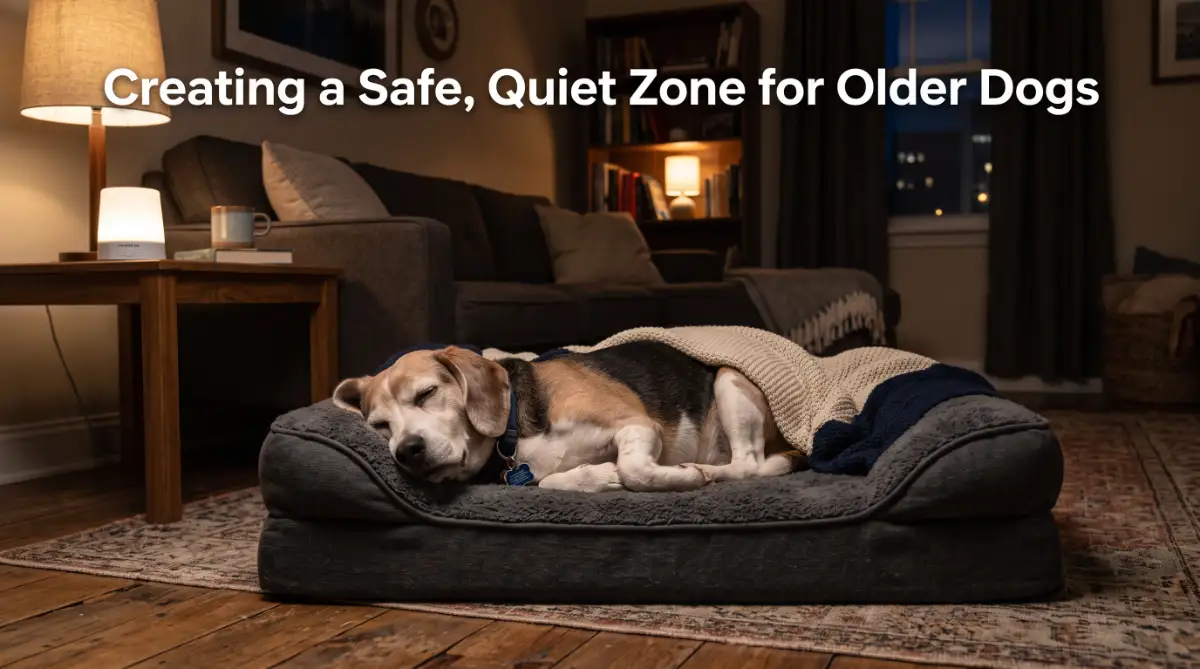
Step 3: Upgrade Their Safe Space
Many older dogs bark at night because they are physically uncomfortable. A thin blanket on the floor is no longer enough for their aging joints.
Upgrading their bed can stop nighttime barking almost immediately. Look for a thick, high-quality orthopedic bed made of memory foam.
The bed should be easy to step into, without high sides that require jumping. Place this bed in a draft-free corner of the room where you sleep.
Having them near you provides immense security. If they wake up confused, smelling you nearby can stop the barking before it starts.
If they prefer sleeping in a crate, remove the door or leave it wide open. A closed crate can cause severe panic attacks in dogs developing dementia.
Long-Term Strategies for Lasting Peace
Immediate fixes are great for tonight, but we need a long-term plan. Adjusting their daily lifestyle will slowly reduce their overall anxiety. A calmer dog during the day means a quieter dog at night.
Step 4: The Magic of Evening Wind-Down Rituals
Just like human babies, senior dogs thrive on predictable routines. An erratic schedule makes them anxious, which leads to more vocalization.
Start an evening wind-down routine about two hours before your bedtime. Keep the lights in the house dim to signal that the day is ending.
Take them for a very short, slow bathroom walk. Do not rush them; let them sniff the grass as much as they want. Sniffing is a natural stress reliever for dogs and tires out their brain.
When you come back inside, give them a light, soothing massage. Brush their fur gently if they enjoy it. This routine tells their confused brain that it is time to sleep.
Myth vs. Reality: Training an Older Dog
Myth: You cannot teach an old dog new tricks, so you just have to live with the barking.
Reality: Older dogs are very capable of learning. While you might not teach them backflips, you can absolutely teach them new relaxation cues and coping mechanisms.
Step 5: Strategic Mental Tiredness
A physically tired dog might still have an anxious, racing mind. We need to tire out their brain to stop the pointless barking.
Since your senior dog cannot run for miles anymore, replace physical exercise with mental games. Food puzzle toys are perfect for this.
Instead of feeding them out of a regular bowl, put their kibble into a snuffle mat. A snuffle mat is a fabric mat with hidden pockets where they have to hunt for their food.
Using their nose requires intense concentration. Ten minutes of sniffing and searching can tire an older dog out as much as a mile-long walk.
You can also use soft, rubber chew toys filled with dog-safe peanut butter. Licking is a highly soothing action that releases endorphins in a dog's brain.
Whenever they start getting restless or vocal during the day, hand them a licking toy. It redirects their nervous energy into a quiet, calming activity.
Adapting Your Home Environment
Sometimes the home itself is causing the dog to bark. Slick floors, dark hallways, and stairs become terrifying obstacles for an aging pet.
Step 6: Fix the Floor Slips
If your dog is losing their muscle tone, they might slip on hardwood or tile floors. Slipping causes fear, and fear causes barking.
Put down cheap, non-slip yoga mats or carpet runners in the areas your dog walks most. Creating these "safe pathways" gives them confidence.
When they feel secure on their feet, they are much less likely to panic and bark. You can also try doggy grip socks, though some dogs hate wearing them.
Step 7: Light up the Shadows
Poor vision makes shadows look like moving objects. If your dog barks at the walls in the evening, check your lighting.
Keep a few soft nightlights plugged into the hallways and near their bed. A gently lit room helps them see that they are safe and alone.
Avoid harsh, bright overhead lights at night. Stick to warm, amber-colored bulbs that do not disturb their natural sleep cycle.
When to Ask for Professional Help
Sometimes, despite all your best efforts, the barking continues. You might feel defeated, but this just means your dog needs extra support.
Step 8: The Vet Check
If the barking is sudden and intense, you must visit your veterinarian. You cannot train away a medical problem.
Ask your vet to check for urinary tract infections, severe arthritis, or dental disease. Bloodwork can also reveal underlying issues that make dogs restless.
If your vet suspects Canine Cognitive Dysfunction, they might suggest special medications. Certain brain-supporting diets and supplements can slow down cognitive decline significantly.
Never give your dog human sleep aids or pain medications without vet approval. Many human drugs are highly toxic to pets.
Natural Calming Supplements
If your vet gives the green light, you can explore natural calming aids. These can be the gentle push your dog needs to relax.
Pheromone collars or diffusers mimic the soothing scent of a mother dog. They are completely odorless to humans but can heavily reduce dog anxiety.
You might also look into dog-safe calming chews containing L-theanine or chamomile. Give these to your dog about an hour before their usual fussy time.
CBD oil designed specifically for pets has also shown great results for senior joint pain and anxiety. Always start with the lowest possible dose to see how they react.
Living with a vocal senior dog tests your patience, but remember all the wonderful years they gave you. With small environmental tweaks, lots of love, and these targeted steps, you can help them relax.
You are doing a wonderful job caring for them in their golden years. Keep trying these gentle methods, stay consistent, and soon you will both be sleeping peacefully again.
Beyond the Basics: Next-Level Comfort for Aging Canines
If you have tried the basic comfort measures and your older dog is still barking, we need to look deeper. Sometimes a simple white noise machine is not enough to soothe a brain that is undergoing physical changes.
We have to start thinking outside the box. This means changing how your dog interacts with their daily environment.
By using advanced sensory tricks, we can rebuild their confidence. When a senior dog feels confident in their surroundings, their need to bark drops dramatically. Let us look at some highly effective strategies that behavioral experts use.
The Brilliant Trick of "Scent Mapping"
As dogs get older, their eyesight often fades without us even noticing. A dog that cannot see clearly will get lost in their own living room.
When they get stuck behind a chair or cannot find the hallway door, panic sets in. This panic immediately leads to loud, distressed barking. You can easily fix this navigation problem by using their strongest sense: their nose.
Scent mapping involves creating invisible smell paths around your house. You can buy dog-safe essential oils, like a heavily diluted lavender or chamomile spray.
Spray a tiny dot of this scent on the baseboards near important doorways. Put a different, distinct scent near their water bowl and their bed.
Now, even in total darkness, your dog can smell their way around the house. They will know exactly where they are before they bump into a wall. This single trick has saved countless owners from midnight barking fits.
Calming the Mind Through Better Nutrition
You might not realize that what goes into your dog's food bowl directly affects their brain. Just like human beings, older dogs can experience heavy "brain fog" if they lack proper nutrients.
A diet filled with cheap fillers can cause stomach aches and inflammation. When a senior dog has silent stomach pain at night, they wake up, pace, and start barking.
Reviewing your pet's meals is a highly important step for their mental health. You need to ensure they are getting enough Omega-3 fatty acids and antioxidants.
These nutrients help protect the aging brain and can even slow down the symptoms of dog dementia. If you are unsure about their current diet, I highly recommend reading up on the impacts of feeding your golden retriever grain-free dog food.
Adjusting their carbohydrate intake and adding brain-supporting proteins can completely change their nighttime behavior. A comfortable tummy equals a quiet, sleepy dog.
Understanding the Power of Deep Pressure Therapy
Have you ever seen a baby instantly calm down when they are tightly swaddled in a blanket? Dogs share a very similar physical response to gentle, continuous pressure.
When your older dog is pacing and barking out of anxiety, their nervous system is in overdrive. You can manually calm their nervous system using deep pressure therapy.
An anti-anxiety wrap, like a Thundershirt, applies gentle pressure to your dog's torso. This pressure actually triggers the release of calming hormones in their brain.
Many owners report that putting a pressure wrap on their dog before bed stops the barking entirely. It makes the dog feel like they are receiving a continuous, safe hug.
If you do not want to buy a special shirt, a tightly wrapped ace bandage works too. Just make sure it is snug, but not restricting their breathing.
Harnessing Veterinary Behavioral Science
If you feel completely stuck, turning to specialized science is the next logical step. The veterinary world has made massive advancements in understanding how older dogs process fear.
Behavioral specialists have developed specific sound desensitization programs for older pets. You can play these specially designed sound frequencies during the day while giving them treats.
Over time, this rewires their brain to associate scary noises with happy feelings. For a deep dive into how canine cognitive changes affect behavior, you can review research on canine cognitive dysfunction syndrome from trusted veterinary colleges.
Understanding the exact medical science behind their confusion gives you more patience. It reminds you that this is a medical condition, not just bad behavior.

Well-Meaning Traps That Make the Barking Worse
When you are exhausted from lack of sleep, it is incredibly easy to make mistakes. We are only human, and constant noise tests our absolute limits.
However, some common reactions to dog barking actually make the problem much worse. If we fall into these traps, we accidentally train our dogs to keep barking.
Let us look at the most common pitfalls pet parents face. Avoiding these mistakes will speed up your journey to a quiet home.
The Danger of the Midnight Yell
Picture this: It is 3:00 AM, you have work in the morning, and the dog will not stop howling. Out of pure frustration, you stomp down the hallway and yell, "Quiet down!"
You might think you are asserting dominance and correcting the behavior. But in your dog's confused mind, they just see their favorite person acting loud and erratic.
To an anxious senior dog, your yelling sounds like you are barking right along with them. Instead of stopping the noise, you have just validated their fear.
They think, "Wow, my owner is upset too, there must really be danger here!" This causes a massive spike in their stress levels, leading to more barking the moment you leave the room.
What to do instead: Always speak in a soft, low whisper. If you cannot hide your frustration, do not speak at all. Just use a gentle touch to guide them back to bed.
The Inconsistency Trap
Older dogs survive on predictable routines. Their internal clock is already broken, so they rely entirely on you for structure.
A major mistake owners make is constantly changing the rules out of desperation. Monday night you let them sleep in your bed, but Tuesday night you lock them in the kitchen.
Wednesday you leave a light on, but Thursday you turn it off because it bothered your eyes. This constant shifting of the environment is terrifying for an aging dog.
They never know what to expect when the sun goes down. This deep uncertainty breeds anxiety, which naturally turns into pacing and barking.
What to do instead: Pick a nighttime routine and stick to it strictly for at least two weeks. It takes time for their brain to accept the new routine as safe.
Punishing a Medical Problem
Perhaps the most heartbreaking mistake is treating a medical issue like a discipline problem. As we discussed earlier, senior dogs often vocalize when they are hurting.
Using water spray bottles, loud noise makers, or scolding a dog in pain is incredibly unfair. It breaks the bond of trust you have built with them over their lifetime.
Sometimes, what sounds like barking might actually be distress from a respiratory issue. For example, a hacking cough can sound surprisingly similar to a sharp bark in the middle of the night.
If your dog is experiencing breathing issues or sudden throat noises, you must treat the root cause first. Learning how to properly stop kennel cough in dogs easily can save you from misdiagnosing a sick dog as a "bad" dog.
Always assume there is a physical problem before you assume it is just a behavioral quirk. Your vet should always be your first call when sudden vocalization starts.
The Nightmare of Bark Collars on Senior Pets
Let me be absolutely clear about this next point. You should never, under any circumstances, use a shock or vibration bark collar on a senior dog.
These devices work by causing pain or sudden startle responses when the dog makes a noise. For a young, healthy dog, this is controversial enough.
But for an older dog dealing with dementia, a bark collar is pure psychological torture. They are barking because they are lost and terrified in their own mind.
When the collar shocks them, they do not understand why they are being hurt. It will only make them completely shut down out of fear, or they will panic and become aggressive.
If you want a peaceful home, you must stick to compassionate methods. Leading veterinary behaviorists recommend positive reinforcement to build confidence, rather than using fear to force silence.
Creating Accidental Attention Loops
Sometimes, without meaning to, we teach our senior dogs that barking gets them a midnight party. If they bark, and you immediately run out, turn on the lights, and give them a treat to quiet them down, they learn a lesson.
They learn that barking equals food and attention. Even if they have dementia, that basic reward system still functions in their brain.
They will start waking up earlier and earlier, barking just to see if you will bring them a midnight snack. We want to comfort them, but we do not want to reward the noise.
The Fix: Wait for a three-second pause in the barking before you enter the room. Do not turn on all the bright overhead lights. Comfort them, but keep the interaction boring and sleepy.
Your Roadmap to a Peaceful Night’s Sleep
We have covered a massive amount of ground today. You now understand exactly why your beautiful older dog is struggling in the dark.
More importantly, you have a solid toolbox of gentle, highly effective strategies to help them. You do not have to just accept sleep deprivation as a normal part of owning a senior dog.
By stepping into their world and seeing things through their cloudy eyes, you can make the right changes. Every small tweak you make to their environment is an act of deep love.
A Quick Action Plan for Tonight
You do not need to do everything on this list at once. In fact, trying too many new things might overwhelm both you and your dog.
Here is a very simple checklist you can implement right now, before the sun goes down:
- Move their bed: Place their sleeping mat in a draft-free corner, ideally in the same room where you sleep.
- Set up background noise: Plug in a small fan or find a white noise playlist on your phone. Keep it running continuously.
- Dim the lights early: Turn off the harsh overhead lights an hour before bedtime to signal that the day is over.
- A gentle massage: Spend five minutes simply rubbing their ears and shoulders in silence before they go to sleep.
A Quick Action Plan for Tomorrow
When the sun comes up, you can start working on the long-term lifestyle changes. These require a bit more planning, but they bring massive rewards.
- Check the floors: Order a few cheap non-slip mats for the slippery hallway outside your bedroom.
- Review their food: Look at the ingredient list on their kibble bag. Ensure it is supporting their aging joints and brain.
- Buy a puzzle toy: Pick up a simple lick mat or a hollow rubber toy to tire out their brain during the afternoon.
- Call the vet: Schedule a basic senior wellness check just to rule out hidden joint pain or dental decay.
A Final Word of Encouragement
Watching a dog grow old is a tremendous privilege, even when it comes with these tough challenges. They spent their entire youth guarding your home, playing with your kids, and making you smile.
Now, they are leaning on you for extra support. It is completely okay to feel exhausted and overwhelmed right now.
Take a deep breath, forgive yourself for feeling frustrated, and try one of these new methods tonight. With consistency, patience, and a whole lot of empathy, you will guide them back to a calm state of mind.
Looking back, those sleepless nights with my own dog pushed me to become a better, more patient pet parent. If I could turn my stressful, noisy nights into peaceful ones, I know for a fact that you can do this too. Start with just one small change tonight, and give your old friend a big hug from me.
You have got this. A quiet house and a happy, resting dog are absolutely within your reach.
Disclaimer:
The information provided in this article is for educational purposes only and should not replace professional medical advice. Every dog is unique. If your pet is showing sudden changes in behavior, vocalization, or physical health, please consult your local veterinarian immediately to ensure they receive proper medical care.