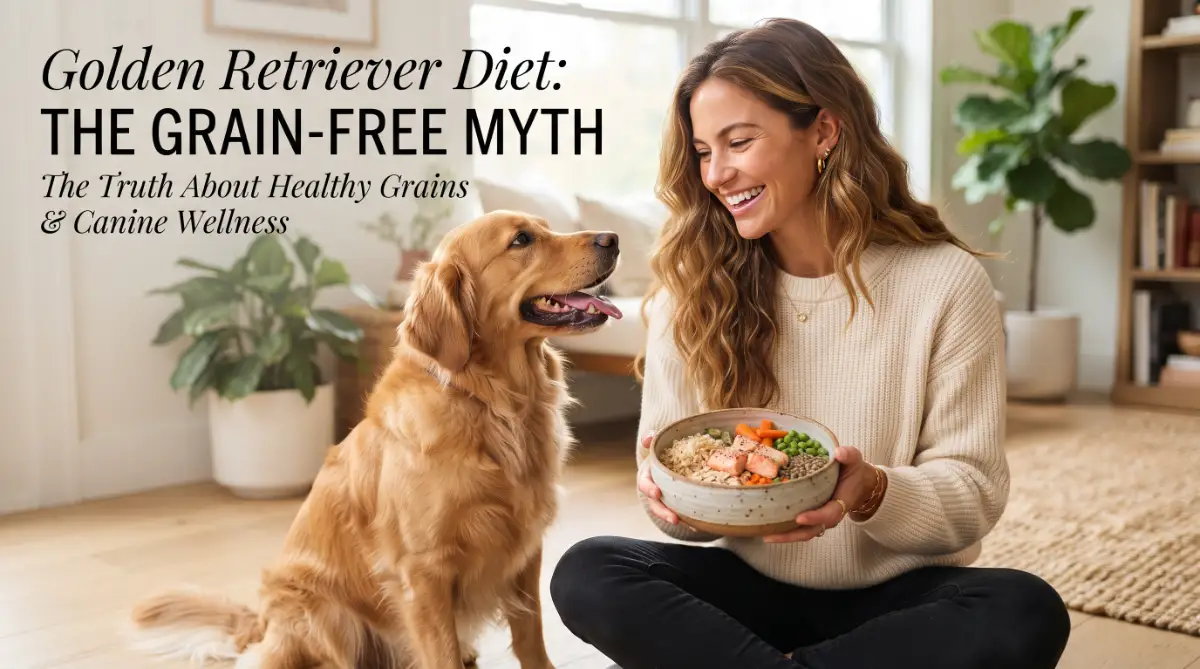
The Truth About Grain-Free Diets for Golden Retrievers: What Vets Wish You Knew
Picture this familiar scenario. You are standing in the middle of a massive pet store aisle, completely surrounded by hundreds of colorful dog food bags.
Every single bag makes a bold promise. They claim to be "wild," "ancestral," or "biologically appropriate" for your sweet, goofy Golden Retriever.
Because you love your dog more than anything, you naturally reach for the most expensive, premium-looking bag. Usually, that bag proudly slaps the words "100% Grain-Free" across the front label.
I used to spend hours staring at those shiny bags, believing that buying the most expensive, grain-free brand meant I was an amazing dog mom to my Golden Retriever. I honestly thought I was protecting him, until a routine vet visit gave me a terrifying reality check about his heart. Hearing that I might be accidentally hurting my best friend broke my heart, but it pushed me to finally learn the truth.
You pay a premium price, confident that you are giving your best friend the absolute peak of nutrition. You feel like a great pet parent.
But then, you open your phone and see a terrifying news headline about dog food and heart disease. Suddenly, that heavy feeling of guilt and panic washes over you.
Have you been slowly harming your Golden Retriever while trying to do the right thing? The anxiety of accidentally feeding your dog the wrong meal is enough to keep any devoted pet owner awake at night.
We project our own human diet trends, like going gluten-free, directly onto our pets. We naturally assume that what is healthy for us must be healthy for them.
The sad reality is that dog food marketing teams know exactly how to play with our emotions. They use our deep love for our pets to sell incredibly expensive diets that might actually be dangerous.
You are not alone in this confusion. It is time to strip away the clever marketing tricks and look closely at what your dog actually needs to live a long, happy life.

Breaking Down the Wolf Myth
The biggest trick the pet food industry ever pulled was convincing you that your Golden Retriever is basically a wild wolf.
Commercials show majestic wolves running through the snow, suddenly transforming into a happy family dog. The message is simple: wolves eat only meat, so your dog should only eat meat, too.
But science tells a completely different story. Your Golden Retriever is definitely not a wolf.
Over thousands of years of living alongside humans, domestic dogs evolved completely different digestive systems. Their bodies adapted to eating the exact same agricultural foods that humans grew.
Researchers have found that dogs possess specific genes that produce amylase. Amylase is the exact enzyme needed to break down starches and grains into usable energy.
Wolves do not have these specific starch-digesting genes in the same high amounts. This biological difference is exactly what separates a wild predator from the lovable dog sleeping on your couch right now.
When you remove healthy grains from a dog's diet, you are ignoring thousands of years of natural evolution. You are feeding them based on a clever marketing gimmick rather than actual science.
What Exactly Happens When We Remove Grains?
When pet food companies decided to remove grains like oats, rice, and barley, they had a major problem. You cannot make a dry kibble purely out of meat.
Kibble needs starch to hold its shape, otherwise, it just falls apart into dust. So, to keep the "grain-free" label, these companies had to find replacement ingredients fast.
They turned to legumes, heavily relying on ingredients like peas, chickpeas, and lentils. They also started using massive amounts of white potatoes and sweet potatoes.
On the surface, peas and lentils sound incredibly healthy to human ears. We eat them in our salads, so we assume they are great for dogs.
However, dog biology reacts differently to these high-legume diets. This exact ingredient swap is where the massive health problems for Golden Retrievers began.
The Silent Threat: Dilated Cardiomyopathy (DCM)
You might have heard the terrifying letters DCM thrown around in vet offices or online dog groups. It stands for Dilated Cardiomyopathy, which is a very serious disease of the heart muscle.
To understand DCM, imagine a brand-new, tight rubber balloon. When you fill it with water, it holds its shape perfectly and has great pressure.
Now imagine blowing that balloon up, stretching it out completely, and letting the air out over and over. The rubber becomes weak, flabby, and unable to hold pressure.
That is exactly what happens to a dog's heart when they develop DCM. The heart muscle becomes extremely thin, weak, and enlarged.
Because the heart becomes so floppy, it simply cannot pump blood effectively to the rest of the dog's body. Fluid starts to build up in their lungs, making it very hard for them to breathe.
The scariest part about diet-associated DCM is how silent it is. Your dog might seem completely fine one day, playing fetch and eating normally.
The next day, they might suddenly collapse out of nowhere. By the time physical symptoms appear, the heart damage is already severe.
Why Golden Retrievers Are Specifically at Risk
Every dog breed has unique genetic quirks, and Golden Retrievers are no exception. Unfortunately, Goldens have a known genetic predisposition to heart issues.
But when you combine their natural genetic risks with a trendy grain-free diet, you create a perfect storm for disaster.
The core issue comes down to a specific amino acid called Taurine. Taurine is incredibly important for maintaining strong, healthy heart muscles in dogs.
Unlike cats, dogs can actually naturally produce their own taurine inside their bodies. They make it by breaking down other amino acids found in their daily food.
However, studies show that Golden Retrievers are notoriously bad at creating enough taurine on their own. They need a steady, highly digestible supply of the right nutrients to keep their hearts pumping well.
How Grain-Free Food Blocks Heart Health
This is where the peas, lentils, and potatoes in grain-free foods become highly problematic.
Veterinary cardiologists strongly suspect that high amounts of these legumes actually block a dog's ability to absorb taurine properly.
Even if the dog food contains plenty of high-quality meat, the heavy concentration of peas essentially creates a wall in the dog's gut. The body simply flushes the necessary building blocks out as waste.
So, your Golden Retriever eats a massive bowl of expensive, grain-free food every single day. Their stomach is full, but their heart is slowly starving.
Over months and years, this hidden taurine deficiency weakens the heart walls. This diet-induced condition has caused thousands of heart issues that were completely preventable.
The Real Power of Wholesome Grains
Let us completely change our mindset about grains. We have been taught to view them as "cheap fillers," but this is a massive misunderstanding.
When cooked properly, grains are incredible powerhouses of nutrition for your Golden Retriever. They provide highly digestible, long-lasting energy that keeps your dog active all day.
Unpacking the Benefits of Good Grains
Grains are packed with essential vitamins and minerals that meats simply do not have enough of.
1. Premium Gut Health:
Whole grains are rich in dietary fiber. Fiber acts like a broom for your dog's digestive system, keeping their stool firm and their gut bacteria perfectly balanced.
2. Sustained Energy:
Unlike quick sugar spikes, the complex carbohydrates found in healthy grains release energy slowly. This gives your Golden the stamina needed for long walks and intense fetch sessions.
3. Healthy Skin and Coat:
Grains naturally contain essential fatty acids. If you want your Golden Retriever to have that signature shiny, soft, and glowing coat, grains are incredibly helpful.
Identifying the Best Grains for Your Dog
Not all grains are the same, and knowing the difference is a great skill for any pet parent. You want to look for complex, whole grains on the ingredient label.
Brown Rice: This is a fantastic, highly digestible grain. It is very gentle on a dog's stomach and is packed with B vitamins.
Oatmeal: Oats are absolutely brilliant for dogs with sensitive skin or mild allergies. They are loaded with healthy fiber and are naturally very soothing for the digestive tract.
Barley: This grain provides excellent slow-burning energy. It is also a great source of soluble fiber, which keeps your dog feeling full and satisfied after meals.
Myth vs. Reality: The Marketing Deception
To clear up the confusion, let us look at some of the most common myths pet owners believe.
How to Read a Dog Food Label Like an Expert
If you are still feeling a little confused about ingredient splitting, watch this quick video below to see exactly how to read a dog food label in real life. It makes spotting those hidden starches so much easier before we move on to picking a safe brand!
Next time you buy dog food, ignore the pretty pictures of fresh vegetables and grilled steaks on the front of the bag. The front is purely marketing.
Turn the bag completely over and look directly at the tiny print on the back. You want to check the actual ingredient list.
The Rule of the Top Five:
Look closely at the first five ingredients listed. Ingredients are always listed by weight before cooking.
You absolutely want a high-quality meat or meat meal as the first ingredient. But right after that, you want to see named whole grains like oatmeal, brown rice, or sorghum.
Spotting the Hidden Legumes:
Pet food companies are smart. If they put "peas" as the second ingredient, you might not buy it.
Instead, they use a trick called "ingredient splitting." They will list pea protein, pea flour, and whole peas separately on the label.
By splitting them up, each pea ingredient weighs less, so they fall lower on the list. But if you added them all together, peas might actually be the main ingredient in the bag.
Expert Tips for Choosing a Safe Brand
When selecting a brand for your Golden Retriever, you should follow the strict guidelines set by the World Small Animal Veterinary Association (WSAVA).
You do not need to memorize complex scientific data. Just ask yourself three basic questions when looking at a brand.
First, do they employ a full-time, board-certified veterinary nutritionist? A true expert needs to formulate the exact recipe, not just a marketing team.
Second, do they own their own manufacturing plants? Brands that make their own food have much tighter control over safety and ingredient quality.
Third, do they conduct continuous feeding trials? A food might look perfect on a piece of paper, but you only know it is safe by feeding it to real dogs and monitoring their health.
Brands like Purina Pro Plan, Royal Canin, Hill's Science Diet, and Eukanuba consistently meet all these strict scientific guidelines.
The Step-by-Step Guide to Changing Your Dog’s Diet
If you are currently feeding your Golden a grain-free diet, do not panic. The great news is that diet-induced heart damage is often completely reversible if caught early.
However, you should never instantly throw out the old food and pour a massive bowl of the new grain-inclusive kibble.
A dog's stomach gets very used to digesting one specific type of food. A sudden, overnight change will almost certainly cause severe diarrhea, vomiting, and a very unhappy dog.
When I first learned the truth and decided to switch my own dog back to a grain-inclusive diet, I panicked and changed his food way too fast. Please learn from my messy mistake—taking a full 10 to 14 days to mix the old and new kibble will save you from a week of stressful backyard cleanups.
You need to transition their food incredibly slowly. Think of it as a gentle, gradual introduction for their gut bacteria.
Week One: The Gentle Introduction
Start by mixing 75% of their old grain-free food with just 25% of the new healthy grain food.
Do this for at least three to four days. Watch their bathroom habits closely. If their stool remains firm and normal, you are ready to move forward.
Week Two: The Halfway Point
Now, shift the mixture to 50% old food and 50% new food. This is a big step for their digestive tract.
Keep them on this exact ratio for another four days. If your dog seems overly gassy or has an upset stomach, do not rush. Stay at this 50/50 mix for a few extra days until their tummy settles.
Week Three: Phasing Out the Old
Move to 25% of the old grain-free food and 75% of the new grain-inclusive kibble.
By this point, your Golden's body is efficiently processing the healthy new grains. You might even start noticing better energy levels during your daily walks.
Week Four: The Full Switch
Finally, you can serve them a bowl of 100% new, scientifically-backed, grain-inclusive food.
You have successfully transitioned their diet safely without causing any stressful digestive distress. You can now breathe a massive sigh of relief knowing their heart is protected.
Signs Your Golden's New Diet is Working
Once you make the switch, you will naturally want to know if the new food is actually benefiting your dog. Your dog cannot speak, but their body will give you very clear signals.
Check Their Coat Condition:
Within a few weeks of eating healthy grains, your Golden's coat should feel noticeably softer. You will see less dry, flaky skin, and shedding might even become more manageable.
Monitor Their Energy Levels:
Pay close attention to how they act after playing. Complex grains provide steady energy. They should not crash heavily after a short walk.
The Scoop Test:
The most honest indicator of a dog's health is what you pick up in the backyard. Their stool should be firm, compact, and easy to pick up.
If you are seeing consistently perfect bathroom habits, it means their gut is properly absorbing all the amazing nutrients from the grains.
When to Immediately Contact Your Vet
While a diet change is a great proactive step, you must remain incredibly observant of your Golden Retriever's daily behavior.
If your dog has been on a boutique grain-free diet for a very long time, it is highly recommended to schedule an echocardiogram with your vet.
Do not wait for symptoms to appear before booking a checkup. However, if you notice any of the following warning signs, call your clinic immediately.
If your Golden starts panting heavily while just resting on the floor, take it seriously. Resting heavy breathing is a major red flag for heart strain.
If they develop a soft, dry cough that seems to happen mostly at night or first thing in the morning, do not ignore it. This kind of cough is often linked to fluid building up near the heart.
If your normally energetic dog suddenly stops halfway through a walk and refuses to keep going, their heart might be struggling to pump enough oxygen.
Making Peace with Past Mistakes
If you have been feeding your dog grain-free food for years, you must stop beating yourself up.
You bought that food entirely out of pure love. You simply listened to companies that spent millions of dollars trying to convince you it was the best option.
Every single pet parent makes mistakes along the way. The only thing that truly matters is what you do with this new scientific information today.
By bringing wholesome, healthy grains back into your Golden Retriever's bowl, you are making an active choice for their long-term health.
You are protecting that big, goofy, loving heart that makes Golden Retrievers the most amazing companions on earth.
Keep things simple, trust veterinary science over colorful marketing, and enjoy the beautiful years ahead with your furry best friend.
Mastering Your Golden’s Long-Term Nutrition Plan
You already know that dropping the grain-free trend is a massive step forward for your Golden Retriever. But how do you actually maintain this healthy lifestyle month after month?
Keeping your dog in peak physical condition requires a bit more than just buying a different bag of kibble. We need to look at their entire feeding routine like a professional veterinary nutritionist would.
The goal here is simple and highly effective. You want to build a digestive environment that absorbs every single nutrient, protecting that big, lovable heart of theirs.
The Secret of Rotational Feeding
Many loving dog owners make the mistake of feeding their Golden the exact same flavor of food for ten years straight. Imagine if you only ate chicken and rice every single day of your entire life.
You would eventually develop nutritional gaps, and your stomach would become incredibly sensitive to any new food. Dogs have a very similar biological reaction to extreme diet repetition.
Once your dog is fully comfortable on a safe, grain-inclusive diet, consider a gentle protein rotation. You stay within the same trusted brand line, but you switch the main meat source every few months.
For example, you might feed a lamb and brown rice formula for three months. After that, you slowly transition them to the salmon and oatmeal formula from the exact same brand.
This simple rotation builds a much stronger, more resilient gut microbiome. It also naturally exposes your Golden to a wider variety of amino acids, which are the fundamental building blocks of a healthy heart.
Decoding the Expert Guidelines
There is a gold standard in the veterinary world that every pet parent should memorize. It is created by the World Small Animal Veterinary Association guidelines, which acts as a global authority on pet health.
When you follow these strict standards, you completely remove the guesswork from feeding your dog. These guidelines specifically demand that pet food brands conduct extensive, long-term feeding trials.
A brand cannot just mix ingredients in a vat and put it on a shelf. They must actively prove that their grain-inclusive formula sustains life, promotes heart health, and prevents disease in actual dogs.
By demanding this level of scientific rigor, you protect your wallet and your best friend. You are no longer paying for fancy marketing; you are paying for peer-reviewed canine science.
The Power of Proper Kibble Hydration
We need to talk about an incredible feeding trick that most pet parents completely ignore. Dry kibble is notoriously low in moisture, usually containing only about ten percent water.
Your Golden Retriever’s body needs plenty of water to process complex grains and high-quality proteins properly. If they eat dry kibble fast, it pulls moisture directly from their stomach lining to digest the food.
To fix this instantly, start adding warm water or dog-safe bone broth to their bowl right before feeding. Let the kibble soak for about five to ten minutes until it softens slightly.
This simple step unlocks the aroma of the meat and grains, making the food wildly irresistible even to picky eaters. More importantly, it pre-digests the starches, making it incredibly gentle on their stomach.
Proper hydration during meals also keeps their kidneys flushing toxins efficiently. It is a completely free, highly effective way to upgrade their daily nutrition instantly.
Reading the Hidden Signs of Digestive Health
Your Golden Retriever will constantly show you how well their body is handling their food. You just need to know exactly what to look for on a daily basis.
Expert veterinary cardiologists at Tufts University often remind pet owners that external symptoms reflect internal health. The most obvious indicator is always their coat condition.
A dog absorbing their healthy grains and fats will have a deeply shiny, soft coat that resists heavy shedding. If their coat feels brittle, dry, or dusty, their gut is likely struggling to process their meals.
You also need to become comfortable checking their daily bathroom habits. A perfectly digested grain-inclusive meal results in small, firm, and easily picked-up stools.
If you see constant loose stools or incredibly massive volumes of waste, the food is passing right through them. That means they are missing out on the exact nutrients their heart desperately needs to stay strong.

Dangerous Feeding Traps Loving Owners Fall Into
Making the shift to a healthier, science-backed diet is an emotional journey. Because we love our dogs deeply, our emotions can easily cloud our logical judgment.
The pet food industry understands this emotional connection perfectly. They have set up several clever traps designed to pull you away from safe, traditional diets.
If you are not paying close attention, you might accidentally fall back into feeding habits that compromise your Golden’s heart muscle. Let us look at the most common, dangerous pitfalls you must actively avoid.
The Boutique Brand Illusion
This is easily the biggest mistake modern dog owners make today. We naturally assume that a small, independent company with a beautiful, rustic bag makes healthier food than a massive, global corporation.
We see terms like "hand-crafted," "artisanal," or "chef-inspired" and immediately think it must be superior. But in the world of complex dog biology, small-batch manufacturing is actually a massive liability.
Boutique brands rarely have the budget to hire a team of full-time, PhD-level animal nutritionists. They often rely on generic software programs to balance their recipes on paper, without ever testing them on living animals.
This lack of testing is exactly what led to the initial FDA investigation into specific diet formulas linked to fatal heart conditions. The companies meant well, but they simply lacked the scientific infrastructure to realize their legume-heavy recipes were blocking taurine absorption.
Always choose science over aesthetics. A plain-looking bag backed by thirty years of clinical research will always beat a trendy bag designed by a clever marketing agency.
The Sudden Switch Disaster
When pet parents finally learn the truth about grain-free diets, they naturally panic. They want to fix the problem immediately, so they throw away the old food and pour a massive bowl of a new, grain-inclusive brand.
This reaction comes from a place of deep love and concern. However, going cold turkey is one of the worst things you can do to your Golden Retriever's sensitive digestive system.
Their gut microbiome is like a delicate garden that has adapted to process their old food. If you suddenly dump entirely new ingredients into that garden, you will shock the system completely.
This sudden shock leads to severe diarrhea, vomiting, and a highly stressed immune system. The dog associates the new healthy food with feeling incredibly sick, making them refuse to eat it in the future.
You must transition the food painfully slowly over a minimum of ten to fourteen days. Patience is your best friend when rebuilding their internal health.
Over-Supplementing Out of Pure Guilt
Once owners realize their grain-free diet might have been risky, guilt heavily sets in. To make up for lost time, they start buying dozens of expensive canine supplements and vitamins.
They add scoops of raw meat, squirts of fish oil, expensive taurine powders, and random vegetables to the bowl. They essentially turn their kitchen counter into a chaotic chemistry lab.
This well-intentioned practice actually destroys the delicate nutritional balance of the commercial dog food. A high-quality, grain-inclusive kibble is precisely engineered so that every vitamin and mineral interacts perfectly.
When you randomly add heavy supplements, you can accidentally cause toxic buildups of certain fat-soluble vitamins. You might also throw off the highly sensitive calcium-to-phosphorus ratio, causing terrible joint issues.
If you are feeding a trusted, science-backed formula, your dog literally does not need any extra powders or magical elixirs. Trust the food to do its job safely.
Ignoring Subtle Physical Warning Signs
Because Dilated Cardiomyopathy (DCM) is a silent, creeping condition, owners often miss the early red flags. They write off mild symptoms as their dog simply getting older or being lazy.
You might notice your dog slowing down on walks, needing more breaks, or sleeping heavier than usual. Sometimes, owners notice balance issues, frantically searching for unexpected reasons for sudden balance loss in their senior pets, completely unaware that a weakened heart is struggling to pump oxygen to the brain.
Do not wait for your dog to completely collapse before taking their physical changes seriously. A mild, dry cough after resting is not a normal part of aging; it is a classic sign of fluid building up near a struggling heart.
Veterinary cardiology testing is incredibly expensive, often costing thousands of dollars for a single diagnostic workup. This heavy financial burden is exactly why pet owners should consider accident only insurance policies or comprehensive plans well before a dietary heart crisis strikes.
If you have fed a grain-free diet for a long period, schedule an appointment for an echocardiogram just for peace of mind. Early detection allows medications to start working long before the heart muscle fails completely.
Your Golden’s New Blueprint for a Thriving Heart
We have covered a massive amount of intense scientific information, and it is completely normal to feel slightly overwhelmed. Take a deep breath and look down at your loyal, trusting Golden Retriever right now.
You are entirely in control of their health destiny, and you now have the exact knowledge needed to protect them. You no longer have to wander aimlessly down the pet store aisles hoping you make a lucky guess.
You understand that wolves and domestic dogs are biologically completely different creatures. You know that healthy, whole grains are powerful sources of sustained energy and essential amino acids.
Most importantly, you recognize the hidden dangers of heavily marketed, legume-rich diets that silently starve your dog's heart.
An Action Plan for Tonight and Beyond
Start by simply checking the ingredient label on your current bag of dog food tonight. Look specifically for those heavy starches like peas, lentils, chickpeas, and sweet potatoes sitting right at the top of the list.
If they are there, do not panic and do not throw the bag away just yet. Tomorrow, use that knowledge to start researching a trusted, WSAVA-compliant brand that features healthy grains like oats and brown rice.
Purchase the smallest bag of the new food first to ensure your dog actually enjoys the flavor. Begin that incredibly slow, patient transition process, mixing the old and new meals carefully over two full weeks.
Celebrate the small victories along the way. Notice how their coat gets a little softer, their energy on walks feels a bit more consistent, and their eyes look brighter.
Every single time you pour a scoop of healthy, scientifically proven food into their bowl, you are making a powerful choice. You are actively choosing longevity, vitality, and science over trendy marketing gimmicks.
Your Golden Retriever gives you endless, unconditional love, patience, and loyalty every single day. Giving them a safe, balanced, and heart-healthy diet is the absolute best way to return that beautiful favor.
Seeing my Golden Retriever acting like a crazy, energetic puppy again on a healthy grain diet has been the biggest relief of my life. Do not let clever pet store marketing scare you anymore—take control of your dog's bowl today, and you will feel amazing knowing you are truly protecting their big, lovable heart.
Medical and Veterinary Disclaimer: The information provided in this article is for educational and informational purposes only and is not intended as medical or veterinary advice. Every dog is unique, and dietary needs can vary significantly based on age, genetics, and underlying health conditions. Always consult directly with a licensed veterinarian or a board-certified veterinary nutritionist before making any major changes to your pet’s diet, especially if they have a history of heart conditions or allergies.