
20-Min Birth Ball Exercises for an Easy Labor & Strong Body
You are lying in bed at 2 AM, staring at the ceiling, trying to find a comfortable position. Every time you roll over, it feels like a massive, heavy weight is pulling your hips apart. Your lower back is throbbing, and that familiar sharp pain shoots down your leg.
I still clearly remember waking up at 3 AM during my 36th week, crying from the intense, sharp pain in my lower back that refused to let me sleep. Every single time I tried to roll over in bed, it felt like my pelvis was literally cracking apart under the heavy weight. I honestly thought my body was just failing me, until a friend brought over her dusty old fitness ball and told me to just sit on it.
Within exactly two days of gentle movement, that awful throbbing pain disappeared completely, and I finally got my sleep back.
You try to use a dozen pillows to support your growing belly, but nothing seems to work. The pressure in your pelvis is constant. You are completely exhausted, yet sleep feels impossible.
This is the hidden struggle of the late stages of pregnancy that people rarely talk about. We often hear how beautiful this journey is, but the physical toll can heavily drain your mental peace. You might feel heavy, clumsy, and honestly, just ready to be done.
Many moms wake up feeling stiff and spend the whole day battling pelvic pressure. The fear of an unpredictable delivery also starts creeping into your mind. You wonder if your body is actually prepared for the big day.
You desperately want a smooth, uncomplicated delivery, but the daily physical discomfort makes it hard to even walk around your house. You are not alone in feeling this way. I have talked to hundreds of mothers who felt exactly the same physical and emotional exhaustion.
The good news is that you do not have to just suffer through the pain. A simple piece of equipment can completely change how your body feels right now.
From Early Struggles to Late Pregnancy Strength
Let us take a quick step back and look at how far you have come. Your body has been through massive changes since day one.
Months ago, your daily routine looked entirely different. You were probably just trying to survive morning sickness. Back then, finding the right First trimester diet was your biggest hurdle.
You spent hours researching Pregnancy health tips just to figure out what to eat without feeling awful. Finding good Nausea relief foods was a daily mission. You relied heavily on Prenatal dietary hacks just to get enough nutrients for your growing baby birth ball exercises easy birth preparation pregnancy workout routine third trimester stretches
Now, your focus has completely shifted. You have already mastered Healthy eating for moms. You understand your Pregnancy nutrition guide inside and out.
The early days of Managing pregnancy nausea are mostly behind you. Even your Pregnancy meal planning has become a normal part of your routine. Now, the challenge is no longer about digestion; it is entirely physical and structural.
You are dealing with the intense weight of the third trimester. Your goal has shifted from eating right to moving right. You need a solid pregnancy workout routine that actually prepares your body for the finish line.
This is where a targeted 20-minute daily habit comes into play. It bridges the gap between basic Women health practices and targeted labor prep.
The Science of Pelvic Mechanics and Easy Delivery
Why does your body hurt so much right now? Let me explain what is happening inside your structure.
As your baby grows, your center of gravity shifts entirely forward. This puts an immense, unnatural strain on your lower back. At the same time, your body releases a hormone called relaxin.
Relaxin is designed to loosen your ligaments so your pelvis can open up during delivery. However, this looseness is exactly what causes that wobbly, painful feeling in your hips. Your muscles are working overtime just to keep you upright and stable.
Doing regular birth ball exercises is one of the smartest ways to counter this pain. The soft, bouncy surface of the ball absorbs your body weight. This instantly takes the heavy pressure off your spine and pelvic floor.
When you sit on a firm chair or a soft couch, your pelvis often tilts backward. This can actually encourage your baby to move into a difficult posterior position. A fitness ball naturally forces you to sit up straight and tilt your pelvis slightly forward.
This forward tilt is the secret to optimal fetal positioning. It encourages the heaviest part of your baby (the back of their head) to swing toward the front of your belly. Optimal fetal positioning can drastically reduce the chances of a long, painful back labor.
Preparing Your Space for Success
Before we start the physical movements, we need to set up your environment properly. Safety is the most important factor when doing any pregnancy workout routine.
Make sure you have the right size ball for your height. When you sit on it, your hips should be slightly higher than your knees. If your knees are higher than your hips, the ball is too small and will not help with optimal fetal positioning.
Place your ball on a non-slip surface, like a yoga mat or a carpet. Do not use it on a smooth hardwood or tile floor, as it can easily slip out from under you. If you feel unsteady, place the ball near a heavy couch or a wall so you have something to hold onto.
Wear comfortable, stretchy clothes that allow your hips to move freely. I always recommend going barefoot or wearing grippy socks so you have a firm connection to the ground.
Turn on some relaxing music and grab a bottle of water. Staying hydrated is a massive part of good Health tips during this stage. Now, let us break down this highly effective 20-minute session.
Step 1: The Gentle Pelvic Warm-Up (5 Minutes)
We will start very slowly to wake up your muscles. Sit directly in the center of the ball with your feet planted firmly on the floor. Keep your feet wider than shoulder-width apart to create a highly stable base.
Rest your hands on your knees or your thighs. Take a deep breath in, and as you exhale, gently tuck your tailbone under. Imagine you are trying to point your belly button toward your chin.
Inhale again, and slowly push your tailbone out behind you, creating a small arch in your lower back. This movement is called a pelvic tilt. It is the foundation of almost all birth ball exercises.
Do this forward and backward motion for about two minutes. You will feel an immediate sense of relief in your lower spine. It gently stretches tight muscles while acting as a form of pelvic floor strengthening.
Next, we are going to move side to side. Shift your weight directly to your right hip, then smoothly glide over to your left hip. Keep your upper body completely still; only your hips should be doing the work.
This lateral movement opens up the sides of your pelvis. It gives your baby more room to settle down into the correct spot. These gentle third trimester stretches are incredibly soothing after a long day of standing or walking.
Step 2: The Infinity Figure-8 Motion (5 Minutes)
If you are having trouble visualizing exactly how to do the figure-8 hip motion without losing your balance, watch this quick demonstration video below. Seeing the exact rhythm in action will make this powerful pelvic stretch so much easier to master right now, and then keep reading below for the final crucial steps of the routine!
Now that your pelvis is warm, we are going to do my absolute favorite movement. This specific motion is famous in Pregnancy Yoga for preparing the body for childbirth.
Keep your wide stance and imagine a large number eight drawn on the floor beneath you. You are going to trace that number eight with your hips.
Push your right hip forward, swoop it around to the right, pull it back, and then cross over to the left side. It might feel a little awkward at first, but just keep trying to find a smooth, rolling rhythm.
This movement is a powerhouse for pelvic floor strengthening. It engages the tiny stabilizing muscles deep inside your pelvis that you rarely use. The rolling motion mimics the natural movements your body will crave during contractions.
Many experts consider this a highly effective form of labor prep. By doing this daily, you are teaching your body how to open up dynamically. It also helps to manually massage the ligaments that are causing you pelvic girdle pain.
Do this figure-8 motion for about five minutes. Change directions halfway through. Close your eyes, focus on your breathing, and let your body relax into the circular motion.
Step 3: Gentle Bouncing for Baby Descent (5 Minutes)
Let us move on to a slightly more active part of this pregnancy workout routine. Gentle bouncing is a fantastic way to utilize gravity to your advantage.
Sit up tall, engage your core slightly, and just begin to bounce up and down on the ball. Keep the bounce very small and controlled. Your feet should never leave the floor.
The soft pushback from the ball creates a gentle, rhythmic pressure on your cervix. This is why bouncing is often discussed when talking about labor inducing methods. While it will not force your body into childbirth before it is ready, it definitely helps things along when the time is right.
If you are hoping for a natural birth, this bounce helps the baby's head apply steady, even pressure to your lower anatomy. That pressure is exactly what your body needs to start dilating naturally.
Many moms who want to induce labor at home safely will spend time gently bouncing while watching television. It is a wonderful, passive way to encourage natural induction.
Just make sure you are not bouncing too hard. Aggressive bouncing can jar your joints and cause discomfort. Keep it soft, steady, and soothing for about five minutes.
Expert Insight: Why Hydration Matters Now More Than Ever
Before we move to the final stretch, I want to share a quick reality check. You cannot do these exercises effectively if your muscles are dehydrated.
Dehydration leads to muscle cramps, especially in your calves and pelvic floor. You learned about the importance of water when you were studying your Pregnancy nutrition guide. That rule still applies heavily in the third trimester.
Drinking plenty of water keeps your amniotic fluid levels healthy. It also keeps your joints lubricated so you can perform these third trimester stretches without pain. Keep a large water bottle next to your ball and take sips between each movement.
It is funny how the basic Health tips never really change. Whether you are dealing with First trimester diet choices or late-stage stretches, hydration is your best friend.
Step 4: The Deep Kneeling Stretch (5 Minutes)
For this final segment, we are going to get off the ball. You will need a soft yoga mat or a folded blanket to protect your knees.
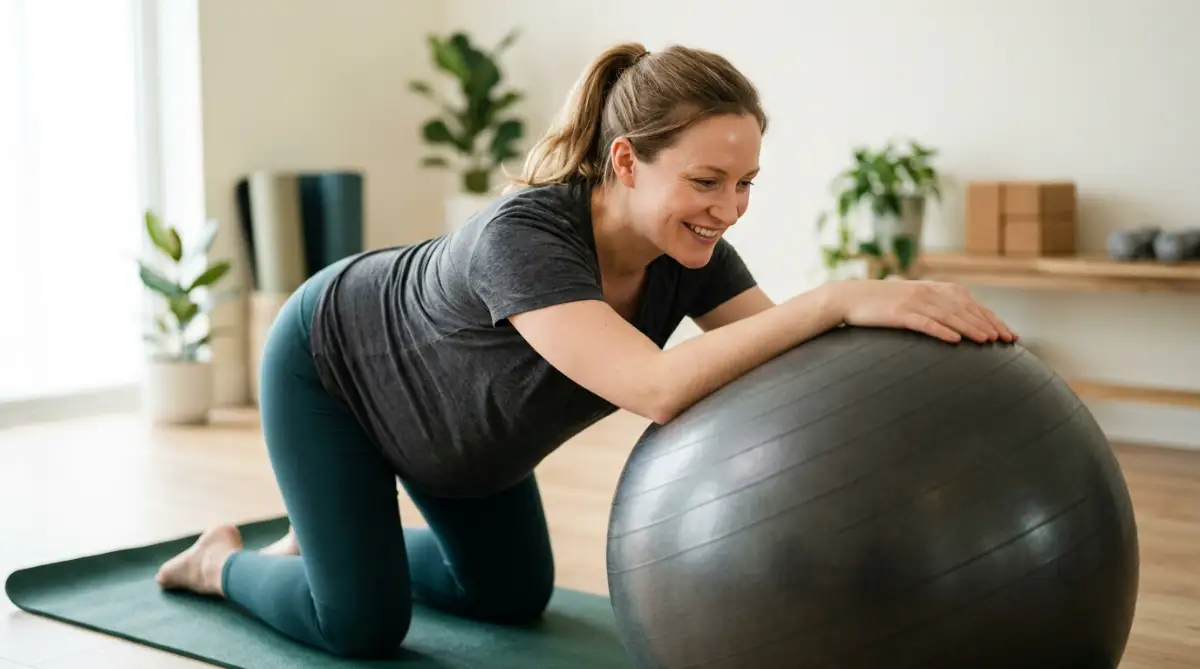
Kneel on the floor facing your fitness ball. Open your knees extremely wide, almost like you are doing a child's pose in Pregnancy Yoga. Place both of your arms and your chest directly onto the top of the ball.
Slowly roll the ball forward away from you. Let your head drop between your arms and sink your hips back toward your heels. You should feel a massive, glorious stretch down your entire back and underneath your armpits.
This specific position is the holy grail of third trimester stretches. It completely removes the weight of the baby from your spine. It gives your lower back a desperately needed break.
If your baby is sitting in an awkward, painful position, this stretch can help them rotate. Hanging your belly forward like a hammock is the absolute best way to promote optimal fetal positioning.
Hold this stretch for about 30 seconds, then slowly roll the ball back toward you to rest. Repeat this deep stretching motion five or six times.
Focus entirely on your breathing while you are stretched out. Inhale deeply through your nose, expanding your ribs. Exhale slowly through your mouth, letting all the tension melt out of your shoulders.
The Myth of Sitting Still
Let us clear up a very common misunderstanding about late-stage pregnancy. Many people believe that resting on the couch all day is the best way to handle exhaustion.
While rest is definitely important, sitting in a reclined, slouched position for hours is actually terrible for your body. It compresses your spine and encourages the baby to turn the wrong way.
This is why a daily pregnancy workout routine centered around simple birth ball exercises is so critical. You do not need to lift heavy weights or run on a treadmill. You just need targeted, smart movements.
Replacing your office chair or your couch spot with a fitness ball can completely change your physical comfort. It is one of the easiest forms of easy birth preparation you can possibly do.
Bridging the Gap: Nutrition and Muscle Recovery
Let us talk briefly about how your diet supports this physical work. Doing daily pelvic floor strengthening requires muscle recovery, even if the movements feel easy.
You already know the basics of Healthy eating for moms. You learned them early on. However, your body now needs high-quality protein to repair the tissues stretching in your pelvis.
The same Prenatal dietary hacks you used before can help you now. Smoothies packed with spinach, Greek yogurt, and berries give your muscles the exact nutrients they need to heal.
Think back to the days of Managing pregnancy nausea with ginger and small, frequent meals. You are a pro at adapting your diet. Now, apply that same Pregnancy meal planning skill to focus on anti-inflammatory foods.
Eating a balanced diet directly supports your labor prep. A strong, well-nourished body responds much better to the demands of a natural birth. Good food and smart birth ball exercises go hand in hand.
Overcoming the Fear of Childbirth
One of the biggest benefits of this 20-minute routine is not even physical. It is entirely mental.
As the due date approaches, anxiety tends to spike. You might read horror stories online or hear stressful birth experiences from friends. This fear actually causes your pelvic muscles to tense up, which makes labor harder.
When you dedicate 20 minutes a day to easy birth preparation, you are taking active control of your journey. You are telling your brain that you are capable, strong, and ready.
Every time you do those hip circles, you are building muscle memory. When you are actually in labor, your body will naturally remember these soothing motions. You will automatically start swaying and moving in ways that help the baby descend.
This mental confidence is a huge part of successful Women health practices. Feeling prepared reduces adrenaline, which allows your body's natural labor hormones to flow freely.
Gentle Methods for Natural Induction
I know many of you are reading this because you are past your due date. You are tired, uncomfortable, and looking for ways to induce labor at home safely.
It is important to understand how natural induction really works. You cannot force a baby out before their lungs and brain are fully ready. However, you can create the perfect physical environment for labor to start.
Combining the bouncing motion with the deep kneeling stretches sends signals to your cervix. The steady pressure helps thin and soften the cervical tissue.
If you want to maximize this labor inducing effect, try doing these ball movements while practicing deep, relaxing breathing. Sometimes, simply letting go of stress and opening up your pelvis is all the natural induction your body needs.
It is a much more pleasant approach than drinking terrible-tasting herbal teas or trying exhausting exercises. Always stick to the gentle, proven methods of natural birth preparation.
Why Consistency is Your Secret Weapon
Doing this routine once will make you feel good for an hour. Doing it every single day for 20 minutes will transform your entire third-stage experience.
Consistency is the key to easy birth preparation. Your ligaments need regular, daily stretching to remain elastic. Your baby needs constant, gentle encouragement to stay in that optimal fetal positioning.
Make it a non-negotiable part of your day. You can do the hip circles while watching your favorite show. You can do the gentle bouncing while chatting on the phone.
You do not need a fancy gym or expensive equipment. This is accessible, realistic labor prep that fits easily into a normal, busy life.
Listening to Your Body's Signals
While these movements are incredibly safe, you must always listen to your body. If any movement causes sharp pain, stop immediately.
There is a big difference between the dull ache of a good stretch and a sharp, sudden pain. Your body is highly intelligent. It will tell you if a specific angle or motion is not working for you today.
Some days, you might just want to sit on the ball and do the gentle pelvic tilts. Other days, you might have the energy to do the full 20-minute pregnancy workout routine. Both are perfectly fine.
Give yourself grace during this heavy, exhausting season. You are growing a human being from scratch. Every little bit of pelvic floor strengthening you manage to do is a massive victory.
Bringing It All Together for the Big Day
Imagine walking into the delivery room feeling grounded, stretched, and physically prepared. You know exactly how to move your hips to manage the contractions.
You understand the mechanics of your pelvis because you have been practicing these birth ball exercises every day. You are not afraid of the pain; you have tools to work through it.
This is the power of combining good Pregnancy health tips with practical, physical preparation. You are setting the stage for the most empowering natural birth experience possible.
So, grab your fitness ball today. Put on some calming music, take a deep breath, and start rolling. Your back will thank you, your hips will thank you, and your baby will be perfectly positioned for their grand entrance into the world.
Maximizing Your Relief: Pro-Level Birth Ball Techniques
Once you master the basic bouncing and hip circles, you might feel ready to take your routine to the next level. Your body adapts very quickly to gentle movements. Adding slight variations can target deeper layers of muscle tension in your lower back.
One of the most effective hidden secrets is the asymmetrical pelvic rock. You will not usually find this move in standard Pregnancy health tips, but it works wonders. To do this, simply place a thick book or a small yoga block under one foot while sitting on the ball.
Having one foot higher than the other slightly tilts your pelvis to the side. When you gently rock back and forth in this uneven position, it aggressively opens up tight hip joints. It acts like a wedge, creating extra space for the baby to drop lower into your pelvis.
Always remember to switch sides after a few minutes to keep your body balanced. This specific technique is widely used by midwives to help clear physical blockages during a long delivery. You can think of it as unlocking a stubborn door hinge with a few drops of oil.
Syncing Your Breath with the Bounce
Movement alone is great, but pairing it with targeted breathwork changes everything. Your pelvic floor muscles are directly connected to your diaphragm. When you take a deep breath in, your pelvic floor naturally drops and relaxes.
Most women hold their breath when they feel a sharp pain in their back or hips. This is a natural reaction, but it instantly tightens the exact muscles we are trying to loosen. You must train your brain to do the opposite.
As you bounce gently on the ball, focus on taking slow, heavy breaths through your nose. Let your belly completely expand outward like a balloon. As you sink into the ball, let out a soft sigh to physically release the tension in your jaw and shoulders.
This habit is a major part of successful Pregnancy Yoga practices that focus on pain management. A relaxed jaw equals a relaxed pelvis. If you are clenching your teeth, your body will fight the opening process.
The Diet Connection to Muscle Recovery
We cannot talk about physical stretching without looking at how you are fueling your body. The muscles holding up your baby are working hard, and they need proper repair. You learned early on that your First trimester diet was mostly about survival.
Back then, you just wanted to get through the day without being sick. You lived on simple Nausea relief foods and basic crackers. Now, the goal of your Healthy eating for moms plan is muscle endurance.
You need foods rich in magnesium and potassium to stop those awful nighttime leg cramps. Adding a banana or a handful of almonds before your evening stretches can make a huge difference. This simple adjustment is one of the smartest Prenatal dietary hacks for late-stage comfort.
If you want a more comprehensive stretching guide, you should definitely check out these 15-minute daily pregnancy stretches for an easier labor. Combining different routines keeps your muscles from getting stuck in a rut.
Why Early Pregnancy Habits Still Matter
It is funny how the habits you built months ago are still saving you today. Think back to when you were actively Managing pregnancy nausea every single morning. You learned how to eat small, frequent meals instead of heavy ones.
That specific Pregnancy meal planning strategy is highly effective right now for a completely different reason. Your stomach is currently squished by a rapidly growing baby. Eating large meals before doing your birth ball exercises will cause terrible heartburn.
Keep following your trusted Pregnancy nutrition guide by snacking lightly before you sit on the ball. Your morning sickness days taught you how to listen closely to your digestive system. Use that exact same intuition to listen to your muscular system now.
It is all connected in the grand scheme of Women health. The resilience you built early on is exactly what will carry you through this final physical push.
Hidden Pitfalls That Can Worsen Your Pelvic Pain
Let me share a very common, yet heartbreaking scenario. A mother buys a fitness ball, uses it every single day, and still ends up with severe back labor. She feels completely defeated, wondering why her labor prep did not work.
More often than not, the issue is not her body; it is exactly how she used the ball. There are a few major mistakes that completely erase the benefits of these stretches. If you are not careful, you can actually cause more harm than good.
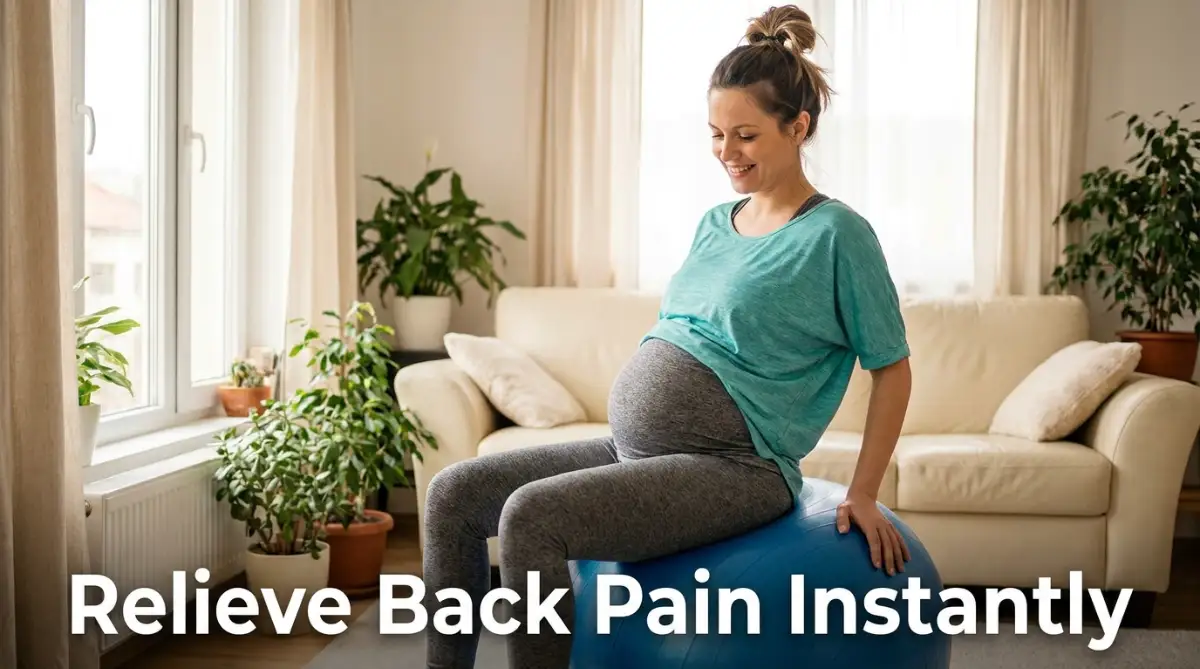
The biggest mistake I see constantly is using a deflated or improperly sized ball. When your ball does not have enough air, your hips sink down into a bucket shape. This position forces your knees to sit much higher than your pelvis.
The Danger of the "Bucket Seat" Position
When your knees are higher than your hips, your pelvis tilts sharply backward. This completely ruins the goal of optimal fetal positioning. Instead of falling forward, the heaviest part of your baby falls backward against your spine.
This causes the baby to settle down looking straight up at the ceiling, which is called the posterior position. A posterior baby leads to intense, agonizing back labor that can last for days. Simply putting more air in your ball can completely prevent this nightmare scenario.
Your hips must always remain higher than your knees when you sit. You should feel like you are lightly perching on the top of the ball, not sinking into a beanbag chair. If you are unsure, sit in front of a mirror and check your knee angle.
Slouching: The Silent Enemy of Natural Birth
Another massive issue is terrible posture while sitting on the ball. It is completely normal to feel exhausted during the third trimester. However, letting your shoulders slump and your back round out destroys your internal space.
Imagine trying to blow up a balloon inside a small, crushed box. It simply will not work. When you slouch, you compress your diaphragm and steal the valuable room your baby needs to move down.
Good posture is heavily emphasized in any trusted biomechanics guide for expecting mothers. Sitting up incredibly tall acts as an open invitation for your baby to engage in the pelvis. It aligns your spine naturally with gravity.
If your core is too tired to sit up straight, do not force it. Simply get off the ball and rest on your side with a pillow between your knees. It is always better to rest properly than to practice bad posture.
Aggressive Bouncing and False Labor
I made a huge mistake with my first pregnancy by trying to force labor with aggressive bouncing when I was two days past my due date. All it did was cause severe spasms in my lower back, leaving me completely exhausted and in tears the next day. Now I always tell moms that gentle, slow hip circles are far more effective for natural induction than frantic bouncing ever will be.
We need to address the very real desperation many moms feel when they pass their due date. You want to meet your baby, and you are exhausted from carrying the extra weight. This often leads women to try desperate labor inducing methods at home.
Some moms will sit on the ball and bounce as hard and as fast as they can. They believe that forceful movement will simply shake the baby out. This is a very dangerous misconception.
Aggressive bouncing can inflame your pelvic joints and cause severe round ligament pain. It also stresses the baby, which is the exact opposite of what you want for a natural birth. Your body will not open up if it feels like it is under attack.
If you are trying to induce labor at home, gentleness is your best weapon. You want to coax the baby down, not force them. For more safe and gentle methods, I highly recommend reading about how to help labor progress at home naturally.
Ignoring the Signs of Exhaustion
The final major pitfall is ignoring your body's clear request for a break. These birth ball exercises are low impact, but they are still a workout. Your pelvic floor muscles can get fatigued just like your biceps or hamstrings.
If you start feeling a dull, dragging ache in your lower pelvis, you need to stop. Pushing through the pain does not make you stronger in this situation. It simply causes your muscles to spasm and tighten up defensively.
Good Health tips always prioritize recovery. If you do your routine in the morning and feel sore by the afternoon, take the next day off. Your body is doing incredible, heavy work behind the scenes, so give it the respect it deserves.
Your Roadmap to a Confident, Empowered Delivery
We have covered exactly why your body hurts and how a simple piece of rubber can fix it. You now know the exact movements that relieve pressure, stretch tight hips, and encourage the baby to move into the perfect spot.
You also know exactly what mistakes to avoid so you do not waste your time or cause extra pain. The only thing left to do is actually turn this knowledge into a daily habit. Information is useless unless you actively apply it to your life.
You do not have to wait until you are miserable to start this routine. Whether you are 25 weeks or 39 weeks pregnant, today is the perfect day to begin. Your body will instantly thank you for the gentle movement and the dedicated stretch time.
Building Your Perfect Nighttime Ritual
The easiest way to stay consistent is to attach this routine to something you already do. Make it a core part of your evening wind-down process.
After you finish dinner, dim the lights in your living room to signal your brain that it is time to relax. Grab your fully inflated fitness ball and place it in front of the television. Instead of sinking into the couch, take a seat on the ball.
Start with five minutes of gentle pelvic tilts while you sip on some water. Roll your hips into those big, smooth figure-8 circles. Let the stress of the day completely melt away as you focus entirely on your breathing.
When a commercial comes on, get on the floor and do your deep kneeling stretches. Hang your belly down, stretch your arms out, and let gravity pull the tension out of your spine. This simple 20-minute investment will completely change how you sleep that night.
Trusting Your Body's Ancient Wisdom
As we wrap up this guide, I want to leave you with a very important reminder. Your body was specifically designed to do this. Childbirth is not a medical crisis; it is a natural, biological event.
The pain and stiffness you are feeling right now are just side effects of your body preparing for a massive physical shift. By using these exercises, you are actively helping your body do what it already knows how to do.
You are a strong, capable mother who is taking full control of her labor prep. Every time you bounce, stretch, and breathe, you are building extreme physical and mental endurance.
You are moving away from fear and stepping straight into confidence. When the first real contractions start, you will not panic. You will simply grab your ball, close your eyes, and start moving exactly how you practiced.
You have absolutely got this. Enjoy these final, quiet moments with your baby, keep your hips moving, and prepare to have an incredibly empowering delivery.
Looking back, investing just 20 minutes a day on that simple rubber ball completely changed how my body handled the actual delivery room. I went from feeling terrified and physically broken to walking into the hospital feeling strong, stretched, and entirely in control. Grab your ball today, play your favorite quiet music, and trust that your body knows exactly what to do when you simply give it the right support.
Disclaimer:
The information provided in this article is for educational and informational purposes only and does not constitute medical advice. Every pregnancy is completely unique. Always consult with your doctor, midwife, or qualified healthcare provider before starting any new exercise routine, stretches, or attempting natural induction methods at home.