A Complete Guide to Managing Daily Tasks with Google Gemini Spark
You wake up, grab your phone, and instantly feel a heavy weight on your chest. There are dozens of unread emails, scattered calendar invites, and random notes saved in three different apps. You are trying to remember that one brilliant idea you had last night, but it is completely gone.
This is the silent struggle we face every single day. We are forced to act like supercomputers, trying to process infinite amounts of data with human brains. It leaves us feeling drained, anxious, and constantly afraid of forgetting something important for productivity ai by using smart assistant.
I remember waking up last month and almost throwing my phone across the room in frustration. I had over fifty unread emails, and I completely missed a client meeting because I forgot to write it down in my main calendar. It was in that exact moment of panic that I realized my brain just couldn't handle this messy digital overload anymore.
Have you ever spent twenty minutes just searching for a specific file or a link someone sent you? That frustration slowly builds up and destroys your mental peace. We spend more time organizing our work than actually doing the work by chatGPT alternative
Imagine sitting at your desk, taking a deep breath, and realizing you do not have to manage everything alone anymore. You do not need to rely purely on your own memory to survive the week. What if an intelligent system could silently connect the dots of your life while you sip your morning coffee?
This is exactly why we need a true personal assistant, not just another standard search box. A system that understands your habits, remembers your preferences, and organizes the chaos into clear, actionable steps. Let us look at how technology is finally shifting to fix this massive human problem.
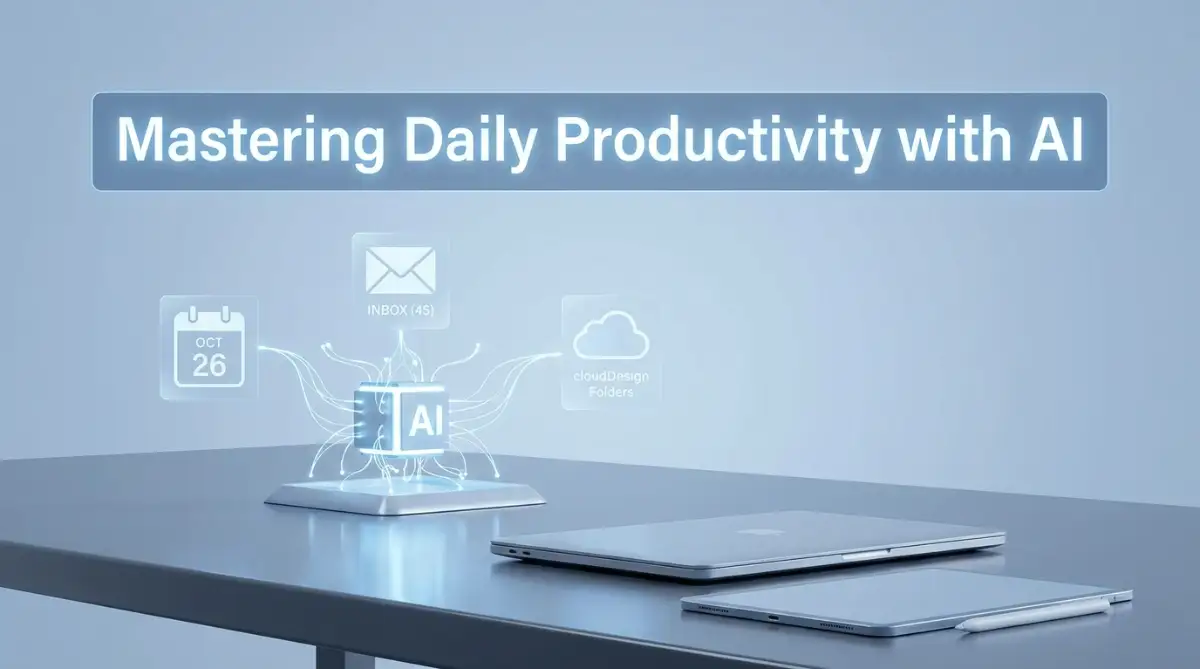
Shifting from Simple Chatbots to Proactive Assistants
Most of us are completely used to the standard way of interacting with digital tools. You ask a question, and the machine gives you an answer. If you do not ask the right question, you get a useless response.
This reactive model is highly exhausting. It places the entire burden of thinking and prompting directly on your shoulders. You have to be the manager, the director, and the quality checker all at once.
A true personal ai agent flips this script completely. Instead of waiting for your exact command, it looks at your connected ecosystem and anticipates your needs. It acts like a highly trained human assistant who knows your schedule better than you do.
When we talk about GeminiSpark, we are looking at a system built on top of the powerful GoogleGemini infrastructure. It is not just predicting the next word in a sentence. It is actively analyzing your daily routines to save you mental energy.
How Traditional Tools Fall Short
Think about the time you used early versions of chatGPT for a complex project. You had to explain your entire background, your goal, and your preferred tone in every single conversation. It felt like training a new employee every single morning.
Other tools like Cloude offer amazing analytical skills and large memory windows. However, they still exist in an isolated box separate from your daily digital workspace. You have to manually copy and paste information back and forth.
We need something deeply integrated into the tools we already use. A smart assistant should be able to read your upcoming meeting notes and prepare a summary without you lifting a finger. This level of deep integration is what separates a simple tool from a personal agent.
The Science of Contextual Memory
How does an ai actually remember who you are? It all comes down to contextual memory architectures and continuous learning loops. The system safely stores bits of your preferences over time.
When you tell your agent that you prefer bullet points over long paragraphs, it updates your core user profile. The next time you ask for a summary, it automatically formats it exactly the way you like it. You never have to repeat your formatting rules again.
This creates a deeply personalized experience. The machine stops being a generic robot and starts reflecting your unique working style. It becomes an extension of your own thought process.
Expert Insight: True productivity happens when technology becomes invisible. If you have to spend ten minutes configuring your smart assistant, you have already lost your focus.
Real-Life Scenarios: Managing the Morning Chaos
Let us walk through a very common, highly stressful scenario. It is a busy Monday morning, and your inbox is completely flooded. You have a project presentation due in three hours.
Automatically Sorting the Noise
Normally, you would start opening emails one by one, deciding what is urgent. With GeminiSpark, the agent has already reviewed the incoming messages before you even unlocked your screen. It silently categorizes the noise.
It highlights a message from your boss as high priority and pushes promotional emails into a separate, silent folder. It then generates a three-sentence summary of what you missed overnight. You get the exact context you need in less than thirty seconds.
This is not magic; it is logical data sorting based on sender history and keyword urgency. The agent recognizes patterns in your communication to determine what genuinely matters to you.
Connecting the Dots Across Apps
Let us say your presentation requires some graphic assets you stored in cloudDesign a few weeks ago. Instead of opening a new tab and digging through folders, you simply ask your agent to pull them up.
The agent searches across your connected drives, finds the exact cloudDesign files, and links them directly into your draft. It understands the relationship between your upcoming calendar event and the files you need for it.
You just saved fifteen minutes of mindless searching. You can now spend that extra time actually practicing your presentation. Your stress levels remain incredibly low.
The Three Pillars of a Highly Effective AI Agent
To truly understand why this technology feels so different, we need to look at its core structure. A reliable personal agent relies on three specific abilities to function smoothly.
1. Autonomous Task Execution
The biggest difference between a chat interface and an agent is autonomy. A chatbot gives you instructions on how to do something. An agent actually goes and does the task for you.
If you say, "Move my afternoon meeting to tomorrow," the agent accesses your calendar. It checks the other person's availability, sends the rescheduling email, and updates your agenda. It completes the entire loop without needing your constant supervision.
2. Multi-Modal Understanding
Human life is not just text. We deal with images, voice notes, PDFs, and video links every single day. A smart agent must be able to process all these different formats simultaneously.
Because it is built on GoogleGemini, this system naturally understands a picture of a handwritten note just as well as a typed document. You can snap a photo of a whiteboard after a meeting, and the agent will turn those scribbles into a structured to-do list.
3. Safety and Boundary Recognition
Giving a machine access to your daily life requires immense trust. A well-designed ai agent operates within strict, user-defined boundaries. It will never send an email or delete a file without asking for your explicit permission first.
You have total control over what it can and cannot see. If you want it to manage your work calendar but ignore your personal photos, you simply toggle a switch. Privacy is built directly into the foundation of the tool.
Comparing the Heavyweights in the Industry
Choosing the right tool can feel overwhelming with so many options available today. Let us look at a simple, objective comparison of how different systems handle daily personal tasks.
As you can see, each tool has a very specific strength. If you are writing a massive technical document, Cloude might be your best friend. However, for running your daily life and managing your schedule, a deeply integrated agent makes much more sense.
Building Your Own Personalized Knowledge Base
One of the most powerful things you can do with a smart agent is create a "second brain." We consume so much information through articles, podcasts, and videos. Sadly, we forget almost 90% of it within a few days.
Saving Ideas Without Friction
Whenever you read a great article, you can just tell your agent to save the key takeaways. You do not need to organize it into specific folders or tag it manually. The ai reads the content and categorizes it logically based on the context.
Six months later, you might be working on a completely new project. You can simply ask, "What was that article I read about human psychology and habit building?" The agent pulls it up instantly.
Generating Fresh Insights
It goes a step beyond just saving links. Because the agent remembers everything you have saved, it can start connecting entirely different ideas together. It acts like a quiet brainstorming partner.
If you save notes about healthy eating and notes about budget planning, the agent can naturally suggest a low-cost meal prep plan. It combines your distinct interests into practical, real-world solutions.
Pro Tip: Treat your agent like a smart filing cabinet. Whenever you have a random thought while walking or driving, use voice-to-text to dump it into your agent's memory. Let the machine organize the mess later.
Overcoming the Fear of the Blank Page
Writer's block is a massive problem for professionals and creatives alike. Staring at a blinking cursor can cause serious anxiety, especially when you are on a tight deadline. A personal agent completely removes the pressure of starting from scratch.
The Brainstorming Phase
Instead of forcing yourself to write the perfect opening line, you just talk to your agent. You can type, "I need to write an email to my team about the new software update, make it sound friendly but urgent." Within seconds, you have a solid first draft.
The draft might not be absolutely perfect, and that is completely fine. The goal is to get words on the page so you have something to edit. It is always easier to edit a slightly flawed draft than to create magic out of nothing.
Refining Your Unique Voice
Many people worry that using ai will make them sound robotic and boring. This only happens if you accept the very first output without any adjustments. The secret is to teach the agent your specific tone of voice.
You can feed the agent three emails you have written in the past and tell it to copy that exact style. Once it understands your rhythm and vocabulary, its drafts will sound exactly like you. You remain the editor-in-chief of your own work.
Myth vs Reality: Understanding Smart Assistants
There are many misunderstandings about what these tools actually do. Let us clear up some of the most common worries people have when setting up a personal agent.
Myth: The machine will eventually take over my decisions and act without my permission.
Reality: These systems operate strictly on a permission-based model. They cannot execute highly sensitive tasks unless you explicitly click a confirmation button. You are always holding the steering wheel.
Myth: Using a smart assistant will make me lazy and reduce my cognitive skills.
Reality: Calculators did not make humans bad at math; they allowed us to solve much harder physics problems. Offloading boring, repetitive tasks gives your brain the energy to focus on deep, creative thinking.
Myth: I need to be a coding expert to set up an ai agent properly.
Reality: The entire purpose of modern tools like GoogleGemini is natural language processing. If you know how to text a friend, you already know how to program your personal agent. You just speak to it in plain English.
Practical Steps to Start Using Your Agent Today
You do not need to change your entire life overnight. The best way to adopt this technology is through small, highly manageable steps. Let us look at a comfortable way to integrate this into your daily routine.
If you are a visual learner, I highly recommend watching this quick video below where I walk through the exact setup process step-by-step. Check it out, and then keep reading to see how you can easily connect this to your own daily habits!
Step A: The Low-Risk Trial
Start by handing over only one specific, low-risk task. For example, use the agent solely for summarizing long documents or planning your weekly grocery list. Do not connect it to your main work email just yet.
This allows you to see how the system thinks and responds. You will slowly build trust as you realize how accurate the summaries are. It takes the pressure off both you and the machine.
Step B: Expanding to Daily Planning
Once you feel comfortable, start using the agent to plan your days. Tell it your main goals for the week and ask it to block out focus time on your calendar. Let it analyze where you are wasting time.
You will likely notice that you are scheduling too many back-to-back meetings. The agent can suggest small breaks and automatically adjust your agenda to prevent afternoon burnout. This small change drastically improves your energy levels.
Step C: Full Workflow Integration
After a few weeks, you can start connecting your bigger apps. Let the agent pull data directly from your cloudDesign files or your company chat channels. This is where you experience the true magic of a fully connected digital ecosystem.
You can literally tell your computer, "Prepare me for my 3 PM meeting." The agent will gather the relevant chat history, the slide deck, and the client's past emails into one clean dashboard. You will walk into that meeting feeling completely prepared and relaxed.
Creating a Healthier Relationship with Technology
At the end of the day, all this technology is completely useless if it just makes you work longer hours. The ultimate goal of a personal ai agent is to buy back your free time. It is about creating space for the things that actually matter in your life.
If the agent saves you an hour a day on email management, do not use that hour to do more work. Use it to go for a walk, read a book, or spend time with your family. Technology should serve your well-being, not just your company's bottom line.
Setting Digital Boundaries
Just because your agent is available around the clock does not mean you have to be. You can easily program your assistant to silence all non-emergency notifications after 6 PM. It will act as a digital bouncer, keeping the noise away from your personal life.
If a client sends an email late at night, the agent can automatically reply with your working hours. It manages expectations gently and professionally. You wake up the next morning rested and ready to tackle the exact tasks the agent organized for you.
The Future of Personal Assistance
We are moving away from a world where humans have to learn how to speak to computers. We are entering an era where computers finally understand how to speak to humans. Tools like GeminiSpark represent a massive shift in how we handle information overload.
Your digital life does not have to be a messy, stressful experience. By adopting a smart, proactive assistant, you regain control over your time and your mental clarity. You become the true master of your workflow, with a tireless helper silently supporting you in the background.
Mastering Your Digital Partner: Pro-Level Strategies
Once you understand the basic functions of a smart assistant, you can start unlocking its true power. Most people only scratch the surface of what these tools can actually do. They use them for simple grammar checks or quick web searches.
If you want to experience a massive shift in your daily productivity, you have to think bigger. You need to transition from giving one-off commands to building automated workflows. GeminiSpark shines the brightest when you let it handle complex, multi-step routines.
I am going to share some advanced strategies that professionals use to save hours every single week. These are not complicated coding tricks. They are simple changes in how you communicate with your machine.
Teaching the Art of Contextual Reasoning
Your assistant is incredibly smart, but it cannot read your mind. If you give it vague instructions, you will get generic, boring results. The secret lies in feeding the system high-quality background information.
Think of your agent like a brilliant junior employee who just joined your company today. You would never ask them to write a client proposal without showing them your past work first. You have to provide clear examples of your preferred style.
This logic applies across all forms of digital generation. For example, if you are learning how to write ai image prompts, you quickly realize that specific details create better art. The exact same principle applies to text and task management.
When you ask the agent to draft an email, always include the emotional tone you want. Tell it to be professional but warm, or direct and firm. This tiny addition completely changes the quality of the output you receive.
Setting Up the Perfect Morning Automation
Imagine waking up to a personalized newspaper that only contains information relevant to your actual life. You can program your agent to generate a daily brief every morning at 7:00 AM. This one habit will instantly lower your morning anxiety.
You can set a rule that tells the system to review your inbox, your calendar, and your project management board. The agent then writes a short, bulleted list of your top three priorities for the day. You read this brief while drinking your coffee, long before you open your laptop.
This simple routine relies on the massive processing power of the GoogleGemini infrastructure. It prevents you from feeling overwhelmed by looking at fifty unread messages. You start your day with absolute clarity and focus.
Psychologists heavily support this method of organizing your morning. By reducing the number of small choices you make early in the day, you practice highly effective cognitive offloading techniques to preserve your mental energy. You save your brainpower for the hard work.
Connecting Your Deep Workspace
The true magic happens when your assistant can speak to all your other applications. A standalone tool is nice, but an integrated partner is a game-changer. You need to connect your agent to your digital storage drives.
Let us say you are a graphic designer organizing assets in cloudDesign for a new client. Normally, finding last month's logo variations takes entirely too long. If your workspace is integrated, you simply ask the agent to pull all files related to that specific client.
The ai agent instantly scans your folders, retrieves the exact image files, and links them into your current chat window. You never had to leave your primary screen. This seamless flow keeps you in a state of deep, uninterrupted work.
The Sous-Chef Analogy
I like to compare this setup to running a high-end restaurant kitchen. You are the executive head chef, and the smart agent is your trusted sous-chef. The head chef does not spend time chopping onions or washing potatoes.
The head chef focuses entirely on the final taste, the presentation, and the overall menu design. You should treat your digital life the exact same way. Let the machine handle the boring data entry and file sorting.
You step in only to make the creative decisions and add the final human touch. This division of labor is the absolute secret to avoiding modern burnout. You get to focus on the work that actually brings you joy and satisfaction.

The Silent Traps of Relying on Smart Assistants
While this technology is incredibly helpful, it comes with a few hidden dangers. When people first discover the power of an ai assistant, they often get overly excited. This excitement leads to some very common, yet highly destructive mistakes.
If you do not set proper boundaries, your helpful assistant can quickly turn into a messy liability. I have seen countless professionals ruin important client relationships because they blindly trusted a machine. We need to talk about these pitfalls openly.
You cannot just turn the system on and expect your life to magically fix itself. A tool is only as good as the person operating it. Let us look at the biggest errors you must avoid at all costs.
The Vending Machine Mindset
The most common mistake is treating your intelligent agent like a cheap vending machine. You put a short, lazy prompt in, and you expect a perfect, finished product to pop out. This works fine for basic platforms like chatGPT when you just need a quick recipe.
When I first started using a smart assistant, I made the huge mistake of blindly copying its very first answer. It actually made me look silly when I sent a completely robotic-sounding email to my biggest client. Now, I always talk to my agent like a real coworker and push it to edit the text until it sounds exactly like me.
However, a personal agent is designed for ongoing conversation and refinement. If you accept its very first answer without asking follow-up questions, you are leaving massive value on the table. You are treating a dynamic partner like a static encyclopedia.
Instead, push back on the machine. Ask it why it chose a certain schedule for you, or tell it to rewrite a paragraph to sound more confident. The more you interact with the agent, the better it understands your unique preferences.
The Danger of Blind Trust and Hallucinations
Never forget that these systems are highly advanced pattern-prediction engines. They are not human, and they do not actually "know" facts the way we do. Sometimes, they confidently generate completely false information.
If you ask your agent to summarize a highly technical financial report, you must double-check the final numbers. Imagine sending an automated email to your boss with the wrong quarterly revenue data. The embarrassment and loss of trust would be massive.
We see this same concept in visual generation as well. Even when you watch how text-to-image ai models generate stunning digital art, you will occasionally spot a hand with six fingers. Text models have their own version of "six fingers," which we call logical hallucinations.
You must always remain the final editor. Read every single email before it goes out. Review every schedule change before it is finalized. Your name is on the final product, not the machine's name.
Ignoring Strict Privacy Boundaries
Another massive mistake is handing over the keys to your entire digital life without thinking about privacy. You should never grant an application access to highly sensitive personal data unless it is absolutely necessary.
If you are using a tool like Cloude for analyzing public marketing trends, it does not need access to your personal family photos. You must go into the settings and manually restrict what the agent is allowed to read.
Corporate environments are especially strict about this. You should always read up on secure AI data practices before connecting your company email to a third-party server. A simple data leak can cost you your job or ruin your business reputation.
The Digital Hoarder Syndrome
Because it is so easy to save information now, people start saving absolutely everything. They tell their agent to remember every random thought, every funny meme, and every useless article they scroll past. This creates a cluttered, noisy memory bank.
When you fill your assistant's memory with junk, it struggles to find the things that actually matter. Its responses become slow, confused, and highly irrelevant. You have essentially created a digital hoarder situation.
You need to practice information hygiene. Only ask the system to remember key insights, important project details, and core personal preferences. If you keep the memory bank clean and focused, the agent will remain sharp and highly effective.
Your Action Plan for a Smarter Tomorrow
We have covered a massive amount of ground today, from the daily struggles of digital burnout to the advanced setups of top professionals. You now understand that a smart agent is far more than a simple chat window. It is a highly capable digital partner waiting for your instructions.
The goal is not to become a robotic, hyper-productive machine that never sleeps. The real goal is to remove the friction from your daily chores so you can breathe easier. You deserve to close your laptop at five o'clock and actually enjoy your evening by your GoogleGemini.
Reading about these strategies is great, but taking action is what changes your life. I do not want you to feel overwhelmed by trying to implement everything at once. I have designed a simple, low-stress challenge for you to start right now.
The 48-Hour Integration Challenge
Day 1: The Small Win. Tomorrow morning, pick just one repetitive task that annoys you. It could be sorting your promotional emails or summarizing a long industry report. Hand that single task over to your agent and watch how it performs.
Do not connect your main calendar or your secure company drives yet. Just let the system handle this one isolated chore. This builds your confidence and helps you understand the interface without any serious risks.
Day 2: The Feedback Loop. On the second day, ask the agent to write a short email for you. When it gives you the draft, do not accept it. Tell the machine exactly what you do not like about it, and ask for a revision.
Practice the art of pushing back. Teach it your specific tone of voice and your formatting preferences. Once you see the second, much better draft, you will finally understand the true power of a conversational digital partner.
A Final Word on Digital Freedom
Technology should always serve humanity, not the other way around. If a new application makes you feel more stressed or demands too much of your time, it is failing its purpose. You are completely in charge of how deep you want to go.
Tools like GeminiSpark are here to lift the heavy mental burdens we were never meant to carry. Let the servers process the endless streams of data. You focus on being creative, being present, and doing the things that only a human being can do.
Take a deep breath, open up a new chat window, and say hello to your new assistant. Your journey toward a peaceful, highly organized digital life starts today.
Looking back, giving an AI assistant a real chance was the best thing I ever did for my own mental peace. If I can go from being constantly overwhelmed to actually enjoying my mornings again, I promise you can too. Take that tiny first step today, and just watch how much easier your work week becomes.
Disclaimer: The information provided in this article is for educational and informational purposes only. AI tools and platform features update frequently. Always verify privacy settings and data security protocols before integrating personal or corporate accounts with third-party digital assistants. We do not guarantee specific productivity results, as individual experiences will vary.


