
Relieve Dog Paw Licking Safely: A Proven Natural Recipe That Works
It is 3:00 AM. The house is completely dark and silent. You are finally in a deep, peaceful sleep.
Suddenly, you hear it. Slurp, slurp, chew, lick.
Your eyes pop open. You look over the edge of the bed, and there is your sweet dog, aggressively going to town on their front paws. The sound is wet, repetitive, and honestly, a little maddening. You softly say, "Hey, stop that." They pause, look up at you with guilty eyes, and the second you turn around, the licking starts all over again.
I remember sitting on my living room floor at 4 AM, nearly in tears, while my own dog obsessively chewed his front paws raw. I had spent hundreds of dollars on special sprays and plastic cones, but nothing gave him real peace. It felt like I was completely failing him, until I finally stumbled upon a natural routine that completely changed our lives.
I know exactly how this feels. As dog parents, we want nothing more than to see our furry best friends relaxed and comfortable. Hearing them chew their paws raw breaks your heart.
You start worrying about infections, hot spots, and expensive vet bills. You might even find yourself feeling frustrated and losing sleep because of the constant noise. This endless cycle destroys your peace of mind and leaves your dog in serious physical discomfort.
Sometimes, the licking gets so bad that their fur turns a rusty brown color from their saliva. Their paws become red, swollen, and warm to the touch. You try wrapping them up, buying silly little dog booties, or even using the dreaded "cone of shame."
But the moment the barrier is gone, they go right back to chewing.
Why do they do this? Are they anxious? Do they have a hidden allergy? You ask yourself these questions every single day. The reality is, excessive paw licking is a massive cry for help.
Your dog is not trying to annoy you. They are simply trying to soothe an itch or a pain that they cannot scratch any other way. The good news is, you do not need to rely on harsh chemicals or expensive medications to give them relief. Today, we are going to fix this together with a safe, simple, and incredibly effective natural method.
Uncovering the Root Cause of the Itch
Before we jump into mixing up our natural recipe, we need to understand the enemy. Treating the symptom without knowing the cause is like putting a tiny bandage on a leaking pipe. It might look better for a minute, but the mess will eventually come back.
Dogs lick their paws for a few very specific reasons. Environmental allergies are the most common culprits. Think about everything your dog steps on during a simple morning walk.
They walk through morning dew, lawn fertilizers, pollen, dust, and sometimes even road salt. All of these invisible irritants get trapped right between their sensitive paw pads.
Food allergies play a massive role too. When a dog is allergic to chicken, beef, or cheap grains in their kibble, the inflammation does not just stay in their stomach. It pushes out through their skin.
This systemic inflammation often shows up in their extremities, primarily the paws and the ears. Interestingly, a dog dealing with severe food allergies or yeast overgrowth might also experience other uncomfortable issues. For example, if you notice dogscooting across your living room rug, this is often linked to the same inflammatory response.
When systemic inflammation hits, it can cause swollen AnalGlands and other frustrating analproblems. So, if your dog is chewing their paws and dragging their bottom, you are likely looking at a full-body yeast infection or a severe allergy. Prioritizing overall DogHealth means paying attention to these connected symptoms.
Myth vs. Reality: The Paw Licking Truth
There is a lot of bad advice floating around on the internet. Let's clear up some common misunderstandings right now.
Understanding these facts is the first step toward effective PetCare. You cannot solve a problem if you are working with the wrong information.
The Ultimate Natural Paw Soak Recipe
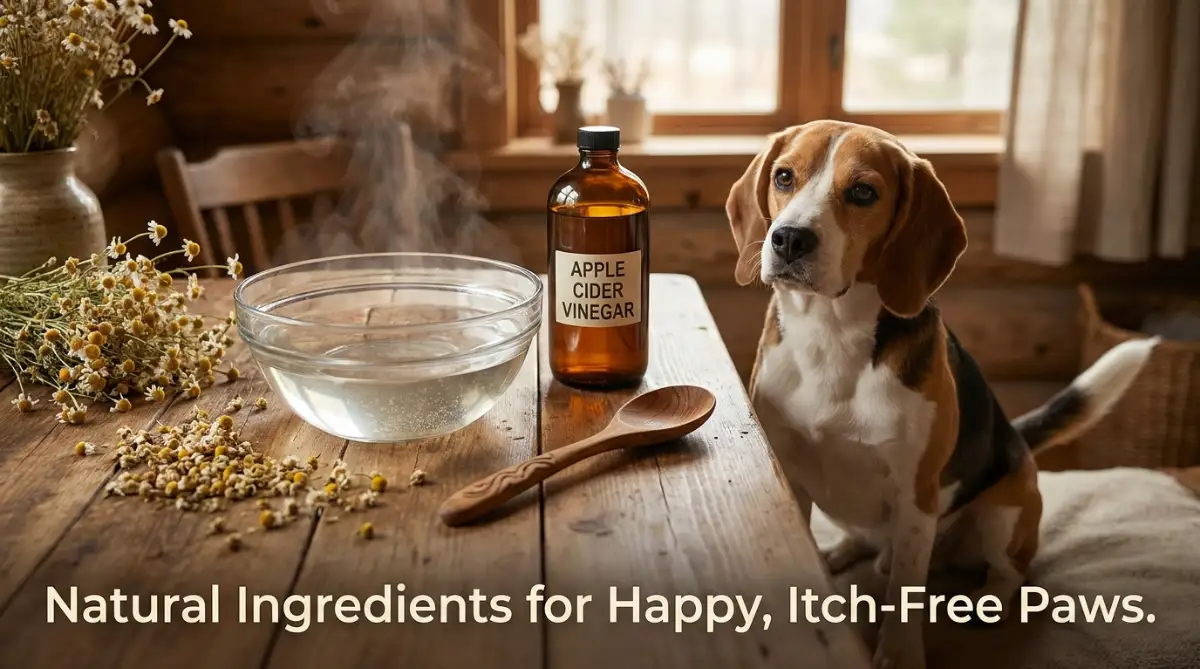
Now, let's get into the exact formula that will bring your dog instant relief. This is an incredibly gentle, completely natural foot bath. You probably already have most of these ingredients sitting in your kitchen pantry right now.
This recipe uses the power of natural anti-inflammatories and mild antifungals. It will safely wash away environmental allergens, kill active yeast, and soothe angry, red skin.
What You Will Need (The Ingredients)
1. Organic Apple Cider Vinegar (with the "mother")
This is the star of our recipe. Apple cider vinegar is a natural antifungal and antibacterial powerhouse. It helps balance the pH level of your dog’s paws, making it a harsh environment for yeast and bacteria to survive itchy dog paws.
Make sure you buy the raw, unfiltered kind. The cloudy stuff floating at the bottom (called the "mother") contains all the beneficial enzymes.
2. Pure Chamomile Tea
Chamomile is not just for helping you sleep at night. It is highly regarded in the DogWellness community for its intense skin-soothing properties. It acts as a natural mild astringent and anti-inflammatory.
When applied locally to the skin, it reduces redness and cools the burning sensation. We will be using strong, brewed chamomile tea as the base of our soak.
3. Epsom Salt (Unscented)
Epsom salt is amazing for drawing out toxins and reducing swelling. If your dog has a tiny splinter or a minor scrape hiding between their toes, Epsom salt will help heal it.
Always check the package to make sure it is 100% pure magnesium sulfate. Never use scented Epsom salts, like lavender or eucalyptus, because synthetic fragrances will irritate your dog’s skin even more natural dog remedies.
4. Warm Filtered Water
You want the water to be comfortably warm, just like a baby’s bath. Hot water will increase the itchiness, and cold water will make the soak uncomfortable for your dog.
Step 1: Preparing the Healing Soak
Preparation is key here. You want everything ready before you even call your dog into the room. Dogs are smart. If they see you panicking and running around with towels, they will get anxious and try to run away.
Start by boiling about two cups of water. Place three plain chamomile tea bags into the hot water and let them steep for a good ten minutes. You want this tea to be incredibly dark and strong.
Once the tea has steeped, remove the tea bags and let the liquid cool down completely. You can pop it in the fridge for a few minutes to speed up the process.
Next, grab a small plastic basin, a clean bucket, or just use your bathtub if you have a large dog. Pour your cooled chamomile tea into the basin.
Add one cup of the organic apple cider vinegar. Then, stir in two tablespoons of unscented Epsom salt. Mix it around gently with a wooden spoon until the salt is fully dissolved.
Finally, add enough warm filtered water to bring the level up to a few inches. You only need the water to be deep enough to cover your dog’s paw pads and nails stop paw licking.
If you are wondering exactly how to get a nervous dog to sit still for a foot bath, watch this quick visual guide to see a stress-free method in action. Once you finish watching, keep reading below to discover the exact steps you must take right after drying to stop yeast from coming back!
Step 2: The Application Process
This step requires patience. Do not just grab your dog’s leg and shove it into the water. If you force them, they will fight you, and water will go everywhere.
Make this a highly positive experience. Grab a handful of their absolute favorite high-value treats. You can use tiny pieces of boiled chicken or natural peanut butter.
Lead them to the basin and let them sniff the water. Give them a treat just for looking at it. Gently lift one paw and slowly lower it into the mixture.
Praise them softly and give them another treat. You want them to stand in this mixture for about three to five minutes. This time frame allows the apple cider vinegar to kill the yeast and the chamomile to soothe the angry skin.
If your dog absolutely hates standing in water, you have a backup option. Soak a clean, soft washcloth in the mixture. Gently press the wet cloth against their paws, holding it there for a minute or two on each foot.
Step 3: Drying and Protecting
What you do after the soak is just as important as the soak itself. VeterinaryAdvice often highlights that leaving paws wet is a huge mistake. Yeast thrives in warm, dark, and damp environments.
If you leave the spaces between their toes wet, you will actually create a breeding ground for more yeast. Take a highly absorbent microfiber towel and gently pat the paws dry. Do not aggressively rub the skin, as this will trigger the itch all over again.
Make sure you get the towel right in between the paw pads. Once the paws are completely bone dry, you can apply a natural protective barrier.
Grab a tiny amount of organic, unrefined coconut oil. Coconut oil is fantastic because it is naturally antibacterial and highly moisturizing. Rub a pea-sized amount onto the rough pads of their feet.
Be careful not to use too much, or your dog will slide around on your hardwood floors like an ice skater. If they lick a little bit of the coconut oil, do not panic. It is perfectly safe for them to ingest and actually offers great PetHealthTips benefits for their digestion.
Designing a Long-Term Relief Routine
One single paw soak is not going to magically cure everything forever. Consistency is the secret weapon here. If your dog is currently suffering from a severe licking habit, you need a solid daily routine.
I learned the hard way that skipping just one day of this routine too early brought all the intense itching right back. My biggest realization was that I needed to treat this soak just like giving a daily medicine, so I started setting an alarm on my phone to make sure I never missed a session.
For the first week, perform this paw soak once a day. I highly recommend doing this right after their longest outdoor walk. This immediately washes away any fresh grass, pollen, or chemicals they just stepped on.
After the first week, you should notice a massive reduction in the licking. The redness will begin to fade into a healthy pink color. At this point, you can reduce the soaks to just two or three times a week for maintenance.
Real-Life Scenario: Breaking the Habit
Sometimes, the itching has stopped, but the licking continues. Why does this happen? Dogs are creatures of habit.
Licking actually releases endorphins in a dog's brain. It makes them feel good and helps them relieve stress. If they have been licking their paws for months, it has become a deeply ingrained habit, much like a human biting their fingernails.
You have to actively break this cycle. When you see your dog start to lick out of pure boredom, politely interrupt them. Do not yell or scold them, as this will just make them anxious.
Instead, distract them with something positive. Hand them a puzzle toy stuffed with frozen yogurt. Give them a hard chew bone. Redirecting their brain to a new, healthy activity will help them forget about their paws.
The Inner Connection: Gut Health and Itchy Skin
You cannot talk about healthy skin without talking about what goes into your dog's stomach. The skin is the largest organ on your dog’s body. It directly reflects what is happening on the inside.
If your dog’s gut microbiome is an absolute mess, their skin will be a mess too. Cheap dog foods are loaded with artificial colors, synthetic preservatives, and heavy carbohydrates like corn and wheat.
These ingredients break down into sugars inside the body. Yeast feeds exclusively on sugar. The more cheap carbs your dog eats, the more the yeast multiplies on their skin and in their ears.
Switching to a high-quality, protein-rich diet can completely transform your dog's life. Look for foods with limited, natural ingredients. Consider adding a daily canine probiotic to their meals.
Probiotics introduce good bacteria back into the gut. These good bacteria will naturally fight off the bad yeast overgrowth from the inside out. Combining a healthy, balanced diet with our external chamomile and vinegar paw soak is the ultimate strategy for success home remedy for dogs
Expert Insight: When to Call the Vet
While this natural recipe is incredibly powerful, you must always use common sense. Natural remedies are designed for mild to moderate irritation, allergies, and daily maintenance.
If you inspect your dog's paw and notice deep, open wounds, you need to pause immediately. If the paw is bleeding, oozing yellow pus, or smells horribly foul, the infection has gone beyond a simple home remedy.
Applying vinegar to an open, bleeding wound will cause severe pain and burning. In these specific scenarios, seeking professional help is absolutely necessary. A veterinarian might need to prescribe temporary antibiotics to get the severe infection under control first.
Once the open wounds are completely healed, you can then start using this natural soak to prevent the problem from ever coming back.
Making Your Home an Allergy-Free Zone
Your home environment plays a massive role in your dog's daily comfort. You might be unintentionally bringing allergens into the house every single day.
Think about the cleaning products you use on your floors. If you mop with heavy chemical bleach or heavily scented floor cleaners, your dog is walking directly on those chemicals. They then go to their bed and lick those harsh toxins right off their feet.
Switch to pet-safe, natural floor cleaners. You can easily clean your floors with a simple mixture of warm water and white vinegar. It sanitizes perfectly and leaves absolutely no toxic residue behind.
Also, consider wiping your dog's paws with a damp cloth every single time they come inside from the yard. Keeping a small towel by the back door takes only ten seconds. This tiny habit prevents millions of microscopic allergens from settling into their fur and starting the itch cycle.
By managing their diet, using this powerful natural paw soak, and keeping their environment clean, you will see an incredible change. You will finally be able to sleep through the night without hearing that frustrating slurping sound. Your dog will feel happier, more relaxed, and deeply grateful for the relief you have given them.
Beyond the Basics: Long-Term Strategies for Itch-Free Paws
Fixing the immediate itch is a huge relief for both you and your dog. However, keeping those paws healthy for the rest of their life requires a slightly deeper approach. We want to stop the problem from ever coming back.
Think of your dog's immune system like an empty water cup. Every single day, different things add a little bit of water to that cup. Dust mites add a few drops, pollen adds a splash, and a poor diet fills it up halfway.
When the cup finally overflows, your dog experiences an allergic reaction. This overflow is exactly what causes the intense paw licking, redness, and swelling. Our goal is to keep that cup from spilling over by lowering the daily allergen load.
Building a Bulletproof Skin Barrier
The skin on your dog’s paws is their first line of defense against the outside world. If that skin is dry, cracked, or weak, allergens easily sneak inside. You need to build up their natural armor from the inside out.
One of the most effective ways to do this is by adding high-quality Omega-3 fatty acids to their diet. You can easily find pure salmon oil or sardine oil at your local pet store. Adding just one pump of this oil to their daily meals works like absolute magic.
Omega-3s naturally reduce inflammation throughout the entire body. Within a few weeks, you will notice their coat becoming incredibly soft and shiny. More importantly, the skin between their toes will become stronger and much less reactive to outdoor irritants.
The Hidden Danger in Your Backyard
Sometimes, the root cause of the licking is hiding right in your own backyard. Many common lawn care products are highly toxic to dogs. Chemical fertilizers, weed killers, and pesticide sprays stick directly to your dog's bare feet.
When your dog walks across treated grass, they absorb these harsh chemicals through their paw pads. Later, when they lick their paws to clean themselves, they end up swallowing those toxins. This creates a terrible cycle of skin irritation and stomach upset.
If you treat your lawn, switch to completely natural, pet-safe alternatives. If you walk your dog in public parks, you cannot control what chemicals the city uses. This is why wiping their paws with a damp cloth immediately after a walk is non-negotiable.
Knowing What Belongs in Your Medicine Cabinet
When a dog is suffering, owners often panic and look for a quick fix. You might be tempted to open your own bathroom cabinet and reach for human allergy pills or anti-itch creams. This is a very risky game to play.
While there are certain OTC human medications safe and effective for dogs, many common human drugs are highly toxic to pets. For example, applying human hydrocortisone cream to a dog's paw can thin their skin over time. If they lick it off, it can cause severe liver issues.
Always consult with a professional before giving your dog any human medication. According to detailed insights on canine atopic dermatitis from the American Veterinary Medical Association, managing skin allergies requires highly specific, pet-safe protocols. Stick to our natural chamomile and apple cider vinegar soak for safe, external relief.
Real-Life Scenario: The Evening Itch
Let me share a quick story about a Golden Retriever named Max. Max was completely fine all day long. But every single evening, right after his final bathroom trip before bed, he would chew his paws aggressively.
His owner was confused because Max showed absolutely no signs of allergies during the morning or afternoon. The mystery was finally solved when they looked at the evening routine. The grass in the backyard was always damp with evening dew.
This moisture activated certain mold spores in the soil. Every night, Max stepped right into this invisible allergen. The solution was incredibly simple.
His owner started keeping a dry towel and our natural paw soak spray right by the back door. A quick five-second wipe completely stopped Max's evening licking habit. Sometimes, the biggest problems have the simplest solutions.
The Importance of Proper Grooming
Long hair between the paw pads acts like a giant broom. It sweeps up every single piece of dirt, pollen, and debris your dog walks on. If your dog has fuzzy feet, you need to keep that hair trimmed very short.
You can use small, blunt-nosed grooming scissors to carefully trim the hair level with their pads. If you are not comfortable doing this, ask your professional groomer to shave the paw pads during their next visit. Less hair means less surface area for allergens to stick to.
Nail length also plays a surprising role in paw health. When a dog's nails are too long, it changes the way their foot strikes the ground. This unnatural posture can cause their toes to splay apart, exposing sensitive skin to the rough pavement.
Keeping their nails short and neat protects the structural integrity of the paw. It keeps the soft skin hidden and protected, exactly as nature intended.
The Hidden Dangers Making Your Dog’s Paws Worse
When you are desperately trying to help your itchy dog, it is easy to make mistakes. Most of these mistakes happen out of pure love and a desire to fix things quickly. However, doing the wrong thing can actually turn a minor itch into a massive infection.
Understanding what to avoid is just as important as knowing what to do. Let's walk through the most common pitfalls that well-meaning dog parents fall into. By avoiding these traps, you will save your dog from unnecessary pain and save yourself a lot of frustration.
The "Baby Wipe" Trap
This is arguably the most common mistake dog owners make. You come back from a muddy walk and grab a pack of human baby wipes to clean their feet. It seems completely harmless, right?
Unfortunately, this is a terrible idea. A dog's skin has a completely different pH level than human skin. Human skin is naturally slightly acidic, while a dog's skin is much closer to neutral.
Baby wipes are specifically formulated for a human infant's acidic skin barrier. When you use them on your dog, you actively strip away their natural protective oils. This leaves the skin dry, easily irritated, and highly vulnerable to yeast infections.
Always use wipes specifically made for dogs, or stick to a simple washcloth with warm water. Sometimes, basic is best.
Scolding the Behavior
It is incredibly frustrating to be woken up by the sound of loud chewing and licking. In a moment of exhaustion, you might yell at your dog to stop. You might clap your hands loudly or send them to their crate.
This is a dangerous behavioral trap. Your dog is not licking to misbehave; they are licking because they are in physical distress. When you yell at them, you do not stop the itch.
Instead, you just make them highly anxious and afraid of you. Anxiety actually triggers more licking, as it becomes a nervous coping mechanism. You end up creating a deeply stressed dog who now hides under the bed to chew their paws in secret.
Always respond with compassion. Redirect their attention gently with a toy, and then address the physical itch with a soothing paw soak.
Stopping the Routine Too Early
Our natural apple cider vinegar and chamomile recipe works very fast. After just two or three days, you will likely see a massive improvement. The redness will fade, and the licking might stop entirely.
This is exactly when most people make a huge mistake. They see the improvement, pack away their supplies, and stop doing the soaks completely. A week later, the intense licking comes roaring back.
Yeast and microscopic bacteria are incredibly stubborn. Just because the skin looks better does not mean the microscopic overgrowth is completely gone. You must be consistent.
Treating the paws naturally is a lot like taking a course of antibiotics. You have to finish the entire process. Once the heavy licking stops, smoothly transition into a weekly maintenance routine rather than stopping cold turkey.
The Illusion of the "Cone of Shame"
Veterinarians often provide a hard plastic Elizabethan collar, commonly known as the "cone