The Quiet Midnight Panic of Modern Investing
Imagine waking up at two in the morning to a quiet buzz on your nightstand. You reach over, your eyes blinking against the harsh glare of your phone screen. A single email notification sits on your lock screen, stating your exchange account password has been changed from an unknown IP address.
You try to log in, but your screen displays an access denied message. Within minutes, your entire digital portfolio, which took years of hard work to build, vanishes into the ether. This is not a hypothetical horror movie scene. This is the exact moment thousands of new market participants face every single year.
The emotional toll of this sudden loss is hard to describe. It brings an immediate sense of helplessness that settles deep in your stomach. You realize that your hard-earned money, meant for a home down payment or retirement, is gone forever.
Many people blame market volatility or sudden price drops for their financial losses. However, the real threat is much more silent and structural. It is a quiet mistake that sits in the background until it is too late to fix.
This hidden danger comes down to one simple question. Do you actually own the digital assets you just paid for?
Let us look at how typical platform setups confuse new buyers and why this misunderstanding costs so much.
The Illusion of Ownership in the Digital Space
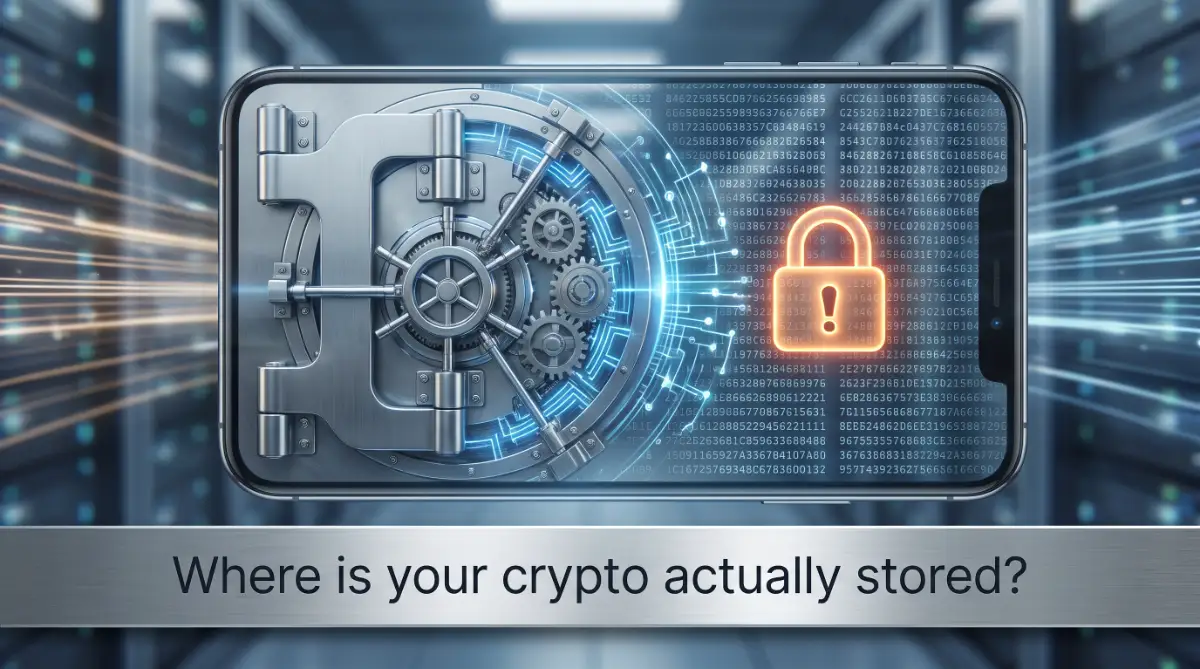
When you buy digital assets through a popular app, the interface looks beautiful and simple. Your balance shows up in green numbers, and it feels like a traditional bank account. This ease of use is a dangerous trap because it hides how the underlying technology actually works.
To understand this, we must look at the difference between having an account and owning an asset.
Why Your App Balance is Just a Promise
When you keep your assets on a centralized platform, the platform holds the actual private keys. A private key is the complex cryptographic password that allows assets to move on the blockchain network.
Because the platform holds this key, they hold the real power over your funds. Your app screen is simply showing you an IOU, a digital promise that they owe you those coins.
If the platform goes bankrupt, faces legal trouble, or suffers a security breach, your access is instantly cut off. You become an unsecured creditor waiting in a long line for help that may never arrive.
Centralized Exchanges vs. Self-Custody Wallets
To make safe decisions, you need to understand how these two storage methods differ in reality.
As the old saying in the community goes: Not your keys, not your coins.
If you do not control the secret cryptographic numbers, you only own a claim to an asset, not the asset itself.
Simple Actions to Secure Your Wealth Today
Moving away from this silent mistake does not require an advanced computer science degree. You can protect your savings by taking a few logical, step-by-step actions today.
Step 1: Set Up a Self-Custody Software Wallet
Your first step toward real safety is downloading a reputable self-custody software wallet. These are applications that run on your phone or computer but generate private keys locally on your device.
When you set up this wallet, the app will show you a list of twelve or twenty-four random words. This list is your seed phrase, which acts as the master key to your entire digital wealth.
Never save this phrase in your phone's photo gallery, email, or cloud storage. Write it down with a pen on physical paper and store it in a secure, dry place.
Step 2: Use the Small Transaction Rule
Many beginners lose their savings by making simple typing or network errors during transfers. To prevent this, always send a tiny test transaction first.
If you make an error with the network selection or address, you only lose a couple of dollars rather than your entire life savings. This simple habit saves countless hours of worry and protects your main portfolio.
Step 3: Upgrade to Offline Hardware Storage
As your portfolio grows, software wallets on connected devices become target points for malware. This is where physical hardware devices become incredibly helpful.
These devices keep your private keys completely offline, away from any internet connection. Even if your computer has a virus, a hacker cannot steal your assets because the key never leaves the physical USB-like device.
Using a hardware device turns your savings into a physical vault that only you can open.
Myth vs. Reality in Asset Protection
Let us address some common misconceptions that lead new investors down the wrong path.
- Myth: "My exchange account has two-factor authentication (2FA), so my funds are perfectly safe."
- Reality: Phone-based 2FA can be bypassed via SIM-swapping attacks, and exchange hacks happen at the database level, bypassing your personal security entirely.
- Myth: "A hardware wallet is too expensive and complicated for a beginner."
- Reality: Spending a small amount on a physical device is highly reasonable compared to losing your entire savings to a basic online phishing scam.
Pro Tip: The Emergency Folder Setup
Create a physical folder in your home containing your recovery sheets. Label it clearly for your family members with simple instructions on how to access the funds if an emergency happens to you.
Keep this folder protected from water, heat, and curious guests. This small step ensures your wealth is safe today and remains accessible to your loved ones in the future.
Advanced Custody Frameworks and Professional Guardrails
Moving beyond the basic setup of a digital wallet requires a shift in how you think about personal security. Experienced players in this space do not rely on a single layer of protection to keep their wealth safe. They build defensive walls around their assets so that even if one layer fails, their savings remain secure.
One of the most effective methods to achieve this level of security is by setting up a passphrase, which is often called a hidden wallet. This is an extra word of your own choosing that you add to your standard seed phrase.
Without this specific extra word, any intruder who finds your paper backup sheet will only see an empty wallet. This simple mathematical trick keeps your main funds invisible to outside eyes.
Another professional standard involves using air-gapped hardware devices to manage transactions. These specialized tools never connect to any network or computer port, not even through a physical USB cable.
Instead, they sign transactions using visual QR codes read by a camera on the device. This physical barrier ensures that online attackers have zero access points to touch your private keys.
To understand the difference between online risks and offline control, it helps to review official security guidelines. You can read about these decentralized standards on the Ethereum security portal to build a stronger foundation.
Learning digital asset security is an important step in building lasting wealth, much like teaching simple financial habits to prepare your teen for the real world. Both require patience, clear guidelines, and a commitment to long-term planning.
The Power of Multi-Signature Protection
If you manage a larger amount of savings, relying on a single device can still represent a single point of failure. This is why advanced security set-ups often utilize multi-signature smart contracts.
A multi-signature arrangement requires approval from multiple separate keys before any funds can leave the wallet.
For instance, you might set up a system that requires two out of three keys to authorize a transfer. You could keep one key on your daily phone, one on an offline hardware device in your home, and a third key in a secure safety deposit box.
An attacker would need to breach two completely separate physical locations to compromise your accounts. This setup practically removes the chance of a remote hack draining your hard-earned savings.
For those who use visual charts to track their backup systems, clean presentation matters. If you run a small business or publish digital logs of your asset management plans, knowing how to upscale ai images for high quality print outputs can help you create sharp, physical reference templates for your secure files.
Physical Security and the Five-Dollar Wrench Risk
Advanced security is not just about digital encryption; it also involves protecting your physical surroundings. If someone learns that you hold a significant amount of digital assets, your physical safety could become a concern.
This scenario is often referred to by security experts as the "five-dollar wrench attack," where an intruder uses physical threats to force you to unlock your phone.
To protect yourself against this threat, keep your digital activities completely private. Avoid discussing your holdings on social media platforms or at local community meetups.
Additionally, many hardware wallets allow you to set up a duress PIN. Entering this specific PIN unlocks a secondary, decoy account with a tiny balance, keeping your primary savings completely hidden.
Just as graphic designers learn how to use ai generated images ethically in your designs to prevent legal issues, you must learn the ethics of personal privacy to avoid physical security threats. Keeping a low profile is your best defense in a transparent digital ecosystem.
Hidden Traps and Psychological Pitfalls to Avoid
The journey to securing your assets is often filled with psychological traps that can bypass even the strongest technical setups. Many new participants lose their savings because they make quick decisions driven by sudden fear or excitement.
Understanding these emotional traps is just as important as setting up your hardware wallet.
The Danger of Searching for Support Online
When people run into technical issues with their wallets, their first instinct is to search for a quick solution on public search engines or social media. This behavior is incredibly risky.
Scammers buy paid advertisements that look exactly like official help centers but are designed to steal your recovery phrase.
These fake support agents will often ask you to "synchronize" or "verify" your wallet using an online form. The moment you type your words into their website, your funds are gone.
Remember that no legitimate hardware company or wallet provider will ever ask for your private recovery phrase.
Smart Contract Approval Traps
Another modern risk involves signing malicious smart contract approvals while interacting with decentralized applications. When you connect your wallet to a new platform, a pop-up window asks you to grant permissions.
If you do not read the terms carefully, you might give a malicious smart contract unlimited access to spend your tokens.
To prevent this issue, get into the habit of regularly checking and revoking your wallet permissions. You can use verified tools to review which applications have active access to your funds.
Keeping these active connections to a absolute minimum keeps your wallet isolated from external smart contract failures.
To clean up your security habits, you must actively eliminate bad practices. Just as digital creators use techniques like learning how to use negative prompts to clean up ai art easily to remove unwanted noise from their work, you must remove risky habits from your transfer routines.
Questions and Answers on Wallet Security
- Q: Can a hardware wallet be hacked if someone steals the physical device?
- A: It is highly unlikely. These devices are protected by a personal PIN code, and they will wipe themselves after several incorrect entry attempts.
- Q: What happens if the company that made my hardware wallet goes out of business?
- A: Your funds are safe. Your seed phrase follows an industry-wide standard known as BIP-39, meaning you can import your phrase into any other compatible wallet to regain access.
- Q: Is it safe to save a photo of my seed phrase if I use a strong password on my phone?
- A: No. Cloud backups and mobile gallery applications are major targets for hackers, and automated malware can easily scan your photos for text patterns that look like seed phrases.
Your Action Plan for Safer Asset Storage
Taking control of your digital savings is a step-by-step process that builds long-term confidence. You do not need to implement every advanced strategy in a single afternoon.
Start by taking simple, deliberate actions to move your funds off centralized exchange platforms.

Think of this transition as a personal insurance policy for your financial future. The time you spend setting up these safety measures today protects you from devastating losses down the road.
By taking these steps, you transition from being a passive account holder to a true owner of your digital wealth.
Start by verifying your current storage setups today. Take a few minutes to write down your seed phrase on physical paper and store it securely away from any internet connection.
This simple action is the strongest foundation you can build to ensure your digital wealth remains yours for years to come.
Disclaimer
This article is provided for educational and informational purposes only. The content above does not constitute financial, investment, or legal advice. Cryptocurrency investments carry a high level of market risk, and custodial decisions should be made based on your own research and personal risk tolerance. Always consult with a certified financial advisor before making major investment decisions.


